
 By Titik Puspa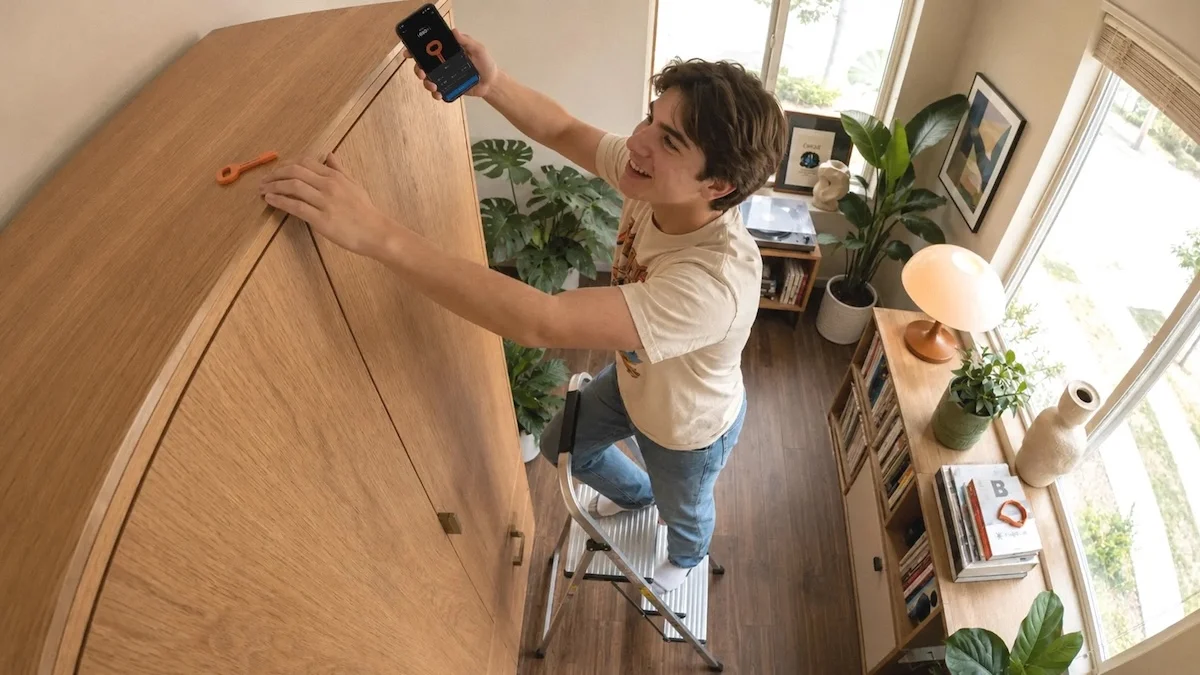
In an era where the siren song of endless scrolling on social media and immersive gaming apps constantly vies for our attention, the effectiveness of traditional screen-time management tools is increasingly being called into question. Many popular applications designed to curb our digital consumption rely on a user’s willpower, offering features like customizable timers and gentle reminders to cease activity. However, the inherent nature of these notifications often renders them easily ignorable, turning them into mere suggestions rather than firm boundaries. This is precisely where Autonomous Key, a novel hardware solution, seeks to disrupt the status quo by introducing a tangible, physical barrier to digital distraction.
Autonomous Key operates on a fundamentally different principle: it leverages the friction of a physical interaction to break the cycle of mindless app engagement. At its core, it’s a sleek, NFC-enabled key that pairs with a dedicated companion app. This pairing allows users to "lock away" their most distracting applications. Unlike software-based blockers that can be bypassed with a simple tap or a password entry, regaining access to locked apps necessitates a physical action – scanning the Autonomous Key with your smartphone. This deliberate, multi-step process transforms an impulsive urge to open a time-consuming app into a conscious decision that requires a measurable effort. Each unlock session is designed to be temporary, lasting for a maximum of 60 minutes before the apps automatically re-lock, encouraging users to be intentional about their app usage rather than defaulting to habitual patterns.
The brilliance of this physical requirement lies in its ability to externalize self-control. Instead of relying solely on internal discipline, which can fluctuate based on mood, fatigue, or external stressors, Autonomous Key shifts the burden of resistance to the environment. Users are encouraged to place the NFC key in a separate room, at their workplace, or even at the gym. This physical separation ensures that the impulse to open Instagram, TikTok, or any other chosen distracting app is met with an immediate, tangible obstacle. The mental hurdle of physically retrieving the key and scanning it acts as a crucial pause, providing an opportunity for reflection and a chance to redirect attention to more productive or present activities. This external locus of control can be particularly effective for individuals who struggle with impulse control or find digital willpower a constant battle.
In terms of market positioning, Autonomous Key enters a burgeoning space of physical screen-time management devices with a highly competitive price point. Priced at an accessible $9, it significantly undercuts its direct competitors. For instance, Blok retails at $29, Unpluq at $26.50, and the more feature-rich Brick is priced at a substantial $59. While Brick does boast advanced functionalities such as a "Sleep Mode" and the capability to block in-app purchases, thereby offering a more comprehensive suite of control options, Autonomous Key focuses on delivering the core value proposition of enforced physical interaction at a fraction of the cost. This affordability makes it a compelling entry point for individuals seeking a tangible solution without a significant financial commitment.

The Autonomous Key itself is a testament to minimalist design and portability, measuring approximately three inches in length. Its compatibility extends to modern smartphones, supporting Android devices running version 8.0 or later and iPhones operating on iOS 15 or later. This broad compatibility ensures that a significant portion of the smartphone user base can benefit from its unique approach.
Beyond its physical function, the companion app enriches the user experience by offering AI-powered insights into digital habits. It meticulously tracks key metrics such as the frequency of app unlocks, the duration for which locked apps remain accessible after an unlock, and the specific times of day when users are most prone to succumbing to digital distractions. This data-driven feedback loop is crucial for self-awareness and for refining the strategy of using the Autonomous Key.
What sets the companion app apart is its deliberately sassy and engaging personality. Instead of presenting dry data, the AI summarizes user habits with a witty and often humorous tone. For example, if a user repeatedly unlocks their apps immediately after they’ve been locked, the AI might playfully remark that the key was "clearly not far enough away" and suggest placing it in a less convenient location. This anthropomorphized feedback can make the process of digital detox feel less like a chore and more like a collaborative effort, injecting an element of fun and personalization into what can often be a challenging journey. This approach aligns with a growing trend in consumer technology to incorporate personality and emotional intelligence into user interfaces, fostering a stronger connection and encouraging sustained engagement.
Furthermore, Autonomous Key distinguishes itself by eschewing subscription models and premium tiers that often lock away essential features in competing apps. The entire functionality of the companion app and the core blocking capabilities are available with the single purchase of the key. This transparent pricing model adds significant value, especially for users who are wary of ongoing costs. The versatility of the key is also noteworthy; a single Autonomous Key can be paired with multiple phones. This feature makes it an exceptionally practical option for individuals who manage several devices, such as a personal phone and a work phone, or for families looking to implement screen-time limits across multiple users and devices. This multi-device support streamlines management and enhances the cost-effectiveness for households.
During personal testing of the Autonomous Key, some minor technical hiccups were observed. The NFC scan, while generally functional, occasionally required multiple attempts to register with the phone. This inconsistency, though not a deal-breaker for casual use, might pose a slight inconvenience for users who rely on immediate access to critical applications like messaging or email throughout the day. For these essential apps, users might want to consider leaving them unlocked or implementing a less stringent blocking strategy to avoid potential delays. The company acknowledges this and is likely to address such nuances in future software updates as the product matures.

A significant consideration for any physical device is the potential for loss. The company has addressed the scenario of a lost key with a clear, albeit currently somewhat cumbersome, workaround. If a user’s apps are locked and they lose their key, the immediate solution involves uninstalling and then reinstalling the companion app. If the apps are already unlocked when the key is lost, users can simply remove the key from their account via the app. However, to enhance user convenience and security, Autonomous states that it is actively developing a backup unlock method, which is expected to be integrated into a future software update. This commitment to ongoing improvement suggests a responsive development team focused on user experience and addressing potential pain points.
Autonomous Key is currently in its beta phase, having successfully completed a Kickstarter campaign that garnered significant interest and support. Shipping of the initial units began earlier this month, marking a pivotal moment for the product’s journey from concept to consumer. It is available in a palette of five attractive colors: pink, orange, blue, gray, and brown, allowing users to choose a style that best suits their personal aesthetic. This early stage of availability indicates that while the core functionality is robust, users might encounter further refinements and feature additions as the product moves through its beta period and beyond.
The development of Autonomous Key reflects a broader societal conversation about our relationship with technology and the increasing need for intentionality in its use. As digital distractions become more pervasive and sophisticated, the demand for solutions that move beyond simple software prompts is growing. The tangible nature of Autonomous Key offers a refreshing departure from purely digital interventions, grounding the effort to reclaim focus in the physical world. Its affordability and unique approach position it as a promising contender in the market, potentially empowering a wider audience to take back control of their digital lives. The company’s proactive approach to gathering user feedback during its beta phase, coupled with its commitment to future enhancements, suggests a long-term vision for helping individuals navigate the complexities of the digital age with greater mindfulness and control.
