
 By Rifan Muazin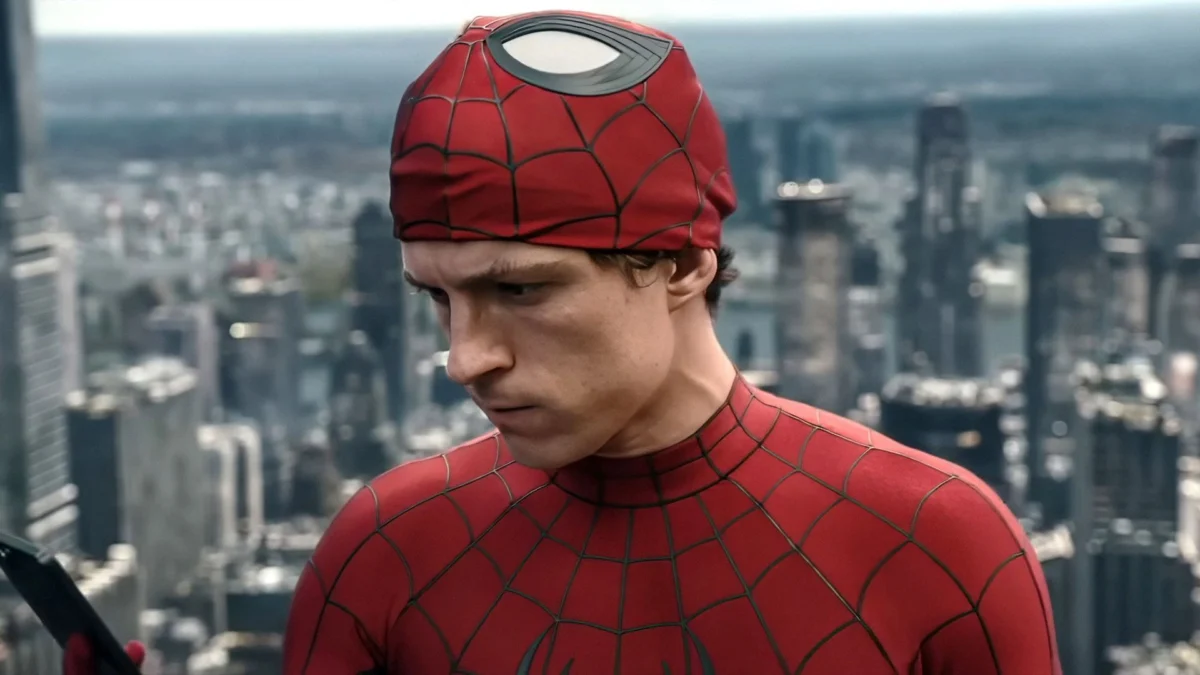
On reflection, it really shouldn’t surprise anyone that Spider-Man: Brand New Day took in such a crazy box office haul during its opening weekend, roaring past Avengers: Endgame to a record-breaking $927 million worldwide. In an era where the term "superhero fatigue" has become a permanent fixture in the cultural lexicon, and industry analysts have spent the better part of three years debating whether Marvel Studios has entered its "flop era," these numbers serve as a staggering reminder of a singular truth: Spidey is the undisputed GOAT of the superheroes. The rules of diminishing returns simply do not apply to the world’s favorite hormonal teen arachnid—who, while now technically in his 20s, still retains that quintessential underdog charm that has defined the character for over sixty years.
The massive financial success of Brand New Day is not merely a testament to the brand’s power, but also a direct result of the agonizing five-year wait fans endured following the seismic conclusion of Spider-Man: No Way Home. That film ended on what many consider to be the most daring twist in the history of the Marvel Cinematic Universe (MCU): a "hard reset" where Doctor Strange’s spell wiped Peter Parker from the collective memory of the world. Peter was left utterly alone, his best friend Ned Leeds and the love of his life, MJ, having no idea who he was. It was a masterstroke of storytelling that promised high emotional stakes and a return to the character’s "street-level" roots, moving away from the high-tech gadgets of the Stark era and back to the struggle of a young man trying to pay rent while saving the city.
Thankfully, that cliffhanger is paid off in Brand New Day, albeit not quite in the tidy, sanitized Hollywood fashion some might have expected. The film leans heavily into the bittersweet reality of Peter’s new life. When Peter finally gathers the courage to reveal their pre-memory-wipe relationship to MJ (Zendaya), the result is not a soaring, romantic reunion accompanied by a triumphant orchestral swell. Instead, MJ provides a grounded, almost painful reality check. She explains to him that because he was essentially deleted from her consciousness, her present self—the person she is today—isn’t in love with him. From her perspective, she never was. It is a heartbreaking moment, yet it feels profoundly satisfying from a narrative standpoint. To have MJ simply "remember" through the power of love would have retroactively dulled the impact of Peter’s sacrifice at the end of No Way Home. By keeping the amnesia intact, the film preserves the sense of loss and loneliness that serves as the emotional engine for this new trilogy.
However, as the film progresses toward its climax, the "rules" of the memory wipe begin to show cracks. The final act of Brand New Day follows the obligatory MCU formula of a high-stakes spectacle, but with a distinctly darker, more grounded tone. Spider-Man finds himself embroiled in a brutal conflict with the Hand—the ancient order of super-ninjas that has long plagued the street-level heroes of the Marvel universe. This conflict serves as a bridge to the wider MCU, as Peter attempts to rescue Jean Grey (played with haunting intensity by Sadie Sink). Jean, overwhelmed by grief following the death of her sister, has inadvertently unleashed her burgeoning psychic powers, freezing half of Manhattan in a massive, shimmering bubble of telepathic energy.
The sequence is a masterclass in modern visual effects, but the emotional core remains focused on Peter’s empathy. He eventually convinces Jean to lower her defenses and let the city go, but the victory comes at a physical cost. In the chaos, Peter takes a sniper bullet intended for the "threat" he was trying to neutralize, fired by none other than Frank Castle, the Punisher (Jon Bernthal). While Peter survives, the encounter reinforces the dangerous, un-thanked nature of his new existence. Jean Grey, meanwhile, is seen boarding a bus, presumably heading to Upstate New York to enroll in a certain "school for the gifted," a scene punctuated by a brief, electrifying riff from the classic 1990s X-Men theme song—a moment that sent opening-night audiences into a frenzy.
The true talking point of the film, however, is the very final scene. Recovering from his injuries and continuing his life of anonymity, Peter visits his favorite bodega. There, he encounters Ned Leeds (Jacob Batalon). Earlier in the film, Peter had tentatively re-introduced himself to Ned as a "flowers-loving neighbor," and the two had even interacted while Peter was in costume as Spider-Man, though Peter stopped short of unmasking. In this final encounter, Peter decides to go one step further. Approaching a confused Ned, Peter initiates their secret "best-pal" handshake.
What happens next is the subject of intense online debate. Ned follows the complex series of movements perfectly, seemingly guided by pure muscle memory. As the handshake concludes, something appears to trigger deep within his subconscious, as if a magical seal has been broken. Ned looks at Peter, his face etched with a shock that transcends simple recognition. "Peter," he exclaims, the name carrying a weight of years of shared history. Peter responds with a wide, tearful grin before the screen cuts to black and the credits roll.
This ending has been read as ambiguous by some, but a closer analysis suggests a more definitive conclusion. There are two primary interpretations: first, that Ned simply realized this "neighbor" is the Spider-Man he met earlier (since MJ had referred to him as Peter in a previous scene); or second, that the magical amnesia has been shattered, and Ned truly remembers his best friend. Given the cinematic language used—the close-up on Ned’s eyes, the specific cadence of his voice—it almost certainly points to the latter. Ned’s expression isn’t that of a fanboy discovering a superhero’s secret identity; it is the expression of a man recovering a lost part of his soul.
The "muscle memory" aspect is a crucial piece of evidence. In psychology, procedural memory (how to do things) is often stored differently than declarative memory (facts and names). By engaging Ned in a physical ritual they performed thousands of times, Peter may have bypassed the magical block placed on Ned’s conscious mind. This theory is supported by several other "leaks" in the spell throughout the movie. Earlier on, the Hulk—unleashed after Jean Grey accidentally enters the mind of Bruce Banner (Mark Ruffalo)—stops mid-rampage when Spider-Man pleads that he is "his friend." While the Hulk’s rage is often placated by emotional appeals, the specific way the character pauses suggests a deeper, subconscious acknowledgement of their history in the Avengers.
Furthermore, there is the subtle clue involving MJ. Toward the end of the film, she is seen pointedly grasping the Black Dahlia necklace Peter gave her in Spider-Man: Far From Home. Although she doesn’t remember the gift’s origin, her attachment to it suggests that the emotional resonance of their relationship remains, even if the specific memories are suppressed. These instances suggest that the "telepathic nuke" Jean Grey set off in the climax may have acted as a psychic catalyst, weakening the structural integrity of Doctor Strange’s spell across the city.
From a critical perspective, some might argue that restoring Ned’s memory so soon is an "underwhelming cop-out" that undoes the tragedy of No Way Home. There is a valid concern that the MCU often refuses to let its consequences stick, opting instead for a return to the status quo. However, Brand New Day manages to walk a fine line. Even if Ned remembers, the world at large still does not. Peter is still a man without a social security number, a college record, or a family. The restoration of one friendship doesn’t fix his life; it only makes the burden of his secret slightly easier to bear.
As we look toward the inevitable Spider-Man 5, the implications of this ending are vast. If Ned remembers, will he try to help MJ remember? Will the return of Peter’s identity bring him back into the crosshairs of enemies who were also affected by the spell? And perhaps most importantly, how will the arrival of the X-Men and the growing presence of street-level vigilantes like the Punisher and Daredevil reshape Peter’s world? Brand New Day has successfully transitioned the franchise from the cosmic scale of the Multiverse back to the heart of New York City, proving that no matter how many times you reset the clock, the story of Peter Parker remains the most compelling narrative in the Marvel pantheon. We may have to wait another few years for the next chapter, but if this film is any indication, the "Brand New Day" for Spider-Man is just beginning.
