
 By admin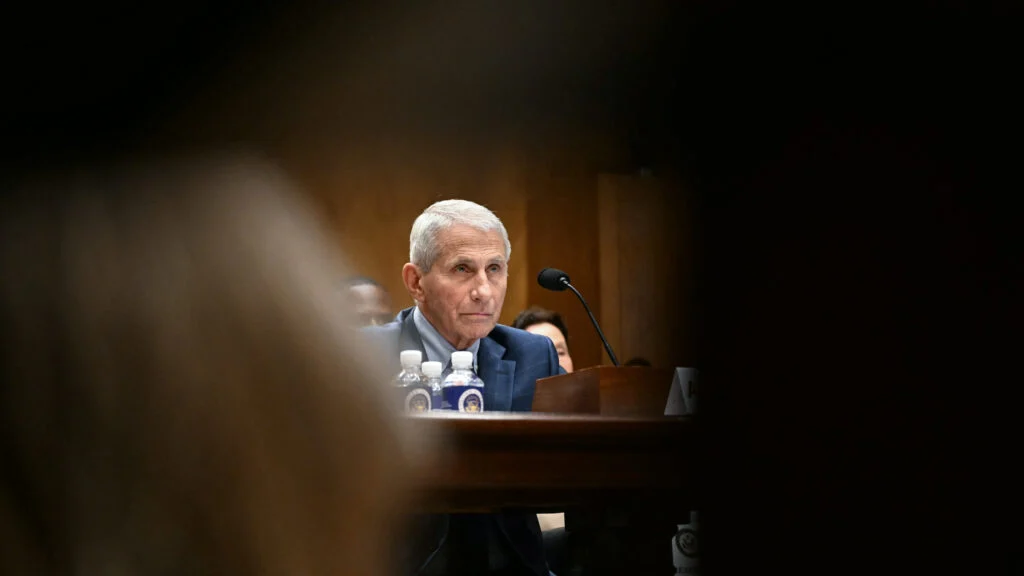
The recent Senate committee hearings regarding the origins of the Covid-19 pandemic have devolved into a master class in political distraction, prioritizing partisan theater over the substantive requirements of national public health. This escalation reached a fever pitch on Thursday, August 6, 2026, when the committee voted to hold Dr. Anthony Fauci in contempt of Congress. The charge followed Fauci’s decision to invoke his Fifth Amendment protection against self-incrimination—a move necessitated by a hostile environment in which the committee’s chair, Senator Rand Paul, has repeatedly and publicly asserted that the former director of the National Institute of Allergy and Infectious Diseases (NIAID) belongs in prison. This legal and political confrontation marks a nadir in the relationship between the American legislative body and the scientific community, further obscuring the critical search for pandemic origins behind a veil of domestic recrimination.
To understand the current impasse, one must return to the initial epicenter: Wuhan, China. It is an established fact that the SARS-CoV-2 virus first emerged in this metropolitan hub, and it is equally certain that the Chinese government engaged in a vigorous campaign to suppress information during the pivotal first weeks and months of the outbreak. In late 2019 and early 2020, Beijing dragged its feet on alerting the international community to the severity of the threat, denying the rest of the world precious weeks that could have been used for preparation, stockpiling, and border containment. The World Health Organization (WHO), despite its best efforts, found its investigations frustrated at every turn. Basic facts regarding the human-to-human transmissibility of the virus were initially downplayed or denied by Chinese authorities, even as hospital wards in Hubei province were being overwhelmed.
Once the virus breached China’s borders and ignited fires across Europe and North America, the Chinese Communist Party (CCP) transitioned from local suppression to a global campaign of disinformation. Whistleblowers like the late Dr. Li Wenliang, who sought to warn colleagues about a new SARS-like pneumonia, were detained and forced to sign "confessions" for spreading rumors. International investigators sent by the WHO in 2021 were famously restricted in their movements, at one point being locked in their hotel rooms under the specious pretext of quarantine protocols while the Chinese government promoted baseless theories that the virus had been imported into Wuhan via frozen food packaging from abroad. Crucial laboratory records from the Wuhan Institute of Virology (WIV) and the raw data from local public health authorities were placed under lock and key. Nations that dared to demand a transparent, independent investigation—most notably Australia—faced immediate and harsh economic retaliation through trade tariffs and bans.
In the face of this systemic international obstruction, the American political landscape has curiously chosen to focus its ire not on the opaque regime in Beijing, but on Dr. Anthony Fauci. For decades, Fauci served as a preeminent public servant, a man of vast epidemiological knowledge who advised presidents from both sides of the aisle through the HIV/AIDS crisis, Ebola, and Zika. The current effort to cast him as the "bad guy" of the Covid-19 saga is a profound misdirection. While the origin of the virus remains a salient question—knowing the source is essential for predicting and preventing the next zoonotic spillover—Fauci does not possess the keys to this mystery. Those keys are held exclusively by the Chinese government, which has a documented history of obfuscating investigations into coronaviruses.
History provides a grim template for this behavior. During the 2002–2004 outbreak of SARS-CoV (now known as SARS-classic), which was also a coronavirus, approximately 66% of the global deaths occurred in China or Hong Kong. Though the first cases appeared in Guangdong province in late 2002, the Chinese government withheld reporting from the WHO until early 2003. State-controlled media were prohibited from reporting on the burgeoning epidemic, and hospital admission data were treated as state secrets. During this period of silence, international travelers unknowingly exported the virus to 29 countries, leading to significant outbreaks in Canada and Singapore. While China later apologized for its slow response and promised greater transparency in future health crises, the 2020 experience proved that the institutional impulse for secrecy remained unchanged.
In the information vacuum created by the CCP’s 2020 crackdown, the global scientific community was forced to rely on circumstantial evidence and evolutionary biology to hypothesize the virus’s origin. Historically, the precedent for such outbreaks is "zoonotic spillover"—the jump of a virus from an animal reservoir to humans. The original SARS was eventually traced back to horseshoe bats in the caves of Yunnan province, which likely infected intermediate hosts like masked palm civets sold in live animal markets. Similarly, Middle East Respiratory Syndrome (MERS) was linked to transmission from dromedary camels.
Given this history, the early assumption that Covid-19 originated at the Huanan Seafood Wholesale Market in Wuhan was scientifically logical. The market, a "wet market" where live wild animals were sold in close proximity to humans, provided the ideal conditions for a spillover event. However, the proximity of the Wuhan Institute of Virology—a facility known to be conducting high-level research on bat coronaviruses—introduced the "lab leak" hypothesis. The possibility that a researcher became infected in the field while sampling bat caves or that a laboratory accident occurred cannot be dismissed by any serious scientist. Yet, the distinction between a natural spillover and a laboratory-associated incident has been weaponized by politicians to imply a criminal conspiracy involving U.S. health officials.
The crux of the current Senate investigation hinges on the funding of research at the WIV through sub-grants from organizations like the EcoHealth Alliance, which received funding from the NIAID. Critics argue that this constituted "gain-of-function" research—experiments that enhance the virulence or transmissibility of a pathogen. While the definition of gain-of-function is a subject of intense debate within the scientific community, the jump from "funding collaborative international research" to "responsibility for a global pandemic" is a chasm bridged only by political expediency. To blame Dr. Fauci for not knowing the intimate details of what was happening behind the closed doors of a Chinese laboratory is as illogical as blaming a detective in Washington, D.C., for an unsolved homicide in Wuhan when that detective has been denied access to every witness, every piece of forensic evidence, and the crime scene itself.
Furthermore, the committee’s focus has conflated the origins of the virus with the subsequent public health policies implemented in the United States, such as mask mandates and social distancing. These are separate issues. Public health policies are based on the best available data at the time to mitigate the spread of an active pathogen, regardless of whether that pathogen emerged from a cave or a test tube. By mixing these "apples and oranges," political actors have successfully eroded public trust in scientific institutions, transforming a matter of global biosafety into a domestic culture war.
The real culprits of the Covid-19 cover-up reside in Beijing. It is the Chinese government that denied access to the early epidemic curves, the genetic sequences of the first patients, and the internal audits of the WIV. If the members of the U.S. Senate were genuinely committed to safeguarding the health of the American people, they would acknowledge that the definitive answer to the pandemic’s origin may never be known without a fundamental change in China’s policy on transparency. Instead of pursuing a vendetta against a retired public servant, the legislative focus should be on the very real threat that the next pandemic is likely to emerge from the same geographic and regulatory environment.
China’s animal husbandry practices, its management of wildlife trade, and its lack of transparent biosafety reporting remain the primary risks for future global health security. Persecuting Dr. Fauci for failing to provide answers that were systematically hidden from him by a foreign adversary is a dangerous sideshow. It serves only to discourage future scientists from entering public service and to weaken the very institutions designed to protect the nation. As the Senate continues its hearings and the legal battles over contempt charges escalate, the global community remains vulnerable. The underlying vulnerabilities that allowed SARS-CoV-2 to paralyze the world have not been addressed. While the political theater in Washington continues to play to the galleries, the clock on the next pandemic continues to tick. The focus on domestic scapegoating is a luxury the world can ill afford while the threat of "Disease X" looms on the horizon. Accuracy, transparency, and international cooperation are the only tools effective against a virus; political retribution is a blunt instrument that serves only to ensure we are less prepared for the next inevitable crisis.
