
 By admin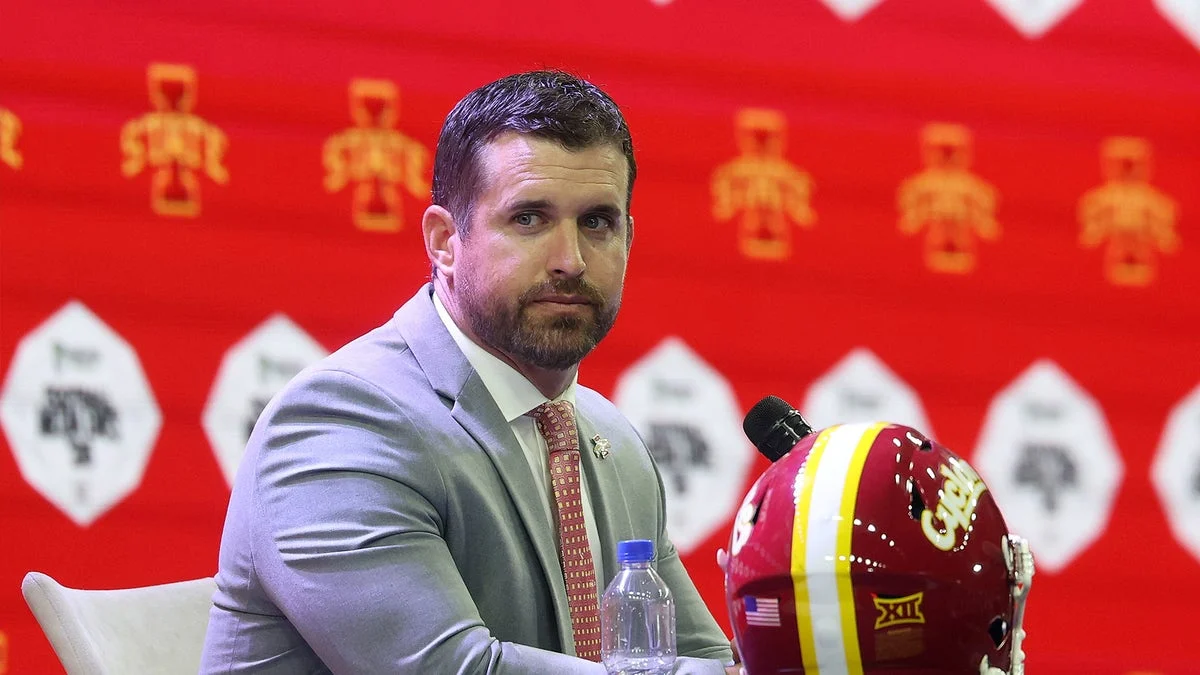
The echoes of Matt Campbell’s decade-long tenure at Iowa State are still reverberating through Ames, Iowa, but a new voice, brimming with an almost audacious confidence, has taken the helm. Jimmy Rogers, the freshly appointed head coach of the Cyclones, has wasted no time in setting a remarkably high bar for his program, boldly predicting a trip to the Big 12 Championship game in his inaugural season. This declaration comes at a time when the Cyclones have been universally written off by the very people who cover the sport, a stark contrast to the optimistic outlook emanating from their new leader.
The pre-season media poll, a barometer of perceived team strength and potential, has placed Iowa State squarely at the bottom of the Big 12 standings. This dismal ranking is not without cause. The Cyclones are returning absolutely no starters from the previous season, a significant void that speaks to a complete overhaul of the roster. Adding to this challenge, a staggering 55 players have opted to transfer out of the program since Rogers’ arrival. This mass exodus is largely attributed to the departure of former head coach Matt Campbell, who, along with 24 of his most promising players, has moved on to the greener pastures of Penn State. The sheer scale of player turnover signals a monumental rebuilding effort, a task that would daunt even the most seasoned coach.
However, Rogers himself appears unfazed, perhaps even energized by the adversity. In a candid conversation with reporters in Ames this week, he revealed that he was the architect of his own bold prediction, anonymously ranking the Cyclones as a Big 12 Championship contender in an On3.com poll of coaches. When pressed about this seemingly contradictory stance, Rogers offered a resolute defense of his philosophy. "What would you think if I didn’t vote on us? You’d wonder why I’m the head coach at Iowa State," he stated, his conviction palpable. "I was brought in to win. Very self-aware. They didn’t hire me to come here and not be competitive. I wasn’t hired for my disposition. I was hired to create a program that competes and wins and that’s the goal. We’re not signing up for second place."
This declaration, while undoubtedly attention-grabbing and destined for widespread dissemination, is rooted in a profound belief in his own capabilities and the potential of the program he now leads. Rogers elaborated, "So I know that’s a bold statement, and they’ll print it everywhere. But the reality is this: the players have to believe in what you say, and you have to act on how you believe. I believe that we can win." This emphasis on belief and action underscores his approach, aiming to instill a winning mentality from the ground up, even in the face of overwhelming skepticism.
The shadow of Matt Campbell looms large over Iowa State football. Campbell, the all-time wins leader for the program, departed after a respectable 8-4 overall record and a 5-4 conference mark in his final season. During his ten-year tenure, the Cyclones made a habit of appearing in bowl games, participating in seven of them, although they opted out of a bowl appearance last season. Their most significant achievement under Campbell was reaching the Big 12 Championship game in 2020, a feat that had not been accomplished by the program since 1912. This historical context highlights the challenge Rogers faces: not only to rebuild a depleted roster but also to recapture the magic that propelled the Cyclones to national relevance under his predecessor, and to surpass the program’s historical limitations.
The players themselves seem to be embracing Rogers’ unwavering confidence. Tight end Tyler Fortenberry, a member of the current squad, expressed that Rogers’ prediction comes as no surprise to those within the team. He attributed Rogers’ self-assurance to his past successes, particularly during his time as an assistant and head coach at South Dakota State, a program within the Football Championship Subdivision (FCS). In his sole season at Washington State, Rogers demonstrated his ability to quickly mold a team, guiding a squad with a significant number of newcomers (75) to a respectable 6-6 record and a bowl invitation. This experience in rapid team development and achieving positive outcomes with transitional rosters is likely a key factor in his current optimistic outlook.
Fortenberry further elaborated on the team’s internal focus, stating, "Coach Rogers does a good job in team meetings making sure we’re not focused on what Twitter says, what Instagram says or what the media says about what we’re going to finish. They all have us 16th. If you buy into that and believe what the media has to say, you’re not going to get anywhere in life." This sentiment reflects a deliberate effort to foster a resilient team culture, one that is insulated from external noise and focused on internal progress and belief. The players are being encouraged to tune out the naysayers and concentrate on their own development and execution.
The narrative surrounding Jimmy Rogers and the Iowa State Cyclones is one of a classic underdog story, albeit one where the underdog is defiantly declaring victory before the fight has even begun. The statistics paint a bleak picture: a last-place prediction, a complete lack of returning starters, and a massive roster turnover. However, Rogers’ approach is not about dismissing these realities but about confronting them with an unyielding belief in his ability to transform the situation. His past coaching performances, particularly his success in building competitive teams quickly, lend credence to his bold pronouncements.
The FCS to FBS transition is a significant leap, and the challenges faced by a new coach at a Power Five conference school are immense, especially when inheriting a program that has just experienced such a dramatic upheaval. The departure of Matt Campbell, a coach who had established a strong identity and a winning culture at Iowa State, leaves a void that is difficult to fill. Campbell’s tenure was characterized by a gritty, disciplined style of play, and his ability to develop overlooked recruits into impactful players was a hallmark of his success. The 2020 Big 12 Championship appearance, a historical anomaly for the program, demonstrated the ceiling of what was possible under his leadership.
Rogers’ task is to not only replicate some of that success but to build upon it, all while navigating the immediate aftermath of a significant coaching change and player exodus. The 55 players who have transferred represent a significant loss of experience and potential, forcing Rogers and his staff to recruit and develop talent at an accelerated pace. The 75 newcomers at Washington State, a number that dwarfs the incoming talent at Iowa State, suggest that Rogers is no stranger to integrating a large influx of new players and forging a cohesive unit. His experience in the FCS, while a different level of competition, has equipped him with the tools to identify and cultivate talent, and to instill a strong work ethic.
The psychological aspect of Rogers’ strategy is also crucial. By publicly declaring championship aspirations, he is creating a high-stakes environment, not just for his players but for himself. This level of confidence can be infectious, motivating players to exceed expectations and to perform at their highest level. Conversely, it can also amplify the pressure and scrutiny, making any missteps more visible. However, Rogers’ own words suggest he is aware of this and embraces it. He was "hired to win," and his confidence is a reflection of that mandate.
The media’s skepticism is understandable. The data points towards a challenging season for Iowa State. The Big 12 conference itself is highly competitive, with established programs like Texas, Oklahoma, Kansas State, and TCU consistently vying for dominance. The addition of new members like BYU, Cincinnati, Houston, and UCF further intensifies the conference landscape, making the path to the championship even more arduous. For a team predicted to finish last, with no returning starters and a significant roster turnover, the odds are indeed stacked against them.
Yet, the history of college football is replete with stories of teams defying expectations and achieving improbable success. The journey of the Iowa State Cyclones under Jimmy Rogers promises to be one of the most closely watched narratives in the upcoming season. Will his audacious confidence translate into tangible results? Can he forge a winning culture from scratch, inspiring a group of new players to overcome the weight of low expectations? The answers will unfold on the field, but for now, Jimmy Rogers has ignited a spark of optimism in Ames, a spark that, if fanned correctly, could lead to something truly special. The focus for the Cyclones will undoubtedly be on building a foundation of strong fundamentals, developing team chemistry, and executing a game plan that maximizes their talent. Rogers’ belief is the first step; now, it’s up to him and his players to prove it can be sustained. The journey from the bottom of the Big 12 to the championship game is a steep climb, but for Jimmy Rogers, it’s a climb he’s already declared he’s ready to make.
