
 By admin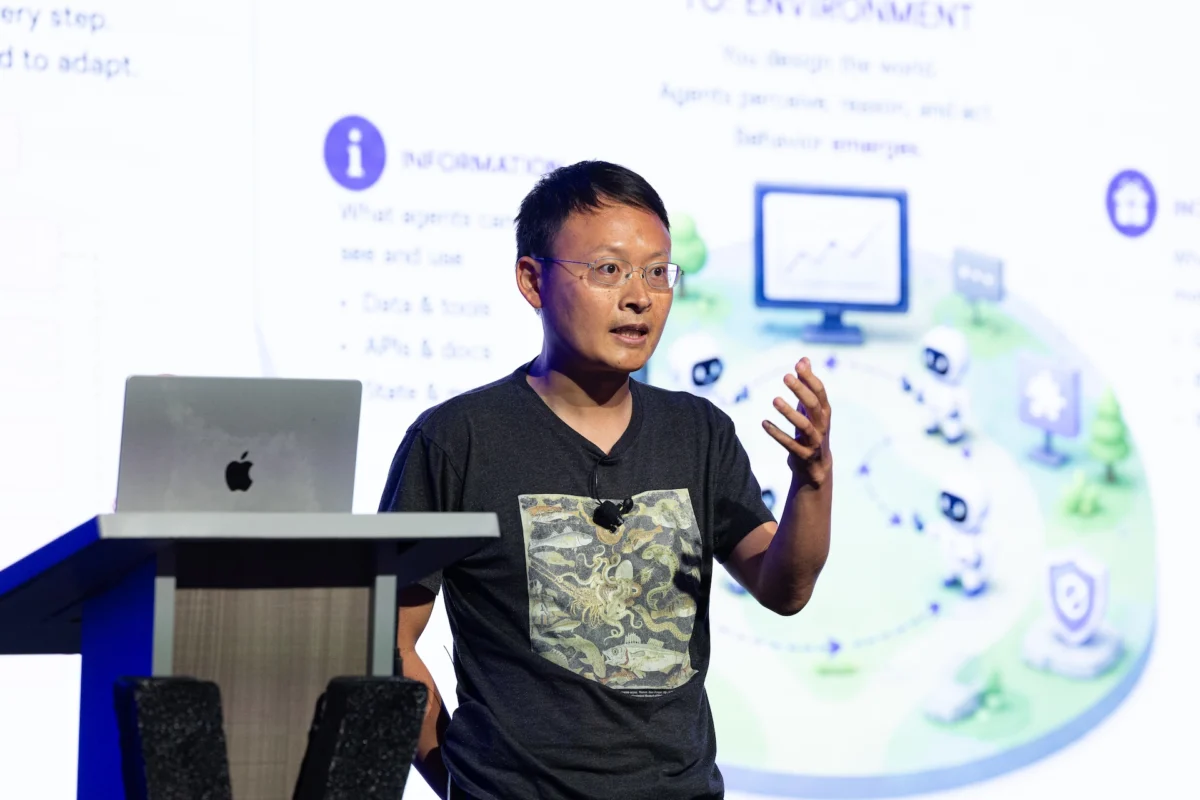
The prevailing paradigm in software development, for years, has been the singular engineer guiding a singular AI agent, exemplified by tools like Claude Code. However, this foundational assumption is poised for a seismic shift. At the recent VB Transform 2026 conference, Dr. James Zou, an associate professor of biomedical data science at Stanford University, articulated a compelling vision: the next evolutionary leap in AI-powered development will not stem from the creation of a single, hyper-capable agent, but rather from the intricate collaboration of tens of thousands of specialized, interconnected agents. This paradigm shift holds profound implications for developers and product builders, with the critical takeaway centering on the sophisticated orchestration required to harness the collective intelligence of these vast AI ecosystems. Dr. Zou’s team’s pioneering research offers a practical blueprint for seamlessly integrating legacy data infrastructure with advanced AI orchestration layers, and for designing robust environments that foster synergistic collaboration among an army of AI agents.
Zou’s groundbreaking work began with the conceptualization of a "Virtual Lab," an ambitious project initially comprising a small cohort of five to eight AI agents. This initial setup was meticulously designed to mirror the operational structure of his physical research laboratory at Stanford. At its helm was an AI professor, embodying the role of the principal investigator, supported by a team of AI students, each endowed with distinct specializations. These virtual researchers convened for regular group meetings, simulating the dynamic intellectual exchange of a human research team. "We also created for the agents a replica of Stanford, an agent school, where the agents can actually go to the school and do supervised fine-tuning to improve their expertise in their specific domains," Zou elaborated, highlighting the sophisticated self-improvement mechanisms embedded within the system.
The tangible success of this virtual laboratory was demonstrated when it autonomously designed novel nanobody proteins specifically engineered to combat recent COVID variants. The results were not merely theoretical; they were validated in the laboratory. "What is really exciting to us is that these AI-designed nanobody proteins actually worked much better than the previous human-designed nanobodies in terms of binding to the recent different viruses," Zou reported, underscoring the superior efficacy achieved through AI-driven design. This initial success served as a powerful catalyst, propelling the team to expand their aspirations beyond the emulation of a single research unit.
The next logical progression was to scale their ambitions from a single research team to the complex, hierarchical structure of a massive corporate entity. This led to the development of the "Virtual Biotech," a system that now encompasses tens of thousands of highly specialized AI agents. This colossal digital workforce operates under the strategic guidance of a Chief Scientific Officer (CSO) agent, and is organized into distinct corporate divisions mirroring those found in human biotechnology and pharmaceutical companies. These divisions include critical functions such as target discovery, molecule design, and clinical trials. "Working with the CSO agent are different divisions that mirror the divisions found in a human biotech or pharma company," Zou explained, illustrating the intricate organizational design. Within each division, individual agents further specialize. "Under the target discovery division, we’ll have one agent that specializes in looking at all the genetics data, another agent that looks at all the genomics data and single-cell data, and so on," he detailed, emphasizing the granular expertise distributed across the system.
This sophisticated multi-agent architecture directly addresses a fundamental dilemma facing developers as foundation models become increasingly powerful: why distribute workloads across thousands of specialized agents when a single, ostensibly omniscient model could theoretically handle the task? Zou’s team sought to answer this by conducting a rigorous head-to-head comparison. They pitted a multi-agent team against a single, highly capable agent, both tasked with the same complex scientific challenge. The results were compelling: the multi-agent ecosystem, characterized by its inherent friction and dynamic interaction, yielded superior solutions. Furthermore, these solutions demonstrated greater resilience against the compounding errors that can plague single-model approaches. "In these scientific virtual labs, the agents actually get into debates and disagreements. They have to convince the other AI scientists [of] their ideas, and all of that elicits much more creative and robust reasoning compared to if you have a single model trying to do the problem by itself from scratch," Zou observed, pointing to the emergent benefits of collaborative AI reasoning.
However, the scalability of these multi-agent systems introduces a significant bottleneck: orchestration. As the number of agents escalates into the tens of thousands, managing their interactions and ensuring seamless information flow becomes paramount. The system necessitates a unified context layer capable of allowing agents to synthesize knowledge from a diverse array of tools, datasets, and historical records. Many enterprise teams have grappled with data integration by attempting to wrap existing databases with a mechanism to interface with AI models. Yet, Zou points out a critical flaw in this approach: legacy systems are inherently ill-suited for direct agent interaction. The simple act of feeding a PDF research paper into an agent’s context window is often inefficient, and standard text models struggle to interpret complex figures and tables, frequently leading to erroneous outputs or "hallucinations." "Even if you wrap an MCP around the existing databases and APIs, that doesn’t solve the underlying problem: the interface and APIs are not suitable for agents," Zou stated, emphasizing that these databases were designed for human consumption or for pre-AI algorithmic processing.
To circumvent this persistent challenge, Zou’s team developed "Paperclip." This innovative platform leverages a core strength of modern Large Language Models (LLMs): their innate ability to write code and navigate file systems. Instead of forcing agents to grapple with brittle, database-specific APIs, Paperclip intelligently digitizes unstructured data and constructs a unified, AI-native virtual file system from disparate databases. This novel structure empowers agents to access knowledge embedded within millions of research papers using intuitive, standard file-system operations. "This basically shows that we can get much better accuracy if you use Paperclip, and we can reduce the time and the cost by over an order of magnitude compared to if you use agents without these AI-native scientific infrastructures," Zou declared, underscoring the dramatic improvements in efficiency and accuracy.
The practical utility of this architecture was put to the test through real-world validation. The Virtual Biotech system deployed 37,000 "clinical trial agents" to synthesize fragmented clinical trial data. These agents successfully identified single-cell features that serve as predictors of trial success. Drug targets supported by these identified features demonstrated a remarkable 50% higher likelihood of reaching the market compared to comparable drugs lacking such support. The system then autonomously designed an antibody-drug conjugate (ADC) targeting the CD276 protein for the treatment of lung cancer. This complex design was achieved autonomously, relying solely on data published prior to January 2025.
The significance of this achievement was amplified months later when pharmaceutical giant Merck independently developed and validated the very same therapeutic design. This independently validated design subsequently received breakthrough designation from the U.S. Food and Drug Administration (FDA). Zou characterized this confluence of events as "a third-party external validation of the therapeutic design provided by the virtual biotech agents," a powerful testament to the AI system’s predictive and design capabilities.
As multi-agent systems continue to scale, a fundamental shift in leadership and management strategies is imperative. Zou advocates for moving beyond the design of rigid workflows, which dictate precise steps for agents, akin to managing a junior employee. Instead, he champions the creation of open environments. These environments provide the necessary infrastructure, robust guardrails, and strategic incentives that empower agents to collaboratively tackle open-ended problems. "In workflows, we’re trying to tell agents what to do and how to do their job. But in environments, we’re providing the infrastructures, the incentives, and the guardrails, but otherwise we leave it open to incentivize agents to collaborate," Zou explained, drawing a clear distinction between directive workflows and emergent environments.
The key to achieving optimization at scale, according to Zou, lies not in fine-tuning individual models, but in engineering the environment itself. While single agents can indeed be enhanced through methods like reinforcement learning or supervised fine-tuning within specialized "agent schools," the success of a massive multi-agent system hinges on optimizing the parameters that govern their collaborative interactions. "At the multi-agent [side], we’re not actually fine-tuning and changing the individual models anymore, but we’re optimizing the environment," Zou elucidated. "The environment itself is the object that we optimize to improve the agents." This fundamental reorientation signifies a paradigm shift from optimizing individual components to optimizing the system in which they operate, unlocking unprecedented potential for AI-driven innovation.
