
 By admin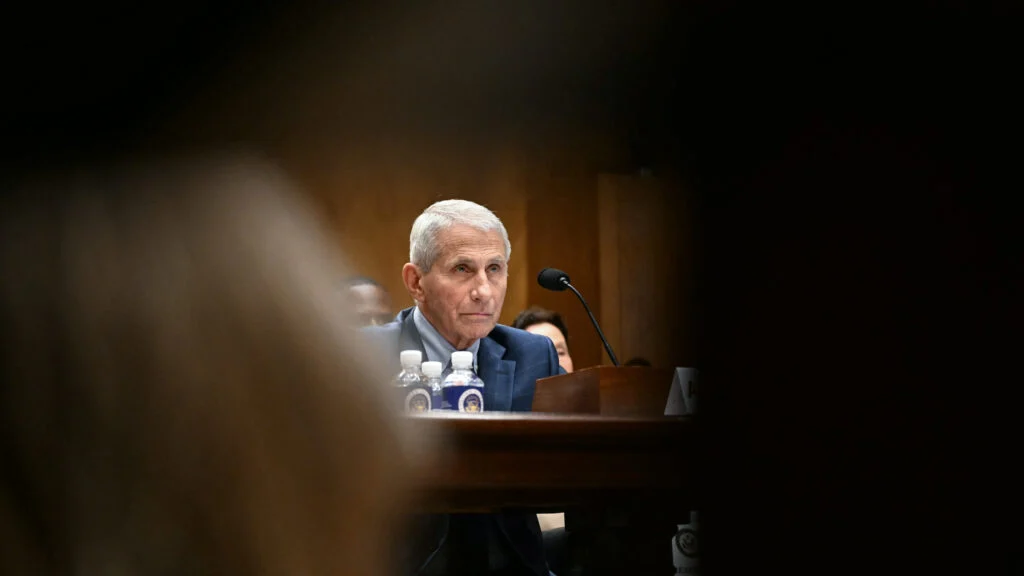
The recent Senate committee hearings regarding the origins of the Covid-19 pandemic have evolved into a master class in political theater, serving more as a distraction from pressing public health imperatives than a genuine search for scientific truth. This escalating partisan friction reached a fever pitch on Thursday, August 6, 2026, when the committee took the unprecedented step of holding Dr. Anthony Fauci in contempt of Congress. The charge followed Fauci’s decision to invoke his Fifth Amendment protection against self-incrimination, a move his legal counsel argued was necessary given the overtly hostile environment created by committee members. Notably, the committee’s chair has publicly declared on multiple occasions that Fauci “should go to prison,” effectively transforming a fact-finding mission into a performative criminal referral. As the nation watches this legal and political drama unfold, the actual lessons of the pandemic—and the necessary steps to prevent the next one—are being buried under a mountain of rhetoric.
To understand the current impasse, one must look back at the genesis of the crisis in Wuhan, China. From the earliest days of the outbreak in late 2019, the Chinese government engaged in a systematic effort to suppress information. In those critical first weeks and months, when the window for containment was still cracked open, Beijing chose obfuscation over transparency. The international community was left in the dark as the Chinese Communist Party (CCP) dragged its feet on alerting the World Health Organization (WHO) to the severity of the threat. This delay was not merely a bureaucratic lapse; it was a strategic choice that denied the rest of the world precious weeks to stockpile personal protective equipment, develop testing protocols, and restrict travel.
Once the virus breached China’s borders and began its devastating march through Europe and North America, the cover-up intensified. Whistleblowers within the Chinese medical community, such as Dr. Li Wenliang, were silenced and reprimanded for "spreading rumors" when they tried to warn colleagues about a SARS-like pneumonia. International investigations were met with fierce resistance. When WHO representatives were finally allowed into Wuhan, they were subjected to restrictive conditions, including being confined to their hotel rooms under the guise of quarantine protocols. China even promoted specious theories suggesting the virus had been imported from abroad via frozen food packaging, a claim widely dismissed by the global scientific community. Furthermore, the CCP denied international access to the very people who held the keys to the mystery: the scientists at the Wuhan Institute of Virology (WIV), their laboratory logs, and the raw data from local public health authorities. Nations that dared to demand an independent, transparent investigation, most notably Australia, were met with immediate and harsh economic retaliation, including crippling tariffs on exports.
In the face of this international wall of silence, the American political discourse has shifted its focus inward, seeking a domestic villain to shoulder the blame for a global catastrophe. Dr. Anthony Fauci, a career public servant who has advised presidents from both parties for decades and is widely regarded as one of the world’s leading experts on infectious diseases, has been cast in this role. The logic of this pivot is as flawed as it is transparent. While the origin of the Covid-19 virus remains a salient issue—knowing the source is vital for predicting and preventing future spillovers—Fauci is not the keeper of those secrets. The answers reside exclusively within the borders of China, a country that has a documented history of hiding the truth during respiratory outbreaks.
The 2002-2004 SARS epidemic provides a chilling blueprint for China’s current behavior. During that outbreak, which involved a virus closely related to SARS-CoV-2, approximately 66% of deaths occurred in mainland China or Hong Kong, but the virus eventually claimed lives in 29 different countries. The first cases emerged in Guangdong province in late 2002, yet the Chinese government failed to report the situation to the WHO until February 2003. State-controlled media was prohibited from reporting on the spreading illness, and data regarding hospitalizations and fatalities were strictly suppressed. While Beijing maintained its silence, international travelers unknowingly exported the virus to cities like Toronto and Singapore, leading to dozens of deaths and significant economic disruption.
In the aftermath of the original SARS crisis, China claimed to have modernized its public health infrastructure and pledged greater transparency. However, eighteen years later, when the Wuhan outbreak began, the government reverted to its traditional playbook. The suppression of information in 2020 was a mirror image of the 2002 response, characterized by the silencing of doctors and the erasure of early infection data. This created an information vacuum that forced global pandemic experts to rely on speculation and circumstantial evidence.
Historically, the emergence of novel coronaviruses has been linked to "zoonotic spillover"—the transmission of a virus from animals to humans. The first SARS outbreak was eventually traced back to live animal markets where civets, cat-like mammals, were sold for food. These civets had likely been infected by horseshoe bats inhabiting caves in southern China. Similarly, the Middle East Respiratory Syndrome (MERS), another deadly coronavirus discovered this century, was found to have jumped to humans from camels. Given this history, the initial assumption in early 2020 that Covid-19 had a similar origin was scientifically sound. The early cluster of cases linked to the Huanan Seafood Wholesale Market in Wuhan—a "wet market" where wild animals were sold despite previous government promises to ban the practice—seemed to provide a smoking gun.
However, the proximity of the Wuhan Institute of Virology, located just eight miles from the market, introduced a complicating factor. The WIV was known to be conducting extensive research on SARS-like viruses, many of which were collected from bat caves hundreds of miles away in Yunnan province. This proximity gave rise to the "lab leak" hypothesis, suggesting that an accidental infection of a lab worker or an improper disposal of waste could have triggered the pandemic. Additionally, records show that WIV researchers frequently traveled to these remote caves, raising the possibility that a researcher could have contracted the virus in the field and brought it back to the city.
The debate between the natural spillover and lab leak theories has become polarized, yet the fundamental obstacle to resolving the dispute remains the same: the lack of access to primary data. If a cover-up occurred, the culprits are the officials in Beijing who blocked the investigation into the WIV’s records and the early epidemiological curves of the outbreak. To hold Dr. Fauci responsible for these missing answers is a logical fallacy of the highest order. It is akin to blaming a detective in Washington, D.C., for failing to solve a crime in a closed city halfway across the world, while being denied access to the crime scene, the witnesses, and the evidence.
Furthermore, the Senate committee’s attempts to conflate the origins of the virus with domestic public health policies, such as mask mandates and social distancing, serve only to muddy the waters. Whether the virus emerged from a market or a lab does not change the biological reality of how it spreads between humans. The public health measures implemented in 2020 and 2021 were based on the best available evidence regarding respiratory transmission, regardless of the initial source. By mixing these distinct issues, political actors are attempting to delegitimize scientific expertise as a whole.
If the members of the U.S. Senate were truly committed to understanding the origins of Covid-19, they would acknowledge the sobering reality that the full truth may never be known without the cooperation of the Chinese government. Persecuting an American scientist for failing to provide information that is being actively withheld by a foreign adversary is not an act of oversight; it is a political sideshow.
The stakes of this distraction are incredibly high. While the committee focuses its energy on holding contempt votes and litigating the past, the threat of the next pandemic looms. Global health experts, including those at Oxford and other leading institutions, warn that the probability of another zoonotic emergence is high, particularly in regions where intensive animal husbandry and wildlife trade intersect with high-density human populations. China remains a primary "hotspot" for such events.
By prioritizing partisan retribution over constructive policy-making, the United States risks being caught unprepared once again. The "Washington Band" continues to play its familiar tune of discord, while the fundamental vulnerabilities in our global health surveillance and international cooperation remain unaddressed. True leadership would involve strengthening international treaties on pathogen sharing, investing in universal vaccine platforms, and finding ways to compel transparency from all nations. Instead, the focus remains on a domestic scapegoat, leaving the world vulnerable to the next inevitable biological threat. The persecution of public servants like Fauci may satisfy a political base, but it does nothing to protect the health of the American people or the stability of the global community.
