
 By Rifan Muazin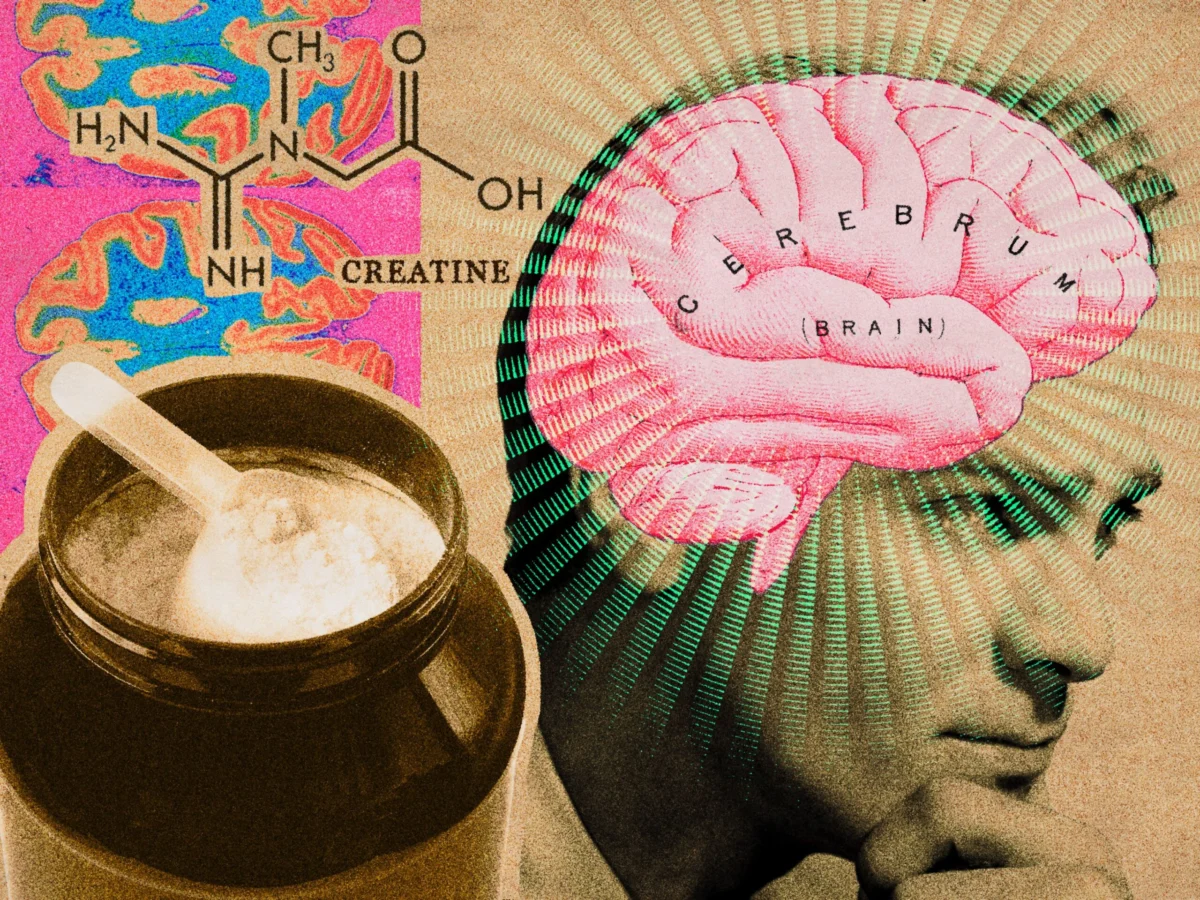
In the often-murky landscape of the nutritional supplement industry—a world frequently dismissed as the "Wild West" of health claims and "bro-science"—there exists a rare handful of compounds that have withstood the rigors of decades of clinical scrutiny. At the pinnacle of this list is creatine monohydrate. For years, the narrative surrounding creatine was simple: five grams a day, paired with consistent resistance training and a protein-rich diet, serves as the gold standard for building lean muscle mass and enhancing physical strength. However, the scientific community is currently undergoing a paradigm shift. While the "meathead" stigma of the 1990s has largely faded, a new chapter is being written where creatine is no longer just for the biceps, but for the most energy-demanding organ in the human body: the brain.
Despite being one of the most exhaustively researched ergogenic aids in history, creatine is being placed under the microscope once again. This time, researchers are not looking at muscle fiber hypertrophy but at the intricate neural pathways that govern memory, focus, and resilience against mental fatigue. As it turns out, the same mechanism that allows a powerlifter to squeeze out a final repetition is the same mechanism that might help a sleep-deprived executive maintain cognitive clarity during a high-stakes presentation.
The fundamental science of creatine revolves around the production of adenosine triphosphate, or ATP. ATP is the universal "energy currency" of the cell. During periods of high metabolic demand, the body breaks down ATP into adenosine diphosphate (ADP) to release energy. Creatine, stored in the body as phosphocreatine, steps in to "donate" a phosphate group to ADP, rapidly recycling it back into ATP. While we have long understood this process in skeletal muscle, experts like Ashley Koff, RD, the nutrition course director for UC Irvine’s Susan Samueli Integrative Health Institute, emphasize that this process is equally vital in the cranium. According to Koff, growing research indicates that creatine is stored in the brain in a manner similar to muscle, offering a wide range of potential mental and cognitive benefits that are only now beginning to be fully understood.
However, the brain is a far more guarded environment than the muscular system. This is due to the blood-brain barrier (BBB), a highly selective semipermeable border that prevents solutes in the circulating blood from non-selectively crossing into the extracellular fluid of the central nervous system. Because the brain is so protective of its internal chemistry, the standard "five grams a day" protocol used by athletes may not be sufficient to move the needle for cognitive health. Dr. Jason Sonners, a longevity and recovery expert at the University of Miami’s Department of Molecular Biology, notes that newer research suggests higher doses are required to force creatine across the blood-brain barrier. When these higher concentrations are achieved, the result is increased energy production within the brain’s neurons, potentially leading to a "supercharging" of mental faculties.
One of the most significant breakthroughs in this field came in early 2024. A landmark study published in the journal Nature by researchers at the University of Pennsylvania confirmed that oral supplementation could indeed increase brain creatine levels. However, the study also highlighted a crucial caveat: the brain is an incredibly efficient machine that regulates its energy stores tightly. Under normal, well-rested conditions, the brain may not show significant improvements from extra creatine because it is already functioning at its baseline capacity.
The real magic happens when the brain is "energy-stressed." Dr. Zishan Khan, a board-certified psychiatrist with Mindpath Health, explains that creatine’s benefits are most pronounced when the system is compromised—specifically during periods of sleep deprivation, chronic stress, or in individuals who have naturally low baseline levels of creatine, such as vegans or vegetarians. While creatine may have "mixed or null effects" on healthy, rested adults, its ability to act as a metabolic buffer during crisis is where its nootropic potential shines.
This has led to a surge of interest on social media regarding creatine’s ability to counteract the effects of sleep loss. It is not merely a viral trend; it is backed by clinical data. Dr. Luke Barr, a board-certified neurologist and director of neurology at Deaconess Health System, points to a 2024 trial published in Nature that found creatine to be remarkably effective at blunting the negative effects of fatigue and cognitive impairment. In one notable example, researchers found that high-dose creatine supplementation could help reverse the cognitive deficits associated with up to 21 hours of sleep deprivation.
The specific cognitive domains that see the most improvement are processing speed and working memory. A 2018 meta-analysis in Experimental Gerontology and a more recent 2024 review from Guizhou Normal University both found that creatine significantly improves short-term memory and reasoning when the brain is under cognitive stress. Essentially, if you are working a 16-hour shift or pulling an all-nighter to finish a project, creatine acts as a secondary battery, keeping the "processing units" of the brain running at optimal speeds when they would otherwise be lagging.
Beyond the immediate benefits of focus and memory, the clinical applications of creatine are expanding into the realm of mental health and neurology. A 2023 review in Sports Medicine uncovered promising evidence that creatine may mitigate symptoms of depression and anxiety. This is likely due to the brain’s energy metabolism being linked to mood regulation; a brain that can more easily produce energy is a brain that is more resilient to emotional stressors. Furthermore, there is burgeoning interest in using creatine as a neuroprotective agent following traumatic brain injuries (TBI), such as concussions. By providing an immediate source of energy to damaged neural tissues, creatine may help accelerate recovery and reduce the long-term cellular damage caused by the "energy crisis" that occurs immediately after a head impact.
The question then becomes: how much is enough? For those looking to transition from physical benefits to mental ones, the dosage requirements change significantly. While five grams is the "muscle dose," Dr. Leigh Erin Connealy, medical director at the Center for New Medicine, suggests that the "brain dose" likely ranges between 10 and 25 grams per day. Because of the difficulty in crossing the blood-brain barrier, dividing these servings into smaller doses throughout the day—perhaps 5 grams taken four times—can help maximize the transport of the compound into brain tissue.
However, experts urge caution regarding duration. The consensus among the medical professionals consulted is that these "mega-doses" should not necessarily be a permanent lifestyle fixture. Instead, they recommend a high-dose protocol for shorter-term periods of four to eight weeks, or using it acutely. For example, Dr. Khan admits to taking a 20-gram "rescue dose" on days following poor sleep to maintain his professional performance. This "pulsing" strategy allows users to reap the cognitive rewards during high-demand phases of life without placing unnecessary long-term stress on the body’s metabolic pathways.
Safety, of course, remains a primary concern for anyone considering quadrupling a standard supplement dose. Fortunately, creatine is widely regarded as one of the safest substances on the market. Side effects are generally mild and localized to the digestive tract, manifesting as bloating or minor cramping, which can often be mitigated by increasing water intake. The long-standing myth that creatine causes kidney damage has been largely debunked in healthy individuals; however, the warning remains for those with pre-existing renal conditions. Dr. Barr notes that while the supplement is exceptionally safe, anyone with kidney disease should avoid high-dose protocols unless under strict medical supervision.
As we look toward the future, the implications of creatine research extend far beyond the gym floor. We are entering an era where nutritional interventions are being used to fine-tune the human "operating system." Whether it is a student cramming for finals, a surgeon performing a lengthy operation, or an aging adult looking to preserve cognitive function against the backdrop of neurodegeneration, creatine offers a scientifically validated, low-risk tool for optimization. It is a rare bridge between the world of physical fitness and cognitive longevity—a testament to the fact that what is good for the body is, more often than not, essential for the mind. In the quest for a "limitless" pill, we may find that a simple, affordable white powder from the 1990s was the answer all along.
