
 By Rifan Muazin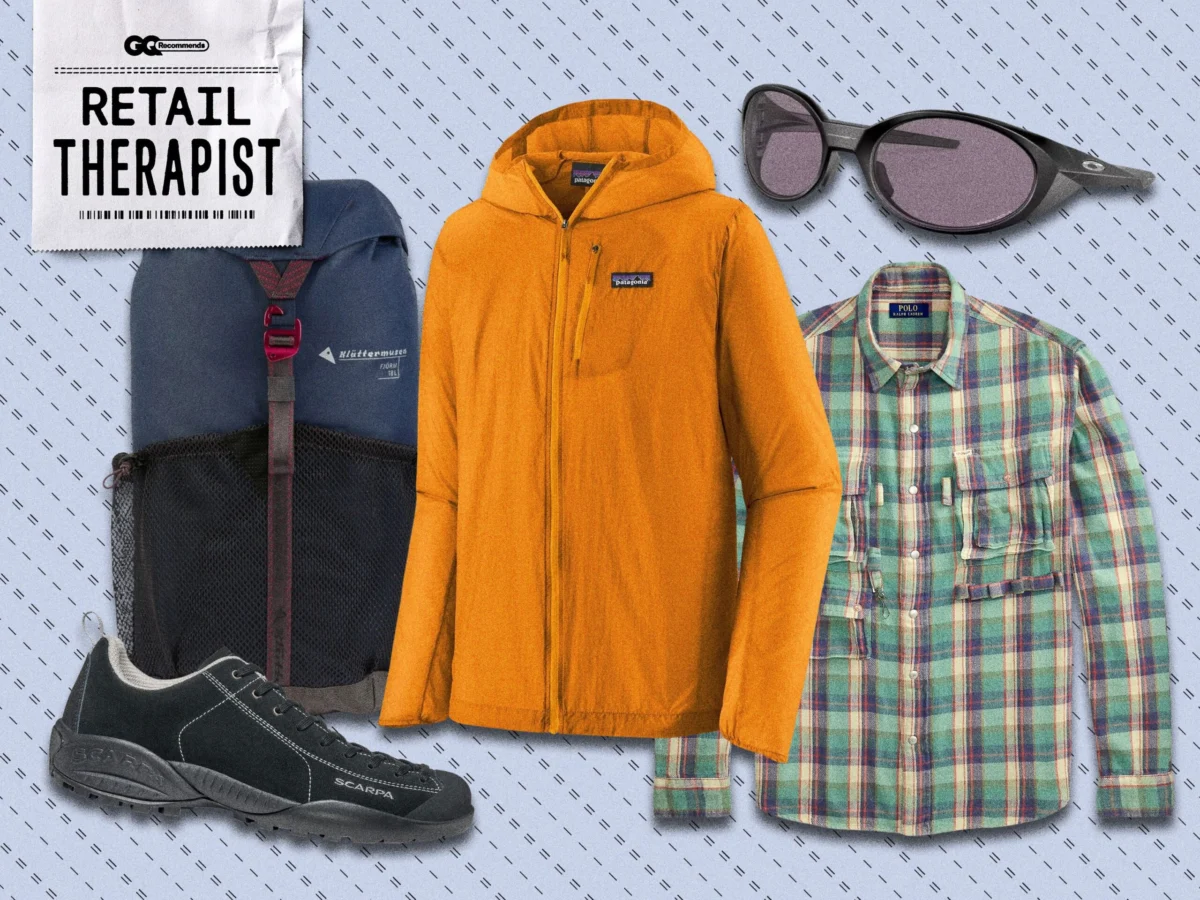
The stakes of this decision are higher than they might appear at first glance. Gerald Ortiz, GQ’s resident shopping expert, recalls a formative disaster on Mt. Tamalpais in Marin County, California. Attending a friend’s birthday hike, Ortiz opted for crepe-soled desert boots—a classic style choice for urban environments but a catastrophic one for the loose gravel and steep inclines of Northern California. An hour into the trek, a descent down a gravel-strewn staircase led to a "comedy of errors" that ended with a jagged rock embedded in his left knee. The resulting rescue operation, involving friends carrying him to a ranger station and a subsequent shuttle ride, left him with a permanent scar and a vital lesson: footwear is the one area where fashion must strictly follow function.
To understand why a desert boot fails where a hiking shoe succeeds, one must look at the mechanics of traction. Traditional crepe soles or smooth leather bottoms lack the "lugs"—the deep, multidirectional indentations—found on specialized outsoles like those produced by Vibram. These lugs are designed to bite into soft earth and provide grip on slick surfaces. Furthermore, hiking-specific footwear offers lateral stability to prevent the ankle from rolling on uneven ground, a common injury that accounts for a significant percentage of wilderness search-and-rescue calls.
For those just beginning their journey into the great outdoors, the marketplace can be divided into three distinct categories: the casual day hike, the aesthetic world of glamping, and the high-performance realm of technical peak-bagging.
The Casual Day Hike: Accessibility and the "Gorpcore" Influence
The most common scenario is the casual day hike—a two-to-four-mile loop that is relatively flat and well-maintained. In this setting, the barrier to entry is low, and you can likely leverage items already hanging in your closet. A vintage graphic tee, a standard zip-up hoodie, and cargo pants are perfectly acceptable. In recent years, the "Gorpcore" trend—a fashion movement that celebrates utilitarian outdoor wear as high fashion—has made it easier than ever to blend in. Brands like Uniqlo have democratized technical fabrics, offering pieces like the AIRism Cotton T-Shirt. While it looks like a standard jersey tee, the AIRism technology utilizes a blend of polyester and cupro to wick moisture away from the skin, preventing the heavy, damp feeling that traditional 100% cotton shirts acquire when you begin to sweat.
However, even on a casual trail, the "no-cotton" rule remains a golden standard among seasoned hikers. The adage "Cotton Kills" refers to the fabric’s tendency to absorb up to 27 times its weight in water and its refusal to insulate when wet, which can lead to hypothermia in sudden temperature drops. For a low-stakes hike, a cotton-blend tee is fine, but as the elevation or duration increases, synthetic or wool alternatives become mandatory.
Accessories play a vital role here as well. A simple Icebreaker Merino 200 Oasis Beanie provides warmth without bulk, utilizing the natural temperature-regulating properties of merino wool. Unlike synthetic fleece, merino remains breathable, preventing your head from overheating during exertion. Similarly, a basic cotton bandana from a brand like Raylarnia is perhaps the most versatile tool in a hiker’s kit; it can serve as a sweatband, a neck protector against the sun, or even a makeshift bandage in a pinch.
Five-Star Glamping: The Intersection of Heritage and Luxury
Glamping, or "glamorous camping," represents a different psychological space. It is often more of a social performance than a rugged survival exercise. If your weekend involves an SUV trip to a pre-booked site with a canvas tent and a real mattress, your clothing choices can lean into the "heritage" aesthetic. This is the time for high-quality flannel shirts, heavy denim (if you aren’t doing serious mileage), and leather hiking boots that look better with age.
In this context, half the fun is the "larping" of the outdoorsman lifestyle. You can justify the purchase of a high-end Gore-Tex shell or a retro-inspired alpine rucksack. These items are functionally over-engineered for a campfire setting, but they offer long-term value because they transition seamlessly back into an urban winter wardrobe. The key is to find pieces that offer a "quiet luxury" version of outdoor gear—brands that emphasize durability and classic silhouettes over neon colors and aggressive branding.
Reaching a New Peak: The Technical Necessity
For those who find that their first "scramble" leads to a sense of spiritual nirvana, the transition to technical gear is inevitable. When a hike turns into a multi-hour ascent involving "scree" (loose rock) and potential weather shifts, your clothing becomes your primary life-support system.
The advanced hiker looks for "three-layer" systems. The base layer, such as the Proof 72-Hour Merino T-Shirt, is designed to be worn for days without retaining odors, thanks to the natural antimicrobial properties of the wool. This is followed by a mid-layer for insulation and a shell for protection against wind and rain. The North Face Carto Mono Triclimate Hooded Jacket is a prime example of this modularity. It features a waterproof outer shell and a removable insulated inner jacket, allowing the wearer to adapt to changing microclimates as they ascend.
In the realm of technical trousers, the Arc’teryx Cronin Cotton Pant (or their more synthetic counterparts like the Gamma series) offers articulated knees and gusseted crotches. This construction allows for a full range of motion—essential when you are stepping up onto high ledges or navigating fallen logs—without the fabric binding or tearing.
Finally, we return to the most critical component: the boots. For serious treks, a mid-height boot like the Salomon X Ultra 5 Mid Gore-Tex is the industry standard. Salomon, a brand that has seen a massive surge in mainstream popularity, remains a technical powerhouse. The X Ultra 5 utilizes a Gore-Tex membrane to keep feet dry in muddy conditions while maintaining breathability. The "Mid" height provides the necessary ankle support that Gerald Ortiz lacked during his Mt. Tamalpais mishap, and the "Contagrip" outsole ensures that loose stones and slippery stairs do not result in a trip to the ranger station.
The Broader Context: Why Gear Matters
The surge in hiking’s popularity is backed by significant data. According to the Outdoor Foundation’s 2023 Outdoor Participation Trends Report, hiking remains one of the fastest-growing outdoor activities, with over 59 million participants in the U.S. alone. As more people head into the wilderness, the frequency of avoidable injuries has also risen. Medical experts note that many common hiking injuries—such as plantar fasciitis, iliotibial (IT) band syndrome, and simple blisters—can be mitigated or entirely prevented with proper gear and gradual conditioning.
Investing in quality gear is not merely about aesthetics; it is an investment in the quality of the experience. When you aren’t worried about a blister forming on your heel or your shirt sticking to your back, you are free to actually observe the environment around you. You can notice the shift in flora as you gain elevation, the sound of the wind through the Douglas firs, and the camaraderie of the group.
Ultimately, "Retail Therapy" in the context of hiking is about preparation. Whether you are opting for the budget-friendly versatility of Uniqlo or the professional-grade protection of Arc’teryx, the goal is the same: to ensure that the only thing you bring home from the trail is a good story and perhaps a few photos—not a scar that serves as a permanent reminder of a poor footwear choice. Hiking is a way to support your friends and challenge yourself, and having the right kit is the first step toward making sure those challenges remain enjoyable rather than hazardous.
