
 By admin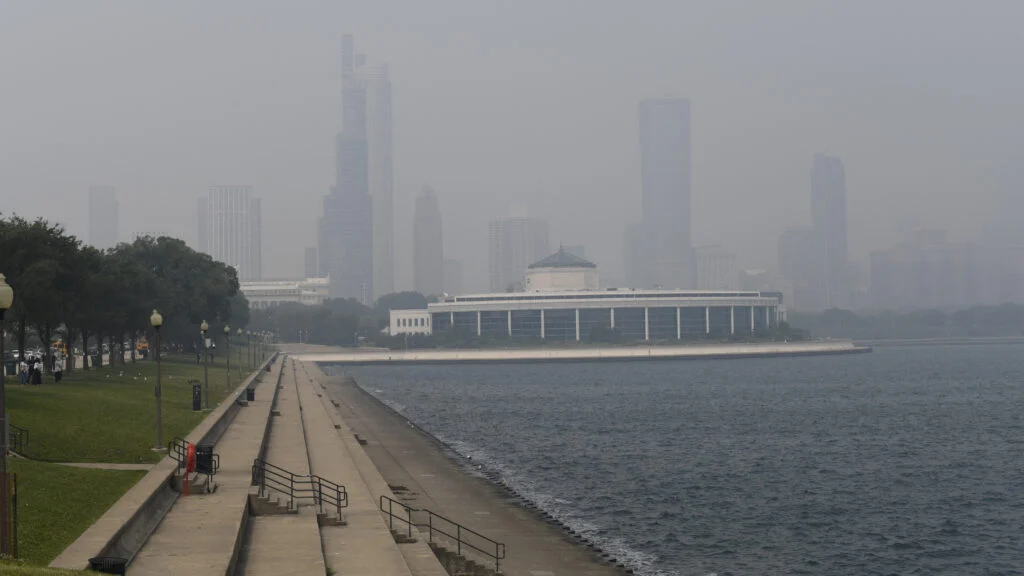
In the mid-summer of 2026, the sky over Chicago underwent a terrifying transformation, shifting from its characteristic lakefront blue to a thick, suffocating grayish-orange. For residents of the Windy City, the sight has become a grimly familiar hallmark of the season. This July marked the third consecutive summer that the metropolitan area was entombed in a blanket of toxic smoke drifting southward from the intensified Canadian wildfires. On one particularly harrowing afternoon, the air quality index (AQI) spiked to a staggering 753—a level categorized as “extremely hazardous” that far exceeds the thresholds for healthy respiration. For those living with chronic conditions, this was not merely an environmental aesthetic or a minor inconvenience; it was a biological assault. Even within the supposed safety of sealed homes, with air purifiers humming at maximum capacity, the microscopic invaders of the Anthropocene made their presence known through throbbing headaches, raw throats, burning eyes, and a sharp, systemic escalation of arthritic pain.
Lorraine Boissoneault, the author of the acclaimed book Body Weather: Notes on Chronic Illness in the Anthropocene, is a firsthand witness to this intersection of environmental degradation and human biology. Living with a complex constellation of six chronic illnesses—including endometriosis, psoriatic arthritis, Celiac disease, Graves’ disease, Hashimoto’s disease, and interstitial cystitis—Boissoneault represents a growing segment of the population whose daily survival is tethered to the fluctuations of a destabilizing climate. The relationship between the human body and the atmosphere has always been intimate, but as the planet warms, that relationship is turning increasingly antagonistic. While many patients have long understood that cold, damp weather can stiffen joints or that high heat can trigger POTS (postural orthostatic tachycardia syndrome), the sheer scale of modern climate events is introducing new, more aggressive variables into the equation of human health.
The scientific community is now confirming what many chronic illness patients have suspected for years: climate change is not a future threat to public health; it is a current, active pathogen. Research into the effects of wildfire smoke, which is rich in fine particulate matter (PM 2.5), has revealed a direct link to the exacerbation of rheumatic and autoimmune diseases. These microscopic particles are small enough to enter the bloodstream through the lungs, triggering systemic inflammation. Studies have shown that elevated levels of particulate matter can significantly worsen symptoms for patients with lupus and are even responsible for a rise in new diagnoses of rheumatoid arthritis (RA). Furthermore, there is a documented connection between smoke inhalation and RA-associated interstitial lung disease, a life-threatening complication where the lungs become scarred and stiff. The reach of this pollution extends beyond the joints; long-term exposure to high levels of particulate matter is now being studied as a contributing factor in the development of multiple sclerosis (MS), Parkinson’s disease, diabetes, and chronic asthma.
While the smoke-filled skies dominate the headlines, the hydrological impacts of climate change are equally insidious. The increasing frequency and severity of catastrophic flooding events create a secondary health crisis in the form of mold and fungal proliferation. For those already battling conditions like myalgic encephalomyelitis (ME) or Long Covid, exposure to mold spores can be devastating, triggering severe relapses, nausea, and intense allergic reactions. The danger is compounded during the process of flood remediation. When homes are gutted and repaired, residents and workers are frequently exposed to legacy toxins such as lead paint and asbestos. Lead exposure in adults is a known driver of kidney damage and chronic cardiovascular issues, including hypertension. Asbestos, disturbed by the structural damage of floods, poses a long-term risk of mesothelioma and other debilitating lung diseases. In this way, the "natural" disaster of a flood leaves behind a "man-made" legacy of chronic illness that can persist for decades.
The thermal reality of 2026 has also proven to be record-breaking and lethal. In June 2026, a massive heatwave swept across Europe, resulting in an estimated 10,000 deaths. Extreme heat acts as a biological stress test, one that many bodies are increasingly unable to pass. Individuals with heart disease, diabetes, and thyroid conditions are at a significantly higher risk of heat-related illness because their bodies’ thermoregulation systems are often compromised. Moreover, the medications used to manage these conditions—such as beta-blockers, diuretics, and certain antidepressants—can interfere with the body’s ability to sweat or maintain blood pressure, making a hot day a potential death sentence for a patient on a standard pharmaceutical regimen.
New frontiers in medical research suggest that the impact of heat goes even deeper than simple heatstroke. Emerging data indicates that high temperatures can actually impair the human immune system by breaking down the epithelial barriers in the lungs, skin, and gut. These barriers are composed of specialized cells that serve as the body’s first line of defense against viruses, bacteria, and environmental toxins. When these "tight junctions" are disrupted by thermal stress, the body becomes more susceptible to a range of issues, from new-onset allergies to the development of full-blown autoimmune disorders. This "leaky body" hypothesis provides a terrifying look at how a warming world might be fundamentally re-engineering human vulnerability.
The shifting climate is also redrawing the map for infectious diseases. As winters become shorter and summers more humid, the geographic range of disease-carrying vectors like ticks and mosquitoes is expanding rapidly. Diseases once confined to tropical or specific regional pockets—such as Dengue fever, Chikungunya, and West Nile virus—are migrating into previously temperate zones. The Lone Star tick, which can trigger alpha-gal syndrome (a life-altering allergy to red meat), is moving steadily northward. Lyme disease, already a scourge in the American Northeast and Midwest, is seeing a spike in cases as tick activity seasons lengthen. The challenge for the medical community is not just the presence of these diseases, but the difficulty of early detection. Without prompt diagnosis, these acute infections can morph into chronic, long-term syndromes that sap a patient’s quality of life for years.
Food safety is another casualty of the changing weather patterns. The summer of 2026 saw a massive outbreak of cyclosporiasis, a parasitic infection that causes severe gastrointestinal distress. The Cyclospora parasite matures faster in the warmer temperatures that have characterized this record-breaking year. Furthermore, the agricultural methods used to combat drought, such as intensive sprinkler irrigation, create the perfect moist microclimates for pathogens like Salmonella to thrive on produce. Recent studies have demonstrated that higher humidity levels allow these bacteria to replicate more efficiently on crops like lettuce and spinach. As humidity and temperature patterns continue to fluctuate wildly, the prevalence of foodborne pathogenic contamination is expected to rise, turning the grocery store into another site of climate-related risk.
The personal toll of these shifts is exemplified by Boissoneault’s own medical history. In 2019, she experienced a series of food poisoning bouts that eventually led to small intestinal bacterial overgrowth (SIBO). This condition, which causes chronic abdominal pain and malnutrition, resulted in a significant and unintentional loss of weight. Crucially, this period of gut dysbiosis coincided with the onset of her psoriatic arthritis. While medical science is still untangling the exact "gut-joint axis," there is substantial evidence suggesting that severe gastrointestinal infections can serve as the "trigger event" for autoimmune diseases like Crohn’s, ulcerative colitis, and Guillain-Barré syndrome. In a world where foodborne illness is becoming more common due to climate change, we can expect a corresponding surge in these secondary chronic conditions.
The reality of the Anthropocene is that even if the global economy achieved net-zero emissions overnight, the carbon already baked into the atmosphere ensures that these environmental stressors are here to stay. The biosphere has been irrevocably altered, and the human body is being forced to adapt in real-time. This necessitates a radical shift in how we approach public health and infrastructure.
The current trend of defunding or dismantling public health agencies is a move in the wrong direction. Instead of scaling back, there is an urgent need for the government to bolster the CDC and FDA, focusing on advanced pathogen tracking and the prediction of emerging disease hotspots. Similarly, meteorological organizations like the National Oceanic and Atmospheric Administration (NOAA) require increased support. Their ability to track shifting weather patterns and provide early warnings for major storms or smoke events is now a vital component of preventative medicine.
Beyond institutional funding, the solution requires a fundamental commitment to social resilience. Providing universal access to healthcare, ensuring stable and filtered housing, and updating urban infrastructure to handle extreme heat and flooding are not just political goals—they are essential climate adaptation strategies. A healthier, more resilient population is better equipped to withstand the biological shocks of a changing planet. As Boissoneault’s work suggests, the climate has already changed; our survival now depends on our willingness to change our society, our healthcare, and our understanding of the body’s place in a warming world. We are no longer just observing the weather; we are living it, and our health is the ultimate barometer of the planet’s distress.
