
 By Rifan Muazin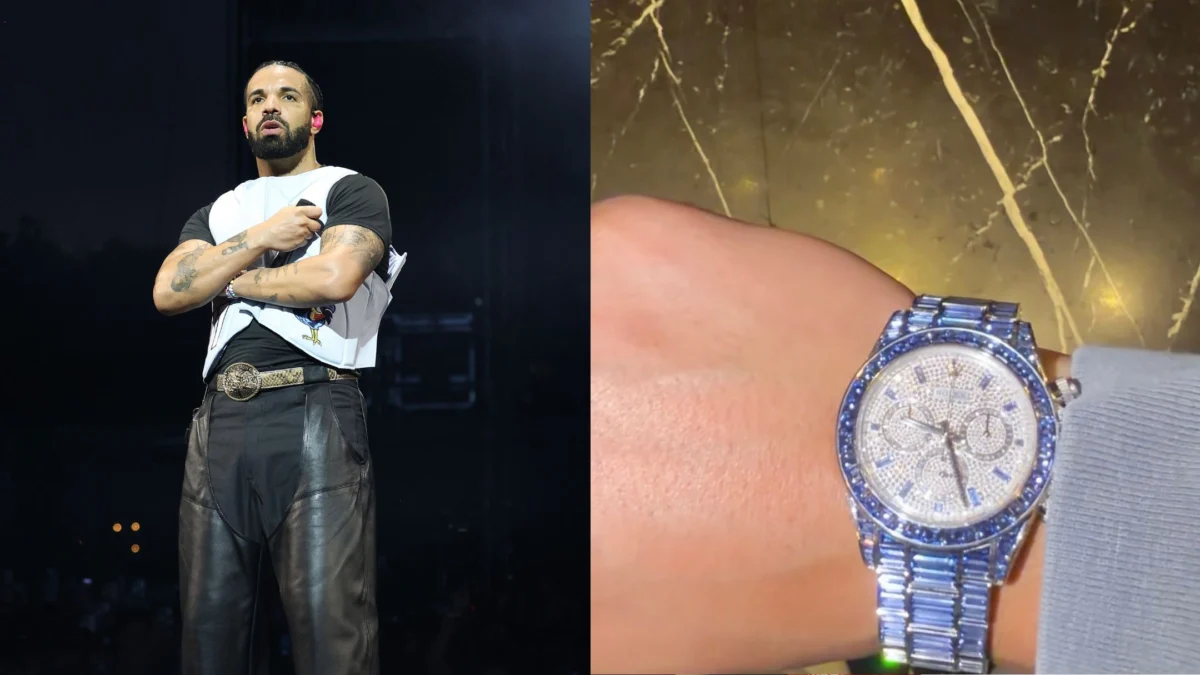
The world of high-end horology is often defined by exclusivity, but even within the rarefied air of "off-catalog" luxury, there exists a hierarchy that few ever manage to climb. On a Friday night that sent shockwaves through the global watch community, Aubrey "Drake" Graham unveiled what is being hailed as the most significant modern Rolex in existence. While Rolex has increasingly leaned into the production of "off-catalog" pieces—ultra-exclusive, high-jewelry variations of their professional models that are never listed on the official website and are reserved for the brand’s most elite clientele—the concept of a "one-of-one" bespoke commission is a phenomenon that the Geneva-based watchmaker has historically avoided. For decades, the "Crown" has maintained a strict policy of uniformity and brand control, making the emergence of a unique, factory-made piece for a single individual a historic pivot in the brand’s 119-year history.
The watch in question, which Drake has dubbed the "Ice Gradient Daytona," represents the pinnacle of Rolex’s gem-setting capabilities. At first glance, the piece shares the DNA of the high-jewelry Daytonas that have graced the wrists of legends like Roger Federer, yet it quickly distinguishes itself through unprecedented technical complexity. The case and dial are a masterclass in "pavé" setting, where the surface of the precious metal is literally paved with diamonds, leaving almost no visible metal between the stones. The hour markers are replaced with vibrant blue sapphires, a theme that extends to the bezel, which features a seamless circle of baguette-cut sapphires. Even the lugs—the four protruding arms of the case that secure the bracelet—are encrusted with diamonds, ensuring that every millimeter of the watch reflects light with blinding intensity.
However, the true innovation of the Ice Gradient Daytona lies not in its case, but in its bracelet. In a video shared with his millions of followers, Drake demonstrated a visual effect never before seen on a factory Rolex. Starting at the Oysterlock safety clasp, the bracelet begins with a series of brilliant white diamonds. As the wrist turns, the stones undergo a meticulous, slow-motion transition in color, shifting from clear diamonds into a gradient of increasingly deep blue sapphires. This "ombré" effect on a metal bracelet requires a level of gemstone sorting and color matching that borders on the impossible. Each stone must be perfectly calibrated in size, cut, and hue to ensure the transition looks organic rather than stepped.
This specific aesthetic choice is not merely a custom whim; it is backed by serious intellectual property. Horological historians and eagle-eyed watch spotters, including the renowned Nick Gould, discovered that Rolex filed patents for this specific gradient setting style in Switzerland in 2023, followed by a United States patent filing just last year. The existence of these patents suggests that while Drake may own the first and perhaps only version of this watch, Rolex has been quietly developing the technology to execute these complex gemstone transitions for years. By choosing Drake as the vessel for this debut, Rolex is signaling a new era where they are willing to merge the worlds of "High Jewelry" and "Professional" watches in ways that challenge the traditional boundaries of tool-watch design.
Drake’s caption on the reveal was as protective as it was celebratory. “Please do not get your local jeweler to recreate this,” he warned his followers. “This is a stand alone and a part of history.” This comment touches on a sensitive nerve within the watch industry: the "aftermarket" vs. "factory" debate. For years, celebrities have taken standard Rolex models to independent jewelers to be encrusted with diamonds—a practice known as "iced out" watches. These modifications typically void the Rolex warranty and are often looked down upon by purists because the quality of the stones and the precision of the setting rarely match Rolex’s internal standards. By emphasizing that this is a "one-of-one" factory piece, Drake is distinguishing himself from those who buy luxury and then modify it; he is showcasing a piece that was conceived, engineered, and executed by the masters in Geneva specifically for him.
The motivation behind the creation of this watch is deeply personal and tied to Drake’s musical legacy. According to the rapper, the watch was "crafted to celebrate the record-breaking milestones of 2026." This timeline refers to a monumental period in his career involving a trilogy of albums released in close succession. The "Ice Gradient" theme is a direct homage to Iceman, the standout favorite among the three releases. To further cement its status as a commemorative trophy, the caseback is engraved with the phrase "Freeze the World." This inscription transforms the watch from a mere accessory into a historical marker, a physical manifestation of a specific peak in his cultural dominance.
The financial implications of such a piece are staggering. Mike Nouveau, a prominent watch dealer and a leading voice on "WatchTok," analyzed the piece and estimated that it likely represents the most expensive Rolex ever sold at the retail level. While the legendary "Paul Newman" Daytona famously sold at auction for $17.75 million in 2017, that was a vintage piece whose value was driven by provenance and rarity on the secondary market. Drake’s Ice Gradient Daytona is a modern retail acquisition. Given the sheer volume of high-quality diamonds and sapphires, the "one-of-one" status, and the specialized labor required to execute a patented setting for the first time, the price tag is estimated to be in the multi-million dollar range, far exceeding the $500,000 to $700,000 typically associated with top-tier off-catalog Daytonas like the "Rainbow" or the "Eye of the Tiger."
To understand the weight of this watch, one must look at Drake’s existing collection, which is already one of the most formidable in the world. He has been seen wearing a $1 million Patek Philippe Nautilus customized by the late Virgil Abloh and covered in emeralds, as well as a rare Rolex Day-Date with an Arabic dial and a unique Jacob & Co. "Astronomia Casino." Yet, Drake himself stated that the Ice Gradient Daytona is "the most important thing I’ve ever had the pleasure of owning." It is telling that he used the word "thing" rather than "watch." This suggests that in his eyes, the piece transcends horology; it is a piece of contemporary art, a symbol of his relationship with one of the world’s most guarded brands, and a testament to his own "record-breaking" status.
From a brand strategy perspective, Rolex’s decision to grant Drake a unique commission marks a potential shift in how the company manages its highest-value relationships. Traditionally, Rolex has maintained an image of egalitarian luxury—if you have the money and the relationship with an Authorized Dealer, you might eventually get the same watch as a movie star. However, as the luxury market becomes increasingly bifurcated, with the "ultra-high-net-worth" segment seeking products that are truly unattainable to the general public, Rolex appears to be adopting a strategy similar to Ferrari’s "Special Projects" division. By creating one-off masterpieces for "Friends of the Brand," Rolex can showcase its technical prowess and maintain its cultural relevancy in a world where "standard" luxury is no longer enough for the global elite.
The "Ice Gradient" Daytona also serves as a showcase for the Rolex gem-setting department, which is often overshadowed by the brand’s mechanical innovations. Every stone on Drake’s watch was hand-selected and hand-set by master jewelers who work within the Rolex manufacture. The transition from white diamonds to blue sapphires is not just an aesthetic choice; it is a display of "chromatic expertise." Finding sapphires that transition in perfect gradients of saturation requires an enormous inventory of stones and an expert eye for color theory. The result is a watch that looks like it is physically freezing, a literal interpretation of the "Iceman" persona Drake has cultivated.
As the news of this watch continues to circulate, it sets a new benchmark for what is possible in the world of celebrity watch collecting. It is no longer enough to own a rare vintage piece or a hard-to-get modern reference. The new "final boss" of watch collecting is the factory-sanctioned one-of-one. Drake has not only acquired a piece of history; he has forced the most conservative watch brand in the world to break its own rules. The Ice Gradient Daytona is a "stand-alone" in every sense of the word—a shimmering, sapphire-encrusted boundary between the Rolex of the past and a new, more daring future for the Crown. Whether this marks the beginning of more bespoke commissions for the world’s elite or remains a singular exception for the "Iceman" himself, one thing is certain: the horological landscape has been irrevocably altered. In an industry that usually moves at the slow, rhythmic pace of a mechanical movement, Drake and Rolex have just accelerated the heartbeat of the watch world to a record-breaking tempo.
