
 By admin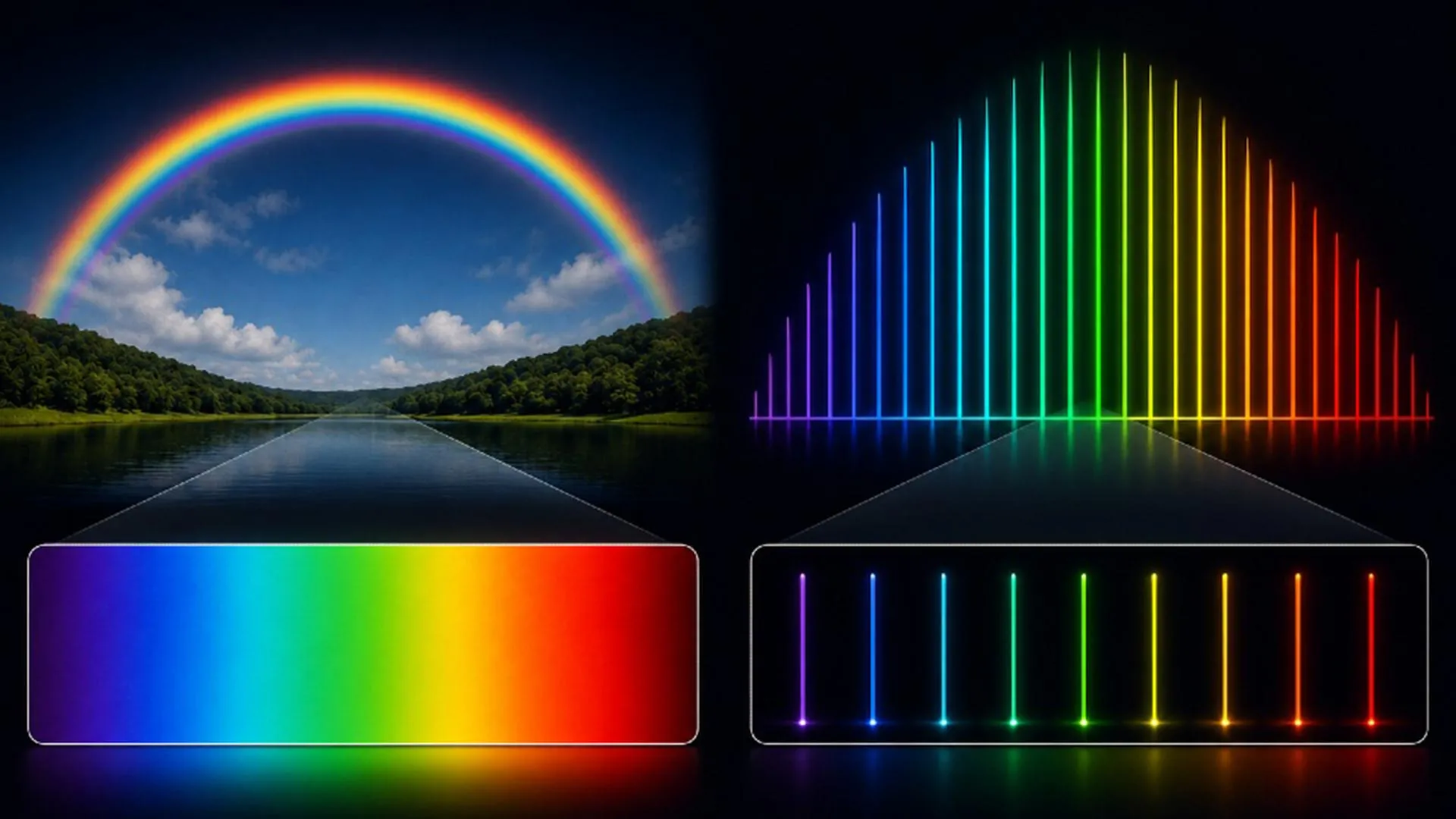
The global demand for data is experiencing an unprecedented surge, driven by the proliferation of smart devices, immersive virtual and augmented reality experiences, artificial intelligence, and the burgeoning Internet of Things (IoT). Current wireless communication infrastructures, predominantly relying on microwave frequencies, are rapidly approaching their capacity limits. This impending "spectrum crunch" necessitates the exploration of new frequency bands to accommodate the ever-growing data traffic. Millimeter waves, operating in the 30 to 300 gigahertz (GHz) range, offer a tantalizing solution due to their significantly wider available bandwidth compared to conventional radio frequencies. This wider bandwidth translates directly into the potential for vastly higher data transmission rates, making them a cornerstone for future communication standards like 6G.
However, harnessing the full potential of millimeter waves has been hampered by considerable technical challenges. A major obstacle lies in producing these signals with the requisite precision, stability, and control for advanced applications. Traditional electronic methods for generating millimeter waves often suffer from limitations in terms of spectral purity, frequency stability, and the ability to simultaneously generate multiple distinct channels, which is crucial for maximizing data throughput.
"The world is becoming increasingly data hungry. We want to send and receive more information, faster and in higher resolution, and millimeter waves could help provide the capacity to do that," explained Dr. Luke Peters, a leading researcher at Loughborough University’s Emergent Photonics Research Centre. He further elaborated on the transformative potential: "They could ultimately contribute to faster, higher capacity 6G networks, but the potential goes far beyond communications. These frequencies could also be used in radar systems as well as spectroscopy and astronomical instruments, helping scientists study materials and make extremely precise measurements of the universe."
The core of this innovative approach lies in a device known as a microcomb. A microcomb, in essence, is a miniature optical frequency comb generator. Unlike a physical comb, which has teeth that are regularly spaced in physical distance, an optical frequency comb generates an extremely precise set of discrete light frequencies that are uniformly spaced in the optical domain. Imagine a rainbow, but instead of a continuous band of colors, you have distinct, perfectly separated lines of color, each representing a specific frequency of light. While the light produced by these microcombs is often invisible to the human eye, the analogy helps convey the highly organized nature of the generated spectrum. Once generated, a specialized antenna or photodetector can then convert these optical frequencies into the desired millimeter waves.
Earlier research had successfully demonstrated that microcombs could produce a single precise millimeter wave frequency. While valuable, the real game-changer for high-capacity communications and other advanced applications would be the ability to generate many such frequencies simultaneously. Each distinct, stable frequency could potentially serve as a separate, independent channel for transmitting information concurrently, dramatically increasing the overall data capacity of a network. Achieving this, however, demands a microcomb with exceptional stability, spectral purity, and signal quality – a formidable engineering and physics challenge.
The new research, detailed in a groundbreaking paper published in Nature Communications, reports a system capable of achieving precisely this feat. The Loughborough-led team has developed an innovative approach that yields a stable, high-quality microcomb, which can then be converted into several precisely spaced millimeter-wave frequencies simultaneously. This represents a significant departure from conventional microcomb generation methods.
Typically, microcombs are created by shining laser light into a microresonator – a tiny, ring-shaped or disc-shaped structure built onto a microchip. This microresonator is designed to trap light and allow it to circulate many times, enhancing non-linear optical effects that lead to the generation of the frequency comb. While effective, these chip-based systems can be sensitive to environmental fluctuations and often require careful, often complex, external control to maintain stability.
The Loughborough system introduces a critical innovation: it connects the chip-based microresonator to a much larger external loop of optical fiber. This hybrid configuration creates a unique feedback mechanism. Laser light continuously travels through both the chip-based microresonator and the extended optical fiber loop. This continuous recirculation and interaction between the two components effectively "self-organizes" the system, helping the desired optical states – the precisely spaced frequencies of the microcomb – to form efficiently, initiate spontaneously, and remain remarkably stable, even when the system is subjected to external disturbances.
Dr. Peters elucidated the elegance of this design: "We’ve essentially created an incredibly precise and stable ‘rainbow on a chip’, where the loop keeps feeding the light back through the chip, allowing these states to build up efficiently, start on their own and remain stable even when the system is disturbed." He further emphasized its robustness, noting, "It’s remarkably robust too. We’ve even had people jumping up and down next to the system and the microcomb remains stable." This inherent stability and robustness are crucial for real-world deployment, as it reduces the need for complex stabilization systems, thereby lowering cost and complexity.
Beyond merely generating a stable "rainbow," the researchers demonstrated an impressive level of control over the microcomb’s output. They showed that they could manipulate the strength of individual frequencies within the comb, effectively making specific "colors" of the rainbow stronger or weaker. This granular control is immensely valuable, as different applications will require different combinations and power levels of frequencies. Importantly, the team verified that the exceptional precision and stability of the optical microcomb were fully preserved even after the light was converted into millimeter-wave signals. This fidelity is paramount for applications where accuracy and consistency are non-negotiable.
"Being able to make individual frequencies stronger or weaker gives us much more control over the signals we produce, because different applications will need different combinations of frequencies," Dr. Peters stated. "Just as importantly, we’ve shown that the precision of the microcomb carries through to the millimeter waves. That gives us a whole set of highly controlled signals, which is exactly what you need for applications where accuracy and stability matter."
The implications of this breakthrough extend far beyond communication. The same level of precision and stability is invaluable for a host of other advanced technologies. In radar systems, for instance, highly precise millimeter waves can enable much finer resolution imaging, better object detection, and enhanced capabilities for autonomous vehicles and advanced security systems. The ability to generate multiple frequencies could allow for sophisticated multi-band radar, improving target discrimination and resilience against interference.
In spectroscopy, which is the study of the interaction between matter and electromagnetic radiation, precise millimeter waves can be used to identify and characterize materials with unprecedented accuracy. This has applications ranging from chemical analysis and quality control in manufacturing to medical diagnostics and environmental monitoring, where specific molecular signatures can be detected.
Astronomical instruments could also benefit significantly. Highly stable and precise millimeter waves are crucial for radio astronomy, enabling scientists to study the composition of interstellar gas and dust, detect specific molecules in distant galaxies, and make extremely precise measurements of the universe, offering new insights into cosmic origins and evolution.
Perhaps one of the most profound applications lies in quantum technologies, particularly in the realm of precision timing. Quantum technologies, including quantum computing, quantum communication, and quantum sensing, fundamentally rely on extreme accuracy and stability. Atomic clocks, the most precise timekeeping devices known, leverage quantum transitions to achieve their extraordinary accuracy. The highly stable and precisely spaced frequencies generated by this microcomb system could act as optical clock signals or reference points, potentially bringing the extraordinary precision of atomic clocks into more compact and portable systems.
"Precision timing sits at the core of emerging quantum technologies, where extreme accuracy is a requirement," Dr. Peters highlighted. This connection to quantum technology is a major area of ongoing research. The team is collaborating with institutions like the National Physical Laboratory (NPL) and the UK Hub for Quantum Enabled Position, Navigation and Timing (QEPNT) to rigorously assess the ultimate accuracy of their microcomb system.
Dr. Antonio Cutrona, who led the microcomb stability measurements, expressed enthusiasm for this direction: "We’re really excited to see how far we can take the precision and stability of these microcombs, particularly for technologies that rely on extremely accurate timing. We hope this study and our system open up new ways of bringing the extraordinary precision of atomic clocks into more compact technologies for timing, navigation and position, and it is particularly exciting to explore these possibilities through our wider collaborations with the National Physical Laboratory and the UK Hub for Quantum Enabled Position, Navigation and Timing."
While the central microchip itself is remarkably small – about the size of a grain of rice – the entire experimental setup currently occupies a tabletop in a laboratory. The next critical phase of the research involves investigating how to shrink this system from its present laboratory footprint into a practical, real-world technology. Researchers are optimistic that future versions could become significantly smaller, more energy-efficient, and potentially compact enough to fit inside a shoebox. This miniaturization is crucial for widespread adoption and integration into various devices and platforms.
One particularly promising application for such a compact and energy-efficient system is aboard satellites. In space, every gram of weight, every cubic centimeter of volume, and every watt of power consumed is critically important. A shoebox-sized device capable of generating multiple, highly stable millimeter-wave channels could revolutionize satellite communications, providing global high-speed internet in remote areas, enhancing Earth observation capabilities, and enabling more robust inter-satellite links. The inherent robustness of the Loughborough system, demonstrated by its resilience to physical disturbances, also makes it an attractive candidate for the harsh operating environment of space.
The journey from a scientific breakthrough to widespread commercial application is often long and arduous, involving continued research, engineering refinement, and industrial scaling. Challenges remain in further miniaturizing the external fiber loop, reducing power consumption to meet commercial demands, and developing cost-effective manufacturing processes for mass production. However, by tackling the fundamental issue of stability and multi-frequency generation, the Loughborough team has cleared a major hurdle.
This study is a testament to the power of international collaboration, bringing together diverse expertise from Loughborough University’s Emergent Photonics Research Centre, the University of Sussex, City University of Hong Kong, QXP Technologies, INRS-EMT, and Swinburne University of Technology and ARC-COMBS. This multidisciplinary effort underscores the complex nature of developing cutting-edge technologies that promise to redefine our digital future and expand the frontiers of scientific discovery. The "rainbow on a chip" stands as a beacon of innovation, illuminating a path towards a faster, more connected, and quantum-enabled world.
