
 By admin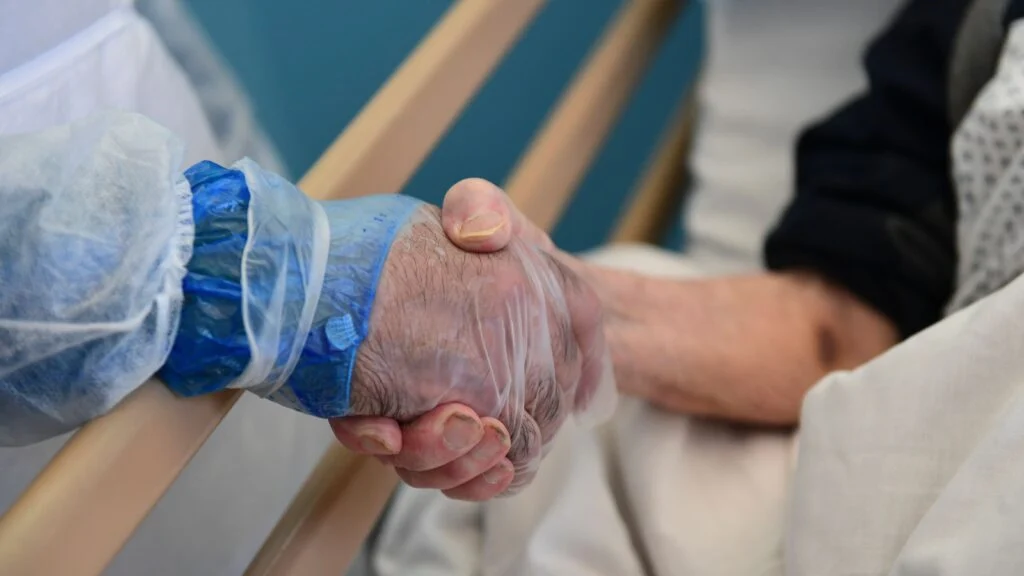
During a recent shift in the emergency department, Zain Khawaja, M.D., an emergency medicine resident at Northwestern University, encountered a woman whose life was about to be upended by a suspected oncologic emergency. She had entered the hospital’s doors expecting a routine evaluation for persistent symptoms, but within minutes, the clinical atmosphere shifted. She found herself at the precipice of a diagnostic journey that could fundamentally alter her future, facing conversations about malignancy and life-altering interventions. When Dr. Khawaja first entered the treatment bay, the tension was palpable. The patient was visibly trembling, and her family members, huddled around the high-railed hospital bed, wore expressions of profound anxiety.
The initial interaction was not defined by a stethoscope or a clipboard, but by a simple, ancient social ritual. Dr. Khawaja introduced himself and shook the patient’s hand, followed by the hands of every family member in the room. This brief moment of tactile acknowledgement served as a momentary anchor in the rising tide of medical chaos. Soon after, the clinical machinery of the modern emergency department (ED) took over. Like many patients in high-acuity settings, she was quickly surrounded by a blur of unfamiliar faces—nurses, technicians, residents, and attending physicians—moving with the practiced urgency that the setting demands. Blood was drawn, monitors began their rhythmic chirping, and a barrage of questions regarding her medical history and current symptoms ensued. In the span of an hour, the woman had ceased to be an individual navigating her day and had become the center of a complex, frightening medical evaluation she had little time to process.
Despite the intensity of the diagnostic workup, the initial handshake remained a turning point in the encounter. While it did not change her ultimate diagnosis or resolve the medical uncertainty of her condition, the gesture appeared to dissipate some of the atmospheric dread. The patient smiled, her family’s posture relaxed, and a bridge of trust was built before the more difficult conversations regarding laboratory results and imaging findings began. As Dr. Khawaja noted, the handshake served as a vital reminder to both the clinician and the patient that she was not merely a set of concerning lab values or a "case" to be managed; she was a human being experiencing one of the most terrifying days of her life.
The significance of these first few moments in a clinical encounter cannot be overstated, as they shape the entire trajectory of the patient-physician relationship. Before a clinician can effectively perform a physical examination or propose a complex treatment plan, a fundamental layer of trust must be established. Patients are constantly, often subconsciously, evaluating whether their provider is empathetic, competent, and trustworthy. In the high-stakes environment of emergency medicine, where time is a luxury and the stakes are often life or death, this trust must be cultivated with remarkable speed. Unlike primary care physicians who may have decades to build rapport with a family, emergency physicians are often meeting a person for the first time during their most vulnerable moment.
In this context, the handshake acts as a foundational element of the "therapeutic alliance." Within minutes of meeting a stranger, an emergency physician may need to ask deeply personal questions about substance use, sexual health, experiences with domestic violence, or psychiatric history. They must perform invasive physical exams and make rapid-fire decisions that can change the course of a patient’s life. Without a baseline of human acknowledgment, these interactions can feel transactional or even predatory. A gesture of human connection provides the psychological safety necessary for a patient to be honest and cooperative during a crisis.
Scientific research supports the value of these traditional greetings. A landmark study published in JAMA Internal Medicine surveyed 415 adults to determine their preferences for physician greetings. The results were overwhelming: more than 78% of participants stated they wanted their physician to shake their hand. The study, which also involved the review of 123 recorded outpatient visits, suggested that physicians should be actively encouraged to use handshakes as a tool for rapport-building, provided they remain sensitive to nonverbal cues that might indicate a patient’s discomfort.
The handshake is part of a broader category of "micro-gestures" that significantly impact patient satisfaction. For instance, a 2023 study highlighted the "chair effect," demonstrating that when a physician simply pulls up a chair to sit at eye level with the patient, the patient perceives the doctor as having spent significantly more time in the room. This simple act improves communication scores and patient satisfaction without actually increasing the duration of the encounter. These findings suggest that the quality of presence is often more important to the patient experience than the quantity of time.
However, the practice of the handshake is increasingly under threat from the structural pressures of modern healthcare. The rise of the electronic medical record (EMR) has created a digital barrier between the healer and the healed. Clinicians often find themselves tethered to a computer terminal, their eyes fixed on a screen rather than the person sitting on the exam table. This "clerical burden" is compounded by increasing patient volumes, frequent interruptions, and the relentless drive for "throughput" and efficiency in busy hospital systems. In many instances, a patient may be shuffled through several layers of the medical team, repeating their story to students, residents, and attendings, yet still leave the hospital feeling as though they were never truly "seen."
The COVID-19 pandemic further marginalized the handshake. For years, physical distancing, personal protective equipment (PPE), and a heightened fear of disease transmission necessitated a "hands-off" approach to medicine. Handshakes, once a staple of the clinical greeting, largely disappeared from hospitals and clinics globally. While many aspects of society have returned to pre-pandemic norms, the medical handshake has struggled to make a full recovery in many clinical settings.
The resistance to returning to tactile greetings is often rooted in legitimate concerns regarding infection control. The hands are notorious vectors for pathogens, including multi-drug resistant organisms and respiratory viruses. However, medical experts argue that the solution is not the total elimination of human touch, but rather the rigorous application of hand hygiene protocols. The World Health Organization (WHO) and the Centers for Disease Control and Prevention (CDC) emphasize that sanitizing hands before and after every patient contact is the gold standard for preventing nosocomial infections. Whether a doctor is performing a complex procedure or offering a simple handshake, the hygiene requirement remains the same.
Furthermore, clinical judgment must dictate when a handshake is inappropriate. In cases where a patient is severely immunocompromised, such as those undergoing intensive chemotherapy, or when strict isolation precautions are in place for contagious diseases like C. difficile or MRSA, a handshake should be avoided. Cultural and religious sensitivities also play a crucial role. In certain Islamic or Orthodox Jewish traditions, for example, physical contact between unrelated members of the opposite sex is avoided. Similarly, patients experiencing extreme physical pain or those with certain psychological traumas may find a handshake intrusive. In these scenarios, a warm verbal greeting, a slight bow, or a hand placed over one’s own heart can communicate the same level of respect and empathy.
The responsibility for fostering this human connection extends to the entire healthcare team, from the triage nurse to the environmental services staff. Each interaction is an opportunity to humanize an environment that often feels cold, sterile, and impersonal. As medicine continues to advance into the realms of artificial intelligence, genomic sequencing, and remote robotic surgery, the risk of dehumanization grows. While these technological leaps offer the promise of more accurate diagnoses and more effective treatments, they cannot replace the biological and psychological necessity of human-to-human empathy.
As Dr. Khawaja reflects on his experience in the emergency department, the lesson is clear: the more technologically advanced medicine becomes, the more intentional clinicians must be about preserving its soul. The handshake is more than just a social grace; it is a clinical tool. It is a declaration that despite the monitors, the labs, and the algorithms, the encounter is fundamentally about two people. By reclaiming these small gestures of connection, the medical community can ensure that even in the midst of a frightening oncologic emergency, the patient remains a person first and a diagnosis second. In the end, the art of medicine lies in the balance between the high-tech capabilities of the modern hospital and the high-touch compassion of the individual healer.
