
 By admin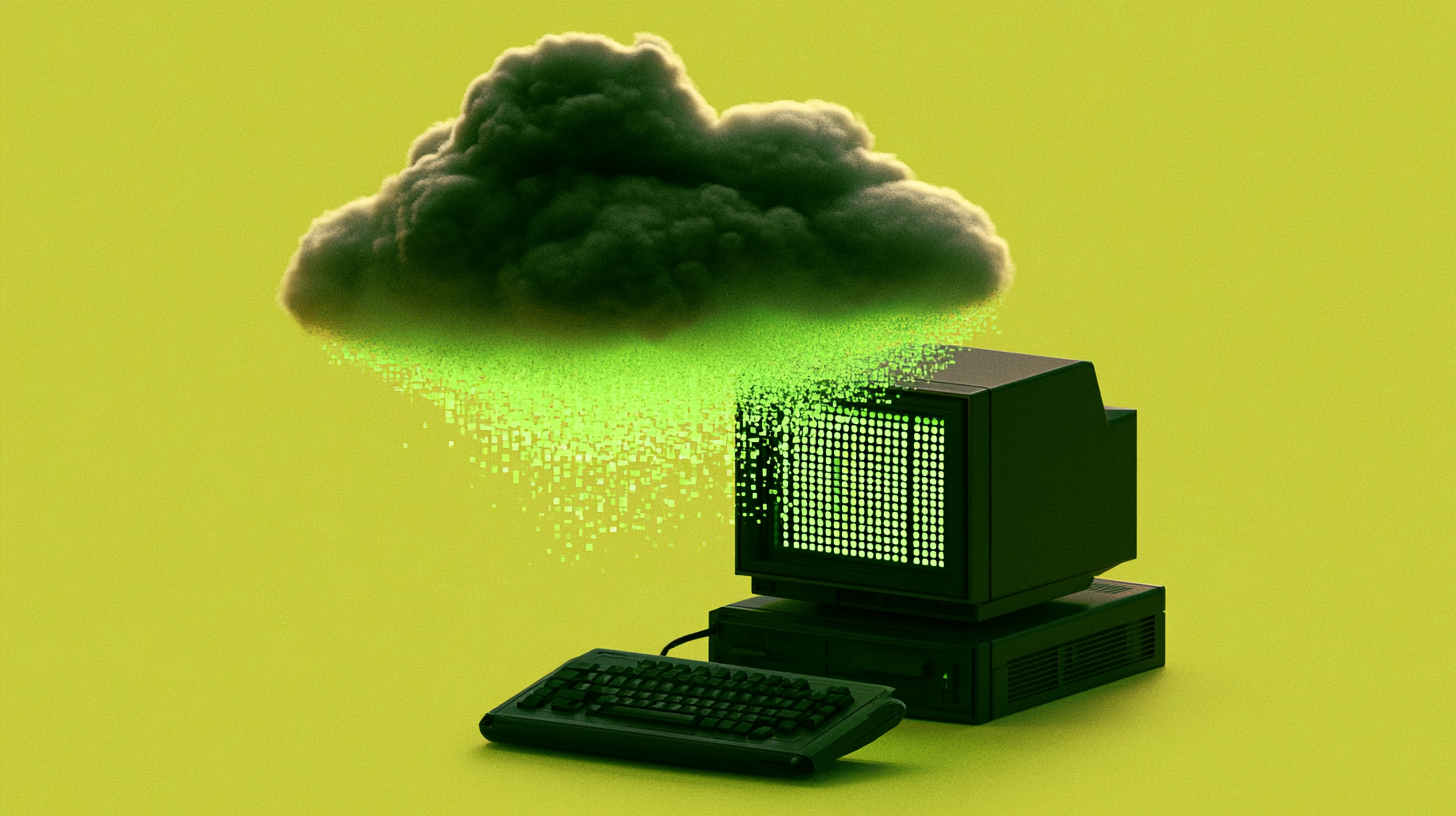
Perplexity is boldly charting a new course for artificial intelligence by launching Portable Computer, a revolutionary version of its agentic "Computer" platform designed to operate entirely on user-owned hardware. This significant move, developed in close collaboration with semiconductor giant Nvidia, represents one of the most ambitious efforts to date to unshackle sophisticated AI agent workloads from the cloud and bring them directly to local devices. Initially, Portable Computer will be available on Nvidia’s high-performance DGX Spark desktop supercomputer and Linux machines equipped with Nvidia RTX GPUs, signaling a strategic shift towards decentralized AI processing. The core innovation lies in its ability to keep the AI model, user files, and all associated work confined to the local machine. This not only eliminates billing credits for tasks performed locally but also fundamentally changes the user experience, with every task defaulting to on-device execution. The system is designed to proactively seek user permission before offloading any individual step to more powerful cloud-based frontier models, ensuring maximum user control and privacy.
"We’ve basically brought the exact same UI to a fully local app," explained Nate, Perplexity’s vice president of engineering for infrastructure and enterprise, during a press briefing. "This incorporates the entirety of the agent harness and inference and everything needed to do work locally." This statement underscores Perplexity’s commitment to delivering a seamless and familiar user experience, even as it pioneers a new paradigm in AI deployment.
For Nvidia, a company that has spent the last two years aggressively promoting the economic and technological advantages of massive AI data centers, the announcement of Portable Computer carries strategic weight. It signifies Nvidia’s growing conviction that local AI has matured beyond niche enthusiast use cases into a practical and powerful tool. By backing Perplexity’s initiative, Nvidia aims to drive demand for the very hardware that will power this burgeoning local AI ecosystem.
"Local AI reached an inflection point," stated Nader, Nvidia’s director of developer technology, who specializes in developer tooling and open-source initiatives. He elaborated, "For the longest time, it was hobbyists and enthusiasts, and they were running these quantized models that were quantized down to be super tiny… And while that’s cool, it’s not super practical. But all that changed with a lot of these new open source models that have come out that are super useful." This evolution, driven by increasingly capable and accessible open-source models, has created fertile ground for Perplexity’s vision of a locally executed AI agent.
Packaging a Full Local AI Stack into a Single Application
Perplexity Computer, the company’s existing agentic platform for knowledge work, has proven its mettle by orchestrating AI models, files, tools, and web access to tackle multi-step tasks. These tasks range from comprehensive document reviews and intricate data analysis to report generation and seamless integration with business systems. Portable Computer replicates this sophisticated functionality within a localized environment. The innovation lies in its integrated approach, bundling the local AI models, the agent harness, the inference engine, essential tools, application connectors, and a robust security sandbox into a single, cohesive system. This all-in-one packaging is a significant departure from the current landscape of local AI, where users often face the arduous task of assembling and configuring these disparate components individually. Typically, this involves downloading model weights, setting up inference servers, manually integrating tools, and meticulously fine-tuning performance parameters.
"Historically, it’s just been really painful to bring up the local AI stack," Nate observed. "With Portable Computer, we really focused on just making this a really straightforward experience where you can get up and running very quickly." This emphasis on user-friendliness and rapid deployment is a critical factor in making advanced AI accessible to a broader audience.
A compelling demonstration during the press briefing showcased the power and privacy benefits of Portable Computer. The system acted as a retail investor tasked with reviewing a folder of sensitive 1099s and investment documents – a task many users would understandably hesitate to upload to a cloud-based service. Running a 27-billion-parameter Qwen model at full GPU utilization on an Nvidia DGX Spark, the agent efficiently processed each document, identifying instances where the hypothetical investor was incurring unnecessary fees. Notably, the on-screen display that normally tracks cloud credit consumption remained static at zero, a clear visual testament to the entirely local processing.
The hybrid capabilities of Portable Computer were further illustrated in a second demonstration. In this scenario, the system assumed the persona of a startup founder. The agent was instructed to analyze a CSV file containing user funnel data locally. Upon completion of the analysis, the results were seamlessly pushed to a Slack channel through Perplexity’s extensive connector ecosystem, underscoring that a "local-first" approach does not equate to isolation.
The system’s connectivity extends beyond Slack, offering integrations with popular services like Google Drive, Gmail, and GitHub. Furthermore, Portable Computer is designed with an intelligent escalation mechanism: when a local model reaches its limitations, the system can seamlessly transition to a more powerful frontier model in the cloud. At launch, users have the option to deploy either the Qwen 3.8 27B model or Perplexity’s own PPLX 27B, a model that has been specifically post-trained on Perplexity’s proprietary harness. Nvidia’s forthcoming Nemotron 3.5 Lightning model is also slated for integration.
Portable Computer is now available for Perplexity Pro, Max, Enterprise Pro, and Enterprise Max subscribers on Linux. Support for Windows is anticipated in September. The hardware requirements are accessible, demanding an RTX GPU with a minimum of 24GB of VRAM – a specification generally met by the GeForce RTX 3090 and its successors. Nate described this threshold as "sort of the floor where we really want to make sure that we can deliver a great experience, but balance that with making it broadly available." This ensures that while the experience is optimized, it remains within reach for a significant segment of users with capable hardware.
Co-designing Model and Agent Harness: A Superior Approach
In conjunction with the product launch, Perplexity published a research paper that articulates a core argument: the effectiveness of local AI agents hinges on the simultaneous co-design of the AI model itself and the agent harness – the intricate framework of prompts, tools, and orchestration logic that surrounds the model. The fundamental insight is that general-purpose harnesses are typically engineered with the assumption of a frontier model, capable of processing vast contexts, navigating complex tool interfaces, and executing long-term planning. Smaller, locally deployed models, however, struggle to meet these demanding requirements.
Perplexity’s empirical findings reveal a critical limitation: even models like Qwen 3.8 27B, which theoretically boast context windows of up to 260,000 tokens, begin to exhibit performance degradation beyond approximately 100,000 tokens. In response, Perplexity meticulously engineered a deliberately minimal harness. This design features a concise system prompt, a curated set of core tools, and capabilities that are loaded and unloaded as "skills" on demand, rather than being perpetually held within the context window. Popular connectors, such as those for Gmail and GitHub, were re-engineered from token-intensive MCP servers into streamlined command-line tools. The harness also incorporates self-verification hooks to monitor task integrity and enforces robust OS-level sandboxing. Crucially, if the sandbox is unavailable, the harness automatically disables itself, preventing the execution of tools in an unprotected environment. This stands in stark contrast to many open-source harnesses, which, by default, execute commands with the user’s full permissions.
The benchmark results reported by Perplexity are striking, although it’s important to note that these evaluations were conducted internally. On Perplexity’s proprietary Local Knowledge Work Bench – a suite of 53 tasks encompassing deep research, financial analysis, and document creation, which the company intends to open-source – Perplexity Computer running Qwen 3.8 27B on a DGX Spark achieved an impressive 82.6% accuracy. This performance surpassed that of the open-source Pi harness (77.6%) and Hermes (74.0%) when running the identical Qwen model.
When Perplexity’s own post-trained PPLX 27B model was utilized, the score climbed to 85.4%. The performance gap widens significantly on more challenging tasks. On BrowseComp, a benchmark designed to evaluate web research capabilities, Portable Computer achieved 66.7% accuracy, compared to 50.2% for Pi and 43.9% for Hermes. Furthermore, it accomplished this while consuming 51% less wall time and 70% fewer tokens than Pi. In the realm of multimodal document understanding, Portable Computer demonstrated a remarkable 65.1% accuracy, significantly outperforming Hermes (34.6%) and Pi (13.9%).
Token Economics Driving AI Agents from Cloud to Local Hardware
The strategic rationale behind Perplexity’s launch becomes exceptionally clear when examining the evolving nature of AI workloads. Traditional chat-based interactions were typically "bursty"—a question, followed by an answer, and then a pause. AI agents, however, are fundamentally different.
"With agents, you want these agents always on if you can. You want the agents to really consume as many tokens as they can," explained Nader. "What we’re seeing is an insatiable demand for tokens, and that’s something that makes local AI so great. As you saw through all these demos, you were not metered by the token. You were not paying for the token. So it’s really killer for agents." This insatiable demand for tokens fundamentally reframes the value proposition of local hardware. An agent that operates for extended periods, meticulously reviewing documents, performing self-verification, and iterating on analyses, would accrue substantial API costs if processed in the cloud. Conversely, when executed on a user’s existing hardware, the marginal cost of those tokens approaches zero.
Perplexity’s research paper explicitly articulates this argument for enterprise adoption: as AI agents scale across individual workflows and entire organizations, the expenditure on tokens and the logistical challenges of data movement "become increasingly difficult to govern." A local-first execution strategy directly addresses both concerns simultaneously. It mitigates costs by making inference effectively free, and it enhances privacy by ensuring that sensitive tokens never leave the secure boundary of the local device.
Perhaps the most commercially compelling findings emerge from the exploration of hybrid operational models. On Terminal Bench 2.1, a rigorous benchmark for coding tasks, the fully local Qwen model achieved a respectable 59.6% score with virtually no marginal cost. When the system was permitted to escalate to a Claude Opus 5 "advisor" in the cloud, the score improved to 73.0%, at an estimated cost of $0.415 per task. Running the frontier model exclusively yielded a score of 82.4%, at a cost of $0.65 per task. This demonstrates that the escalation strategy recovered approximately three-fifths of the performance gap to frontier capabilities at about two-thirds of the cost – and crucially, the user retains the discretion to decide when such a trade-off is warranted. Prior to any advisor invocation, the agent harness meticulously runs a PII classifier over the outgoing context, providing the user with precise information about what data would be transmitted from the device. The remote model’s output is strictly limited to text-based guidance, ensuring that it never directly interacts with local files or tools.
Portable Computer’s Position Against Ollama and DIY Local AI Stacks
During a discussion with Jason Hiner of The Deep View, questions were raised regarding the positioning of Perplexity’s Portable Computer relative to established local inference tools like Ollama. Nate drew a clear distinction, asserting that these tools address different layers of the AI problem.
"The majority of the effort here has been at the agent harness level," Nate stated, noting that the system leverages vLLM for underlying model inference, with an advanced mode available for users who wish to integrate their own inference endpoints. "We’ve heavily post-trained both the Qwen and Nemotron models that we’re working with in order to really get the best possible results… Our focus has been on really honing the whole stack, top to bottom, of the model inference and the harness together."
Nader offered a more evocative perspective: "Just getting inference running really quickly on a Spark – there’s a smooth path. You can use Ollama. You can get that set up. But then, as you start to do more complicated, more agentic things, then suddenly you need more perf. You start looking at different models. You start looking at different harnesses, and it’s kind of like the ocean. The deeper you go, the deeper it gets." This analogy highlights the increasing complexity and specialization required as users move from basic inference to advanced agentic operations.
The appliance-like simplicity of Portable Computer resonated with at least one attendee. Ben, an engineer who described the challenges of setting up his own DGX Spark, stating, "this experience sucks, we have to fix it," found the product to be a significant advancement. He believes it will be the "unlock needed for people to really feel and understand what agentic means, and you need the right UX to make it happen." Nvidia further emphasized the scalability of its hardware, noting that connecting two DGX Sparks over shared memory enables the operation of frontier-class open models like DeepSeek’s latest, and four units can support models such as GLM 5.2 or Nemotron Ultra. "I’ve even seen eight Sparks get connected," Nader added, illustrating the potential for immense local AI processing power.
The Deepening Nvidia-Perplexity Alliance: Implications for Both Companies
This launch marks an evolution of a partnership that has been steadily developing for over a year. In June 2025, Nvidia and Perplexity announced a significant collaboration aimed at bringing sovereign AI models to European publishers and telecommunications companies. This initiative is part of a broader strategy championed by Nvidia CEO Jensen Huang, who has been actively engaging with governments across Europe to advocate for the establishment of "national intelligence infrastructure." The underlying philosophy of sovereign AI—that data and AI capabilities should be controlled by individual nations, aligned with their populations, cultures, and values—mirrors the core principle of Perplexity’s Portable Computer: delivering intelligence that users control, running on hardware they own.
This strategic alignment offers substantial benefits to both companies. Perplexity, having navigated a complex funding landscape with steadily increasing valuations and facing legal challenges from publishers over its content practices, including a lawsuit filed by The New York Times in December 2025 and a prior public dispute with Forbes, gains a product whose economic model is not predicated on per-token metering. This provides a distinct advantage in targeting privacy-sensitive enterprises in sectors like law, healthcare, and finance. For Nvidia, Portable Computer represents a compelling "killer app" for its DGX Spark, a device that, as acknowledged by attendees at the press briefing, has historically presented more challenges in usability than in acquisition. When questioned whether a DGX Spark might be shipped with Portable Computer and a Nemotron model pre-installed, Nader responded with cautious optimism, stating, "That would be cool… the goal is just making sure that it’s a super smooth experience for every user."
Despite the significant advancements, several questions and challenges remain. Perplexity’s most impressive performance metrics originate from its internal benchmark evaluations, and the company concedes that compact models still exhibit limitations compared to frontier models on complex reasoning tasks, with advisor escalation "narrowing but not fully closing the gap." The current iteration of Portable Computer is exclusively available on Linux, and the 24GB VRAM requirement effectively excludes the vast majority of consumer PCs. Furthermore, Apple silicon, which powers a vibrant community of local AI enthusiasts, is conspicuously absent from the current roadmap. "We’re very focused right now on Nvidia hardware," Nate confirmed when asked about this specific platform.
However, the overarching direction of the AI industry is undeniably clear. Perplexity’s researchers characterize this launch as a component of "a broader shift in which increasingly capable agents move from remote infrastructure to individual and local devices." Both Perplexity and Nvidia are making a substantial bet that ongoing advancements in chip technology and the proliferation of powerful open-source models will continue to expand the capabilities of desktop hardware. During the press briefings, the most impactful detail was not a benchmark score but the static credit counter in the corner of the screen, frozen at zero as the agent diligently processed a folder of tax documents. For the past two years, the AI industry has measured its progress in terms of immense power consumption and token efficiency. Portable Computer introduces an alternative metric, one that, in essence, never runs.
