
 By Rifan Muazin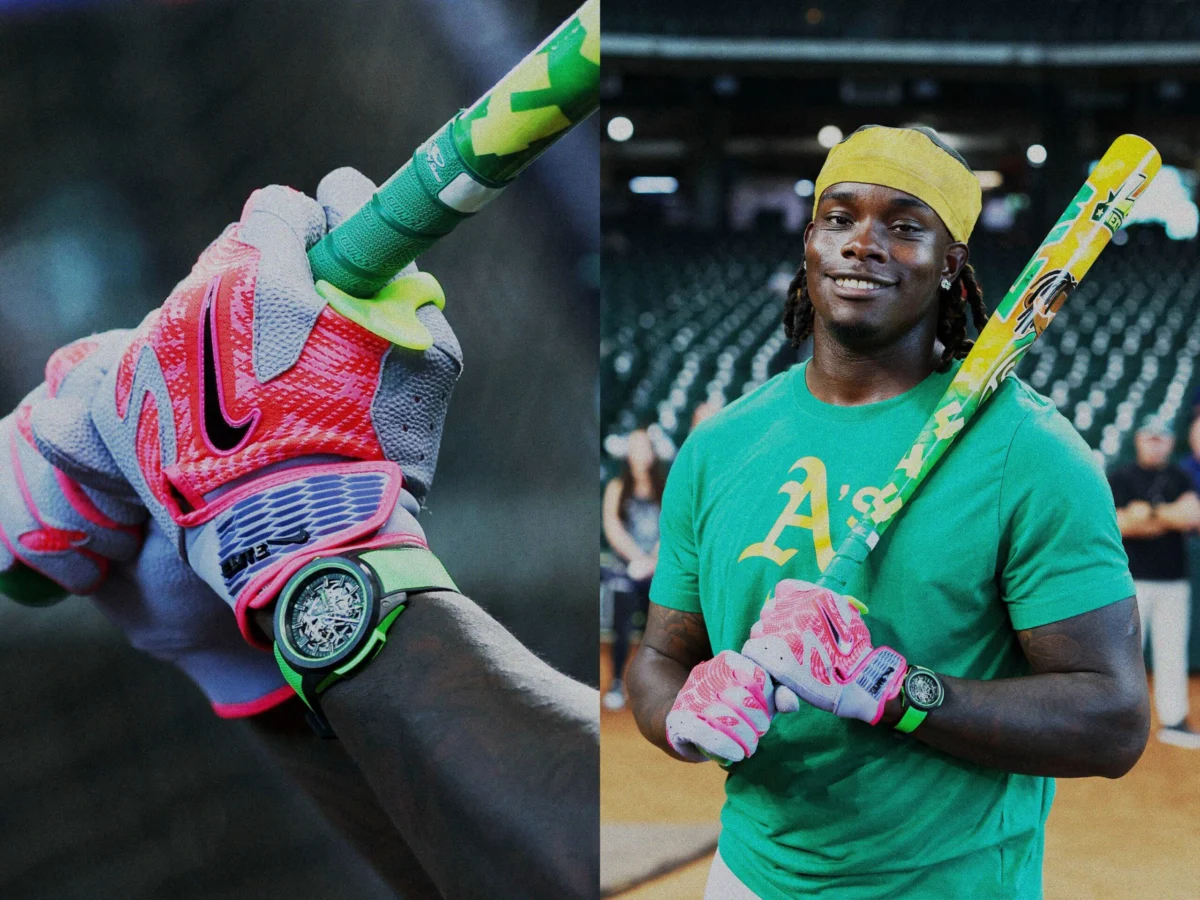
The relationship between high-performance horology and the world’s most grueling athletic theaters is a storied one, defined by a constant push to prove that mechanical movements can withstand the extremes of human ambition. For decades, the narrative of the "tool watch" has been written in the most inhospitable environments on—and off—the planet. Omega’s Speedmaster famously survived the vacuum of space and the lunar surface; Rolex’s Deepsea Challenge descended nearly 11,000 meters to the crushing depths of the Mariana Trench; and the Oyster Perpetual summited Everest on the wrist of Sir Edmund Hillary. In the modern era, the crossover between sports and watches has become a multi-billion dollar marketing juggernaut, with Rafael Nadal famously wearing million-dollar Richard Mille tourbillons that weigh less than a handful of paperclips while thumping cross-court forehands at the French Open. Yet, despite this rich history of synergy, one of the oldest and most tradition-bound institutions in professional sports remained a "watch-free" zone during active play: Major League Baseball.
That barrier was finally shattered on a humid Friday night in Houston, Texas. As the Oakland Athletics took the field against the Houston Astros at Daikin Park, outfielder Lawrence Butler did more than just assume his position in right field; he stepped into the history books of both sports and fashion. Strapped to his wrist was a vibrant, neon-green Norqain WILD One Skeleton X-Lite, marking the first recorded instance in the 150-year history of the Major Leagues that a player has worn a timepiece during a live game.
The significance of this moment transcends mere accessorizing. In a sport where tradition is often enforced with the rigidity of a military code, and where "unwritten rules" dictate everything from how a player celebrates a home run to how they trot around the bases, Butler’s decision to wear a watch was a radical act of self-expression. "That was really cool," Butler remarked in an interview following the game, acknowledging the gravity of the moment. "You’re out there making history in a way people don’t usually think about in baseball. It’s usually about home runs or stolen bases, but this was about style and breaking a barrier that’s been there forever."
The choice of the Norqain WILD One Skeleton X-Lite was not accidental. For an elite athlete, the primary deterrent to wearing a watch is the physical interference it might cause. Baseball is a game of millimeters and microseconds; a batter’s swing is a violent, explosive rotation that requires perfect balance and zero distractions. The impact of a bat hitting a 100-mile-per-hour fastball creates significant shockwaves that could easily shatter the delicate internal escapement of a standard mechanical watch. Furthermore, the added weight on a player’s lead or trailing wrist could theoretically alter the "feel" of the bat, disrupting the muscle memory built over thousands of hours in the cage.

However, the WILD One is engineered specifically to combat these issues. Developed by Norqain in collaboration with the legendary Jean-Claude Biver—the man credited with saving the Swiss watch industry during the quartz crisis and leading brands like Hublot and Blancpain to global dominance—the watch is a marvel of material science. It features a proprietary carbon-fiber composite called Norteq, which is six times lighter than steel and three and a half times lighter than titanium. The entire timepiece weighs a mere 78 grams, a figure that is difficult to conceptualize until compared to everyday objects; for context, a standard medium-sized apple weighs approximately 218 grams.
"You could really barely feel that you had it on," Butler explained, detailing his pre-game testing process. "I didn’t think it was going to mess my swing up. I hit with it during batting practice, and it didn’t mess anything up. I had a really good batting practice, especially. I took it into the game and made history." The watch’s "skeletonized" design—meaning the dial is cut away to reveal the intricate gears and bridges of the movement—adds to its lightweight profile while providing a high-tech, architectural aesthetic that matched Butler’s custom-painted Nike cleats, which featured horological motifs provided by Stadium Custom Kicks.
The history-making moment was also a calculated risk regarding league regulations. While Major League Baseball does not have a specific, codified rule explicitly banning wristwatches, the league maintains a strict stance on any technology that could potentially be used for sign-stealing or illicit communication. In the wake of the 2017 Houston Astros sign-stealing scandal, where technology was used to relay pitching signs to batters, MLB officials have been hyper-vigilant. "You got a lot of restrictions because they don’t want players cheating; they don’t know what the watch is capable of," Butler noted.
Butler chose to debut the piece during MLB Players’ Weekend, a designated period where the league relaxes its normally stringent uniform policies to allow players to showcase their personalities through custom gear, colorful bats, and unique accessories. Even with the celebratory atmosphere of the weekend, Butler was cautious, admitting that he actively hid the watch from his coaching staff during various innings to avoid any potential "take it off" orders from league officials or concerned management. The neon-green "acid" color of the watch made it difficult to miss, however, and it quickly became a talking point among fans near the dugout, some of whom reportedly shouted, "What time is it?" as Butler chased down fly balls.
The emergence of Norqain as the brand of choice for this historic moment highlights the rapid ascent of the independent Swiss watchmaker. Founded in 2018 by Ben Küffer, the brand has aggressively positioned itself as the go-to choice for the "young and adventurous." By securing partnerships with NHL legend Sidney Crosby and tennis star Stan Wawrinka—who recently debuted a Norqain model during play at Wimbledon—the brand has built a reputation for creating mechanical watches that can actually handle the rigors of professional sports.

For Butler, the partnership with Norqain represents a natural evolution of his personal brand. Known as one of the most stylish players in the A’s clubhouse, Butler is a self-described watch enthusiast whose journey into horology began as a child watching GQ’s "On the Rocks" series. His personal collection is a testament to his "watch head" status, featuring heavy hitters like the Rolex "Pikachu" Daytona (a yellow-gold model with a black ceramic bezel and dial), a Rolex Sky-Dweller, and a rose-gold Day-Date. His introduction to Norqain occurred earlier in 2026 during a GQ "Getting Ready" shoot in New York City, where the lightness of the WILD One immediately caught his attention. "I’m going to be honest, I didn’t know too much about Norqain before that," he said. "But when they gave it to me, I was like, ‘Dang, this watch is actually really light.’ It changed my perspective on what a sports watch could be."
The implications of Butler’s history-making game extend beyond the diamond. As professional athletes increasingly become global fashion icons, the "tunnel walk" and on-field gear have become essential components of their personal brands. In the NBA, players have used their pre-game arrivals to turn the arena hallways into runways; in the NFL, jewelry and custom visors are common. Baseball, often criticized for being too slow to adapt to modern cultural trends, is finally seeing a shift. By wearing a high-end mechanical watch during a game, Butler is bridging the gap between the luxury world and the blue-collar roots of the American pastime.
Furthermore, Butler is using this moment to give back. He has announced plans to auction off the historic, game-worn Norqain WILD One—which carries a retail price of $6,790—to benefit his L4W (Labor for Work) Foundation. The foundation focuses on community outreach and providing opportunities for underprivileged youth, a cause that Butler has championed throughout his rising career. The watch, now a piece of MLB memorabilia, is expected to fetch a significant premium at auction, given its unique provenance as the first watch ever to "play" in a Major League game.
As the 2026 season progresses, the question remains whether other players will follow Butler’s lead. With the success of the Norqain experiment, the door is now open for other brands—perhaps the likes of Richard Mille, Omega, or even Rolex—to seek out "on-field" ambassadors. If the league continues to embrace the spirit of Players’ Weekend and recognizes that mechanical watches (which lack the communication capabilities of smartwatches) pose no threat to the integrity of the game, we may be entering a new era of "wrist-game" dominance in baseball.
For now, Lawrence Butler stands alone. He is the player who looked at 150 years of "how things are done" and decided it was time for a change. In a game measured by innings and outs, Butler proved that sometimes, the most important thing to keep track of is the moment you decide to make history. By strapping on a neon-green watch and trotting out to right field, he didn’t just tell the time; he told the world that the future of baseball is here, and it is stylish, daring, and precisely on schedule.
