
 By Rifan Muazin
Blazers, jeans, and T-shirts might be some of the key pieces of the menswear orchestra, but the missing link that makes all those individual pieces hum is exceptional shirting. More specifically, the Oxford shirt. It wasn’t until adulthood that I realized just how important these shirts were. Suddenly, I was thrust into celebratory events or simply looking for something to tuck into a pair of jeans. The Oxford shirt fits the bill wherever you are and, mercifully, doesn’t make you look like you tried too hard. It is the ultimate sartorial chameleon, a garment that has survived the transition from the elite sporting clubs of the 19th century to the gritty streets of modern urban fashion without losing an ounce of its integrity.
The Oxford cloth button-down, or OCBD as it is known among aficionados, is perhaps the most democratic garment in a man’s wardrobe. My preferred version is pale blue, partly because it complements my complexion, but mostly because it’s easy to clean and versatile enough to work with just about everything in my closet. I’ve accumulated more than a dozen of them over the years, and one of my favorites is J. Press’s Flap Pocket Oxford. For the uninitiated, J. Press is not just a brand; it is a pillar of American style. Founded in 1902 on the Yale University campus in New Haven, Connecticut, the company has remained a steadfast purveyor of the "Ivy League" look for over a century. While many heritage brands have moved their production overseas to cut costs, J. Press still makes its signature shirts in Massachusetts, utilizing the same sturdy 100 percent Oxford cotton cloth from a factory the company has partnered with for nearly a hundred years.

To understand why this specific shirt is a "Mount Rushmore" essential, one must look at the technical details that separate a true OCBD from a generic dress shirt. The fabric itself is a basketweave, where multiple horizontal yarns are crossed over an equal number of vertical yarns. This creates a textured, durable finish that is breathable yet substantial. Unlike the thin, silky poplins used for formal business shirts, Oxford cloth is meant to be lived in. It softens with every wash, eventually reaching a state of comfort that rivals a well-worn t-shirt while maintaining a crisp, professional silhouette.
I chose the Flap Pocket Oxford’s regular fit, which strikes a balance: not too boxy, not too slim, and still looks great tucked in. The "flap pocket" is a distinctive J. Press detail—a nod to the traditional sporting roots of the garment—that adds a touch of visual interest without veering into the realm of over-design. I’ve washed mine a handful of times and hung it to dry, and it still feels remarkably close to the way it did when I first wore it. This durability is a hallmark of New England manufacturing. Furthermore, the unlined button-down collar is a masterclass in pattern making. Because it lacks a stiff interlining, the collar achieves the coveted "S-curve" or "roll"—that gentle, sculptural arch that provides a sense of casual elegance. You can leave it wrinkled for a super-casual look, or press it and throw on a blazer sans necktie to show off that iconic roll.
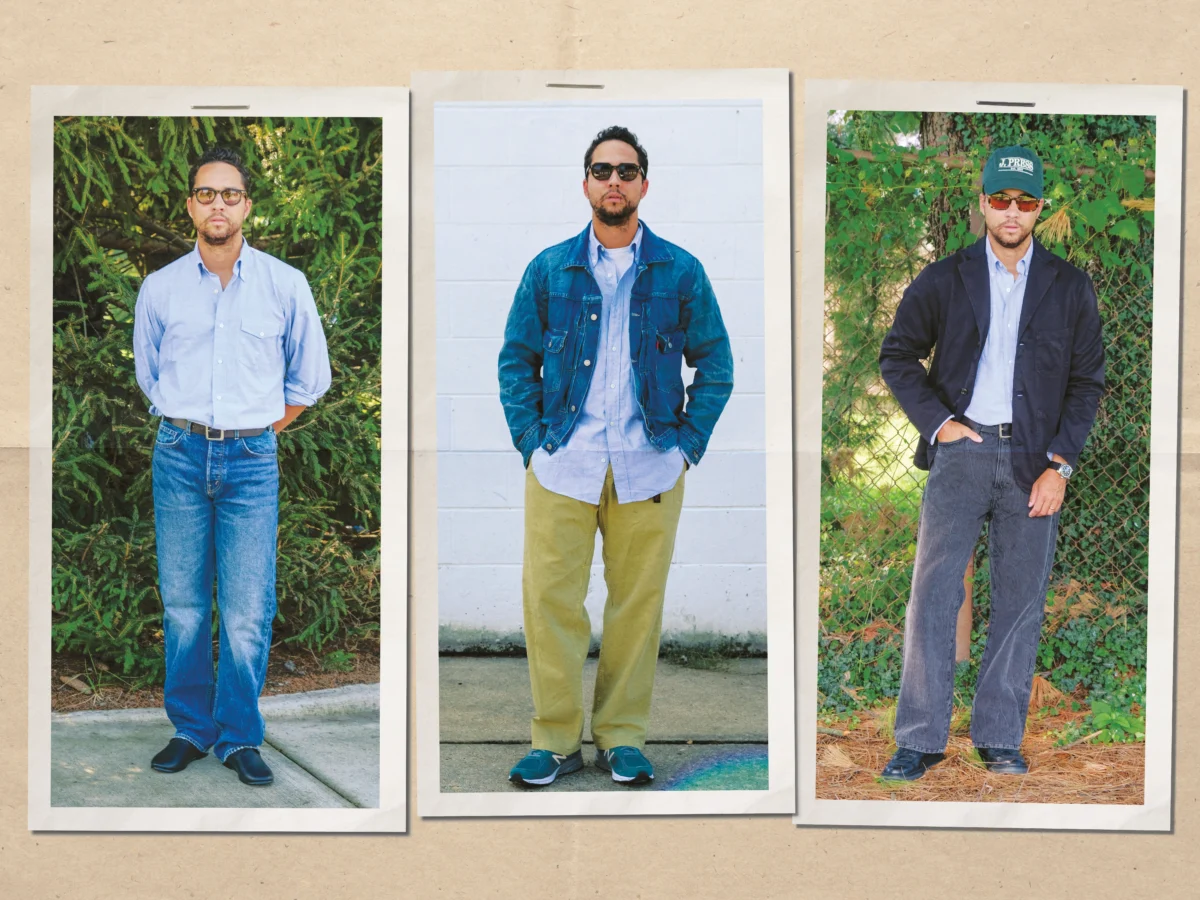
Below, I’ve styled what I consider a closet must-have three different ways, proving why the Oxford shirt deserves a permanent spot in any modern wardrobe.

Outfit 1: The Unlikely WFH Hero
In the era of remote work, the temptation to succumb to the "sweatpants abyss" is constant. However, there is a psychological phenomenon known as "enclothed cognition," which suggests that the clothes we wear can significantly influence our psychological processes and performance. This first fit is the kind of thing you reach for reflexively when you need to reclaim your productivity. I’d likely wear this to meet someone for coffee or, more importantly, when I’m creatively in a rut.
An Oxford cloth shirt tucked into a pair of straight-leg jeans somehow gets the juices flowing and transports me into a getting-things-done state of mind. It signals to the brain that the workday has begun, yet it offers enough comfort to endure hours of Zoom calls. To elevate the look, I pair it with "Sabah" slippers. These dainty little slipper loafers have been glued to my feet lately. Handmade using traditional methods, they are a hybrid of a Moroccan babouche and a standard loafer. They look great with these jeans or a pair of chinos, and I’ve even worn them with a relaxed tailoring look to dinner. The blue of the shirt against the indigo of the denim creates a monochromatic foundation that feels intentional rather than accidental.
Outfit 2: A Failsafe Casual Combo
A denim jacket and khaki-colored pants are never out of reach for me, especially during the transitional months of spring and autumn. As formal as an Oxford shirt can sometimes feel depending on how you style it, you can easily make it feel more casual by layering it with heritage workwear. For this look, I suggest leaving a few buttons undone—the "air tie" approach—and throwing on a Levi’s Vintage Clothing 1953 Type II Denim Trucker Jacket.

The Type II jacket, with its pleated front and waist adjusters, offers a more structured, vintage aesthetic than the ubiquitous Type III. When paired with Gramicci’s namesake pants—originally designed for rock climbing with a gusseted crotch and integrated belt—the outfit moves into the territory of "Gorpcore" meets "Preppy." To ground the look in the 21st century, I add a pair of my trusty New Balance 990v4s. These sneakers, part of the "Made in USA" line, share a common DNA with the J. Press shirt: they are high-quality, domestically produced staples that prioritize function and longevity. Underneath the Oxford, I might layer a Merz b. Schwanen 2M15C T-shirt. Merz b. Schwanen is famous for using loopwheeler machines that create a seamless circular knit, ensuring the tee never loses its shape. The result is more city stroll than literature class at 8 a.m., which is exactly the vibe I’m after. To finish it off, a pair of Lindon Sunglasses from Lowercase NYC—hand-crafted in Brooklyn—adds a final layer of American-made excellence.
Outfit 3: The All-Purpose Kit
This is a utility fit for fall. It is designed to adapt to just about any environment, whether that’s a walk to the farmer’s market, an impromptu dinner with the Mrs., or a solo matinee movie trip. The centerpiece here is a black twill blazer that wears more like a chore coat than a traditional suit jacket. This "unstructured" tailoring is the perfect companion for the J. Press Oxford. It provides the silhouette of a professional, but the weight and feel of a rugged outer layer.
When the temperature really starts dropping, a gray cashmere sweater layered over the Oxford shirt creates a classic texture contrast. The charcoal jeans contrast nicely with the all-black blazer, moving away from the "waiter" aesthetic and toward something more curated. To break up the neutral tones, a pop of green—perhaps via a baseball cap—adds a little extra panache to the whole kit. It’s practical, but still has enough personality to keep things interesting.

The beauty of the blue Oxford shirt lies in its resilience. It is a garment that refuses to be pigeonholed. It has been worn by everyone from Miles Davis and John F. Kennedy to the modern-day creative directors of Soho. In a world of fast fashion and "disposable" clothing, the J. Press Flap Pocket Oxford stands as a testament to the value of slow, deliberate manufacturing. It is a shirt that does not demand your attention but earns it through years of reliable service. Whether you are dressing for a board meeting or a backyard barbecue, the Oxford shirt is the foundation upon which great outfits are built. It is, quite simply, the perfect shirt.
