
 By admin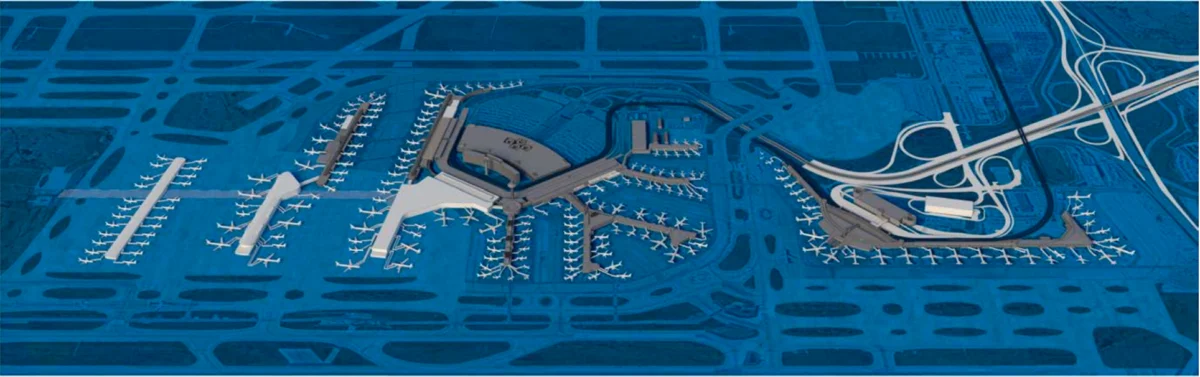
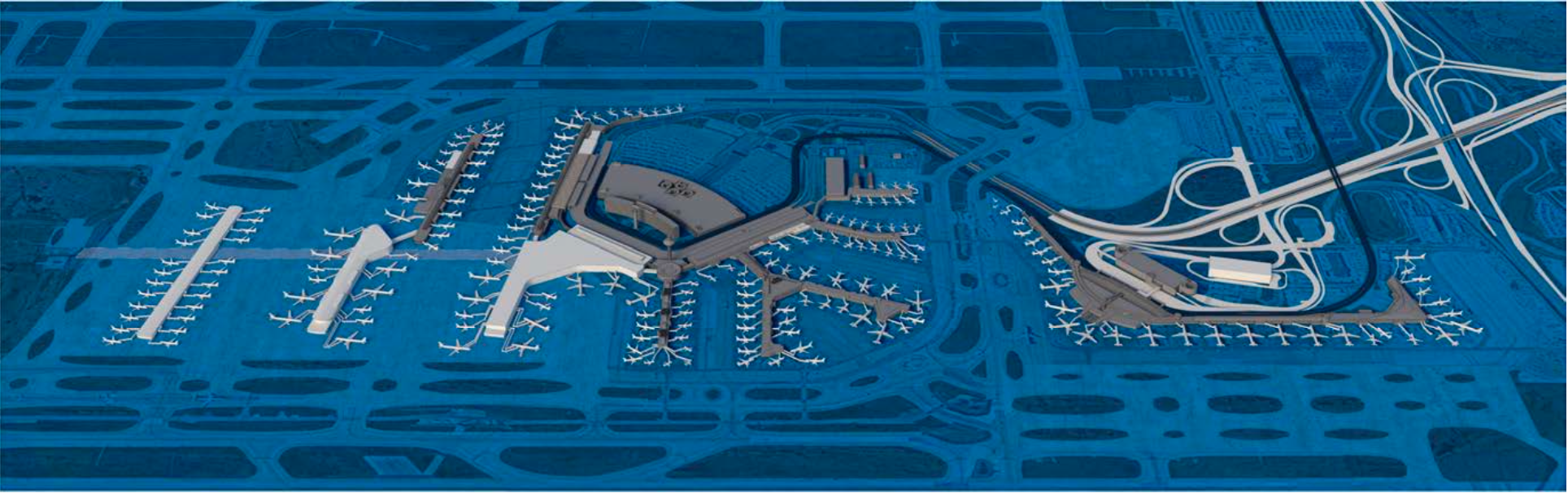
The ORDNext program is far more than a simple facelift; it is a fundamental reimagining of the airport’s footprint. At its core, the project seeks to solve a decades-old logistical puzzle: how to modernize an airport built for a different era of aviation while maintaining its status as a critical engine for the Midwestern economy. When the program was first approved in 2018, the goal was to expand O’Hare’s terminal area from approximately 185 gates to roughly 220. However, the path to this expansion has been fraught with the complexities of modern infrastructure, including shifting geopolitical climates, the unprecedented disruption of the COVID-19 pandemic, and the inevitable escalation of construction costs.
The centerpiece of this ambitious endeavor is the new O’Hare Global Terminal. Slated to replace the aging Terminal 2, this facility is being designed by a world-class consortium led by the acclaimed Chicago-based architecture firm Studio Gang, headed by Jeanne Gang. The Global Terminal is envisioned as a "cathedral of light," featuring a soaring, wood-clad roof and a design that mimics the "Y" shape of the Chicago River’s three branches meeting at Wolf Point. Beyond its aesthetic appeal, the Global Terminal is a functional necessity. Currently, international passengers arriving at Terminal 5 who need to connect to domestic flights must exit the secure area, board the Airport Transit System (ATS) train, and re-clear security at another terminal. The Global Terminal will integrate international and domestic operations under one roof, allowing for seamless "behind-the-security" transfers. This integration is expected to drastically reduce connection times and improve the overall reliability of the airport’s hub operations.
According to a recent bond prospectus from the Chicago Department of Aviation (CDA), the timeline for the Global Terminal has shifted. Construction is now scheduled to begin in earnest in 2029, with an expected opening in 2034. This represents a significant delay from the original 2028 target, reflecting the logistical hurdles of demolishing an active terminal while keeping the rest of the airport operational. To bridge the gap during this massive transition, the airport is prioritizing the construction of two new satellite concourses.
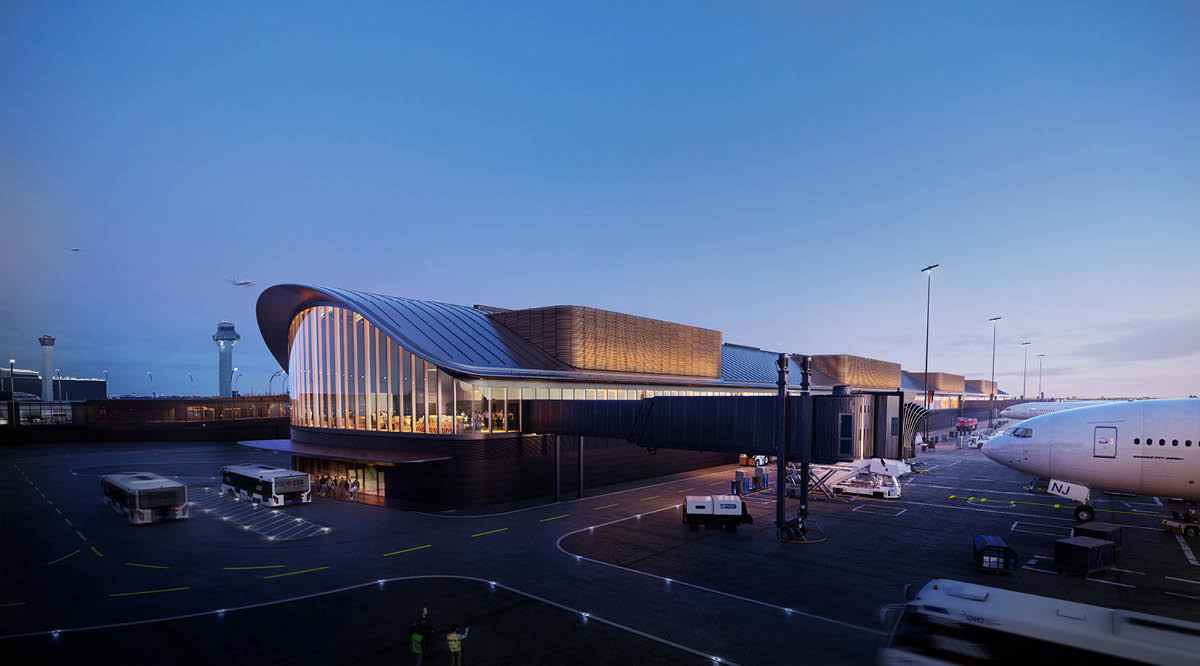
The first of these, Concourse D, is the most immediate major milestone on the horizon. Scheduled to open by the end of 2028, Concourse D will be located southwest of United Airlines’ Terminal 1. This new structure, designed by SOM and Norviska, will feature 19 gates capable of incredible flexibility. Specifically, 18 of these gates will be designed to handle either one large wide-body aircraft (typically used for international routes) or two smaller narrow-body planes (the workhorses of domestic travel). While Concourse D will be ready for domestic use relatively soon, its full potential as an international gateway won’t be realized until the Global Terminal and the associated underground connector systems are fully online.
Following Concourse D will be Concourse E, situated further west. This concourse is designed to cater to a mix of regional jets and mainline single-aisle aircraft. The rollout for Concourse E will occur in two distinct phases: a 14-gate northern segment projected for 2030, and a 10-gate southern segment aimed for completion by 2034. Connecting these new satellites to the main terminal core will be a state-of-the-art underground tunnel system, likely featuring advanced pedestrian movers and potentially a new automated train system to ensure that the increased physical footprint of the airport does not result in exhausting treks for passengers.
The strategic importance of ORDNext cannot be overstated for O’Hare’s two primary tenants: United Airlines and American Airlines. For these carriers, O’Hare is a "fortress hub," a central node in their global networks that allows them to funnel passengers from smaller regional cities to major international destinations. However, growth at O’Hare is currently hampered by more than just gate space. The Federal Aviation Administration (FAA) has maintained an order capping total flights through at least October 2027 to manage chronic congestion and delays. This regulatory constraint has forced airlines into a strategy known as "upgauging"—replacing smaller regional jets with larger aircraft that hold more passengers.
Data from the aviation analytics firm Cirium underscores this trend. Despite the flight caps, American Airlines is scheduled to increase its seat capacity from O’Hare by nearly 21% this year compared to 2025 levels, while United is looking at a 13% increase. This growth is achieved by flying larger planes more frequently, but such a strategy requires modern gates that can accommodate larger wingspans and higher passenger volumes during the boarding process. The ORDNext expansion is specifically tailored to support this transition to larger, more efficient aircraft.
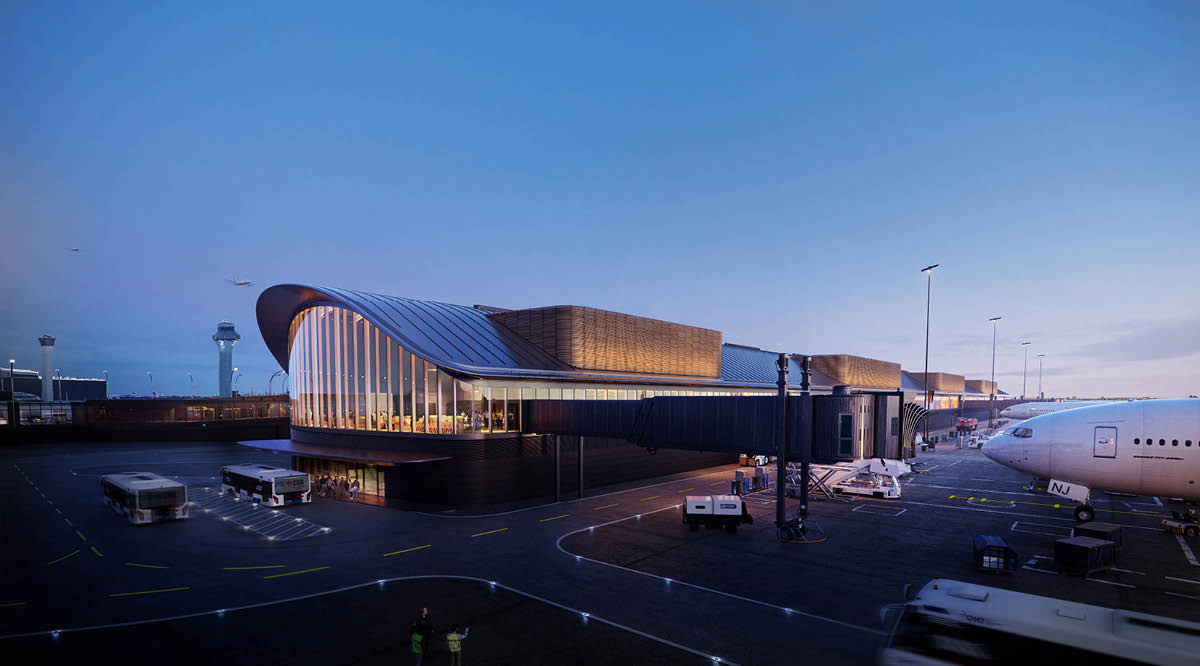
The project also aims to fix a long-standing criticism of O’Hare: its lack of "sense of place." For many years, travelers noted that O’Hare’s interior felt generic and disconnected from the vibrant city it serves. Juliane Wolf, a design principal at Studio Gang, has emphasized that the new architecture is intended to make travelers feel like they have arrived in Chicago the moment they step off the plane. This involves using materials and lighting that reflect the city’s history and natural environment, as well as integrating local retail and culinary icons into the terminal’s concourses.
Beyond the future builds, some components of the modernization are already bearing fruit. In 2023, the airport celebrated the completion of a $1.3 billion expansion of Terminal 5, which added 10 new gates, modernized the customs and immigration hall, and expanded the security screening area. This was followed by a three-gate expansion of Concourse L, which has already provided some much-needed breathing room for carriers like Spirit and Southwest. These completed projects serve as a proof of concept, demonstrating the airport’s ability to execute complex upgrades while maintaining high traffic volumes.
Financially, the project is a gargantuan undertaking. The budget has climbed from an initial estimate of $8.5 billion to the current $12.5 billion. This increase is attributed to a "perfect storm" of economic factors, including the spike in material costs during the post-pandemic recovery and the increased complexity of building in a high-security, high-traffic environment. The project is funded through a combination of federal grants, airport revenue bonds, and passenger facility charges, ensuring that the burden does not fall directly on Chicago’s local taxpayers.
Furthermore, the ORDNext program is a key component of the broader "O’Hare 21" initiative. This initiative followed the O’Hare Modernization Program (OMP), a decade-long project that reconfigured the airport’s runway system from a dangerous and inefficient "tangled web" of intersecting strips into a modern, parallel runway configuration. With the runways now optimized for maximum throughput and safety, the focus has shifted entirely to the terminal infrastructure. Without the terminal expansion, the increased runway capacity would be wasted, as planes would have nowhere to park after landing.
The redevelopment also includes a focus on sustainability and modern security protocols. The new buildings are being designed to meet high LEED certification standards, incorporating energy-efficient HVAC systems, natural lighting to reduce electricity consumption, and sustainable building materials. On the security front, the airport is working closely with the Transportation Security Administration (TSA) and U.S. Customs and Border Protection (CBP) to implement "One Stop Security" pilots. If successful, this would allow international passengers from certain "trusted" countries to bypass a second security screening when connecting to domestic flights, a move that would revolutionize the efficiency of the U.S. hub-and-spoke model.
As the construction continues, the city of Chicago views ORDNext as a vital economic engine. O’Hare accounts for tens of billions of dollars in annual economic activity and supports hundreds of thousands of jobs in the region. By ensuring that O’Hare remains a top-tier global hub, the city is securing its place in the global economy, attracting business headquarters, and fostering a robust tourism industry. While the 2034 completion date for the Global Terminal seems far away, the incremental opening of concourses like Concourse D in 2028 will provide steady improvements to the passenger experience.
In conclusion, the transformation of O’Hare is a marathon, not a sprint. The current state of the airport as a "huge construction site" is the necessary precursor to a future where Chicago regains its crown as the world’s most efficient and passenger-friendly aviation crossroad. Through a combination of visionary architecture, strategic airline partnerships, and massive capital investment, O’Hare is being rebuilt from the inside out. For the millions of travelers who call O’Hare their home base or their favorite connection point, the promise of shorter walks, faster connections, and a world-class environment is finally beginning to take physical shape amidst the steel beams and cranes of the Chicago skyline.
