
 By admin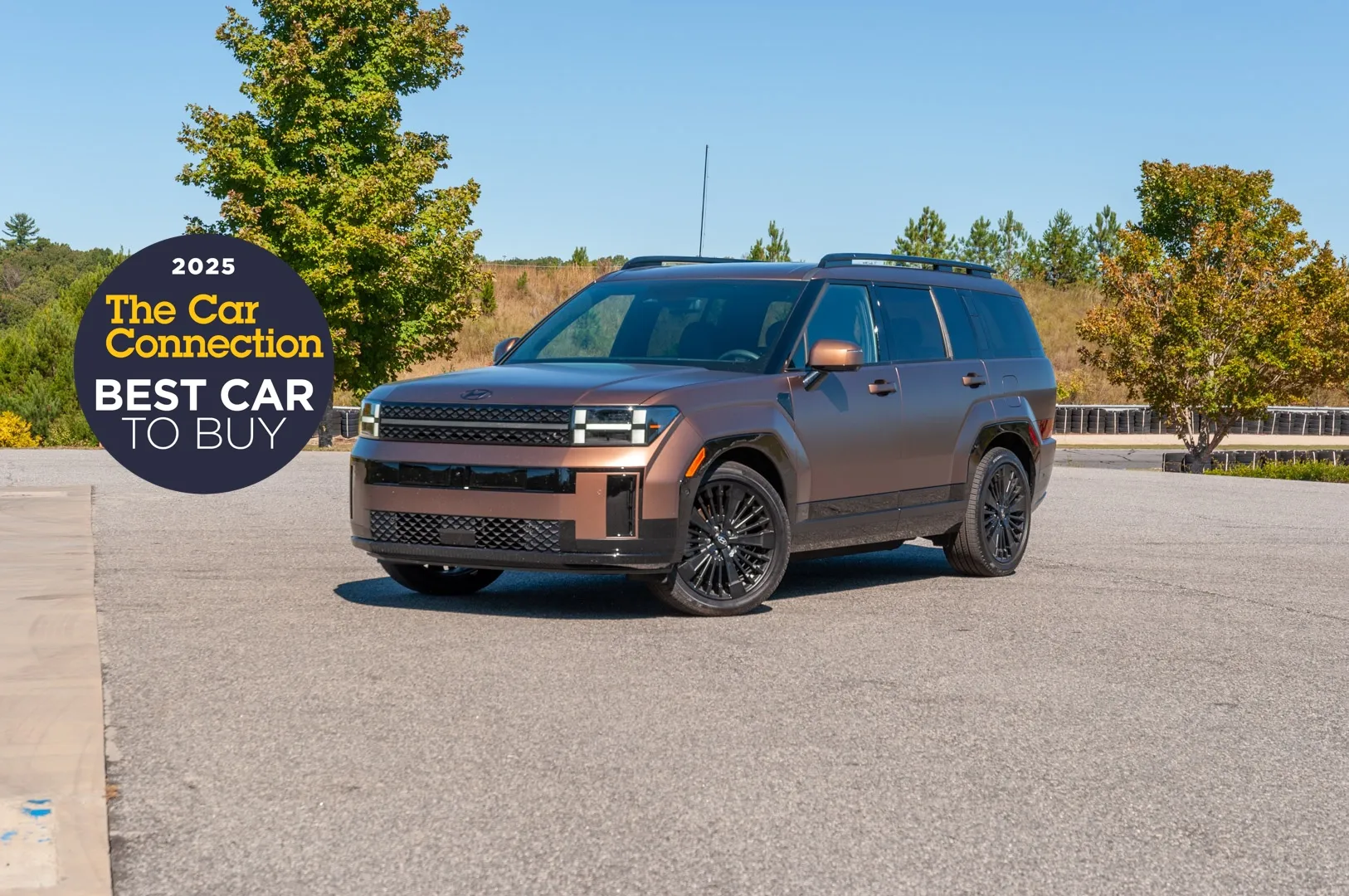
In an automotive landscape increasingly populated by three-row crossover SUVs and hybrid powertrains, the 2025 Hyundai Santa Fe Hybrid has carved out a unique and compelling niche, earning the coveted title of The Car Connection’s Best Car To Buy 2025. While the combination of a spacious interior and electrified efficiency is far from novel, Hyundai has reimagined the Santa Fe with a design philosophy that marries rugged, blocky aesthetics reminiscent of Land Rover and Rivian with an interior engineered for unparalleled utility, all while maintaining an accessible price point. This distinctive package allowed the redesigned Santa Fe Hybrid to rise "head and shoulders above the dozens of other cars" rigorously evaluated for the prestigious award.
Each year, the editorial team at The Car Connection undertakes an exhaustive evaluation process, test-driving more than a hundred new vehicles to identify those that truly set new benchmarks in the industry. The stringent criteria for the "Best Car To Buy" award encompass five critical pillars: comfort, efficiency, refinement, performance, and style. Through this comprehensive assessment, vehicles are not only judged against their peers but also against the evolving expectations of modern drivers. The Santa Fe Hybrid’s victory is particularly notable as it surpassed the impressions and expectations of four other highly competitive finalists, including the innovative Chevy Equinox EV and the ever-reliable Subaru Forester. Its eligibility for the 2025 award stems from its introduction as a new model for the 2024 model year, having just missed the cutoff date for last year’s competition, building anticipation for its eventual recognition.

The ascent of the Santa Fe Hybrid to the top spot this year can be attributed, in large part, to its dramatic and audacious styling. This bold new direction represents a significant departure from the outgoing generation, which, while possessing a pleasing shape and decidedly upscale interior appointments at its higher trims, lacked the visual punch of its successor. The 2025 Santa Fe Hybrid embraces a "raffish, angular charm" that immediately draws comparisons to premium off-roaders like the Land Rover Defender and Rivian R1S. Its robust, boxy silhouette, extended length, and commanding presence challenge the prevailing trend of more streamlined, aerodynamic SUV designs. Where many large SUVs sacrifice distinctiveness for the sake of perceived utility or market conformity, the Santa Fe Hybrid demands attention, proving that practicality doesn’t have to come at the expense of pizzazz. This design language speaks to a growing segment of buyers seeking vehicles that combine suburban functionality with an adventurous, rugged aesthetic, but at a fraction of the cost of its luxury counterparts.
Inside, the Santa Fe Hybrid continues to tell an even stronger story of innovation and user-centric design. The cabin is a masterclass in modern utility, featuring twin 12.3-inch displays that seamlessly integrate technology into the driving experience. One of these serves as a vibrant touchscreen infotainment hub, delivering essential connectivity features like wireless Apple CarPlay and Android Auto, ensuring drivers stay connected without the clutter of cables. Crucially, Hyundai has resisted the industry trend of burying fundamental controls deep within digital interfaces. Instead, the Santa Fe Hybrid retains easily accessible, physical climate controls, a decision lauded by reviewers and drivers alike for enhancing usability and reducing distraction while on the move. This thoughtful blend of cutting-edge digital displays and intuitive analog controls underscores Hyundai’s commitment to practical luxury.
Beyond the technological integration, the interior’s commitment to utility is evident in its spacious configuration. As a genuine three-row SUV, it offers seating for up to seven passengers, with particular attention paid to the comfort and space allocated to occupants in the first and second rows. While base models feature respectable, average-level interior trim, the Calligraphy trim elevates the experience to truly luxurious heights. This top-tier variant boasts premium leather upholstery, sophisticated ambient lighting, and advanced comfort features such as heating and cooling for both driver and front passenger. Furthermore, the Calligraphy model integrates an especially effective adaptive cruise control system, showcasing Hyundai’s prowess in driver assistance technologies. Cargo space is also a highlight, with the Santa Fe designed to maximize practical storage solutions, making it an ideal companion for families, adventurers, or anyone needing substantial hauling capacity. The square, upright rear design, a direct result of its boxy exterior, contributes significantly to a more voluminous and usable cargo area than many of its competitors.

While the exterior design and interior appointments are undoubtedly delightful, the Santa Fe Hybrid’s powertrain is what truly perks up interest and clinches its efficiency credentials. The standard Santa Fe offers a 277-hp turbo-4 engine, a capable unit in its own right, but it cedes the fuel-economy wars decisively to the hybrid variant. The 231-hp hybrid system is a finely tuned symphony of internal combustion and electric power. It pairs a robust 1.6-liter turbocharged four-cylinder engine with a smooth-shifting 6-speed automatic transmission. This conventional setup is augmented by a potent 47.7-kilowatt electric motor and a compact 1.5-kilowatt-hour battery pack. In perfect coordination, these components generate a combined output of 231 horsepower and a substantial 271 pound-feet of torque. This torque figure, notably higher than the non-hybrid turbo-4, is available almost instantaneously from the electric motor, granting the three-row SUV a quicker step off the line and more responsive power on tap, particularly in city driving scenarios where electric assist shines.
The integration of the hybrid components with the legacy gas pieces is remarkably smooth and seamless, a testament to Hyundai’s advanced engineering. Drivers can further customize their experience with a Sport mode, which sharpens throttle response and optimizes gear shifts for a more engaging drive. Paddle-controlled shifts also allow for manual gear selection, providing an extra layer of driver involvement when desired. Adding to its efficiency prowess, the Santa Fe Hybrid features a sophisticated regenerative braking system with four distinct modes. These modes allow the vehicle to recapture otherwise lost kinetic energy during deceleration, converting it back into electrical energy to recharge the battery pack. This not only boosts fuel economy but also extends the range of electric-only driving, or allows the hybrid to coast with battery power readily available to maintain efficient momentum. This thoughtful approach to energy recovery significantly contributes to its overall environmental performance.
The Santa Fe Hybrid, so outfitted, achieves an impressive peak of 36 mpg combined in EPA ratings. For a three-row SUV of its size and capability, this figure is a significant nod in its favor, offering substantial long-term savings at the pump compared to its conventional gasoline-powered counterparts. This fuel efficiency, coupled with its generous seating capacity and versatile cabin, solidifies its position as a highly practical and economically sensible choice for families and individuals alike. It effectively bridges the gap for consumers who are not yet ready to fully commit to an all-electric vehicle but are eager to reduce their carbon footprint and fuel expenses.

Safety, as always, remains a paramount concern for Hyundai, and the Santa Fe Hybrid performs commendably in this regard. While official crash test results for the 2025 model year are still pending from organizations like the National Highway Traffic Safety Administration (NHTSA) and the Insurance Institute for Highway Safety (IIHS), Hyundai vehicles consistently earn top safety ratings, and early indications suggest the new Santa Fe will continue this trend. All models come standard with a robust suite of active safety features, including automatic emergency braking, which can detect potential collisions and apply the brakes autonomously, and blind-spot monitors, which alert the driver to vehicles in adjacent lanes. Moving up the trim levels, buyers gain access to even more sophisticated driver assistance technologies. These advanced systems, such as enhanced adaptive cruise control, lane-keeping assist, and Hyundai’s Highway Driving Assist, are designed to back up an attentive driver with extra help for braking, steering, and maintaining a set speed and distance on long journeys, significantly reducing driver fatigue and enhancing overall road safety.
Perhaps the most compelling argument for the Santa Fe Hybrid’s superiority lies in its extraordinary value proposition. Hyundai has strategically priced the hybrid model to be remarkably competitive, costing only $500 more than a similarly equipped gas-only model. This minimal price premium makes the decision to opt for the hybrid virtually a no-brainer, given the substantial fuel savings that will accrue over the vehicle’s lifespan. The recommended starting price for the well-equipped Santa Fe Hybrid SEL is $38,615, offering an excellent balance of features and efficiency. For those seeking the pinnacle of luxury and technology, the price rises to $48,865 for the opulent Calligraphy trim. However, regardless of the chosen trim level, the enhanced gas mileage delivered by the hybrid powertrain presents an offer that no discerning driver should refuse, making it an economically sound and environmentally responsible choice.
The Santa Fe Hybrid also strategically positions itself within Hyundai’s broader electrification strategy. While the company is actively developing and launching dedicated electric vehicles, such as the eagerly anticipated Ioniq 9—a relative of the Kia EV9, which was recognized as The Car Connection’s Best Car To Buy 2024—the Santa Fe Hybrid caters directly to a crucial demographic. It serves as an ideal transitional vehicle for those who are not quite ready to take the full electric vehicle leap, perhaps due to range anxiety, charging infrastructure concerns, or simply preference for a hybrid setup. By offering a compelling hybrid option, Hyundai ensures that a wider range of consumers can participate in the shift towards more sustainable transportation without having to compromise on practicality, style, or performance. This dual-pronged approach underscores Hyundai’s commitment to meeting diverse consumer needs across the evolving automotive landscape.

In conclusion, the 2025 Hyundai Santa Fe Hybrid’s recognition as The Car Connection’s Best Car To Buy 2025 is a testament to its comprehensive excellence. Its daring design, meticulously crafted and utility-focused interior, highly efficient and responsive hybrid powertrain, robust safety features, and undeniable value proposition combine to create a vehicle that not only meets but significantly exceeds expectations. It stands as a beacon of modern automotive engineering, proving that a family-friendly SUV can be both stylish and sustainable, without sacrificing an ounce of practicality or performance.
For readers interested in exploring other top contenders, insights into the performance and green winners can be found on our sister websites, Motor Authority and Green Car Reports.
