
 By admin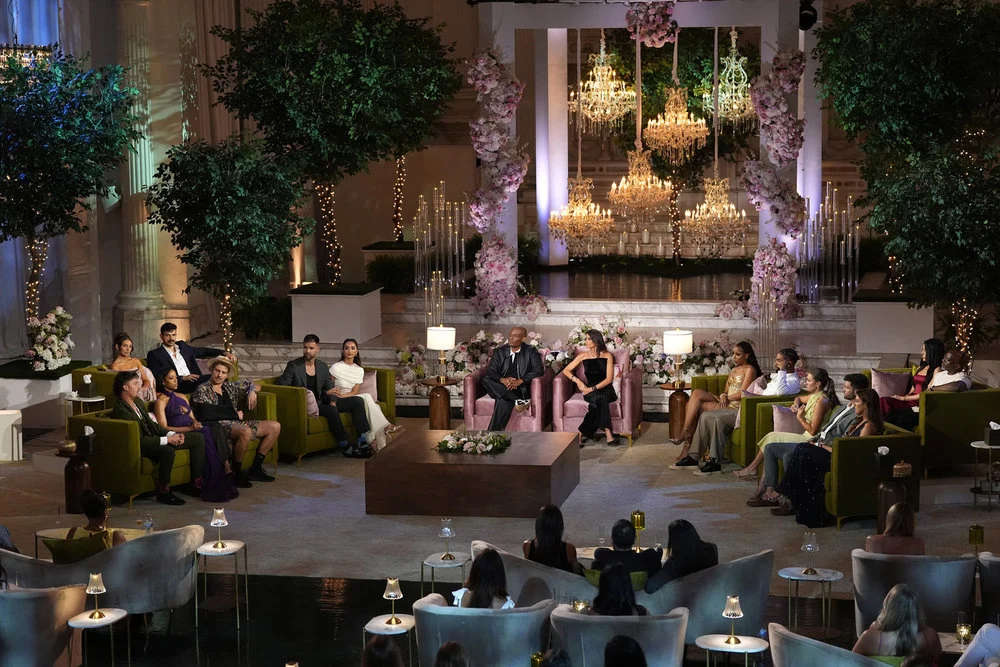
Millions of viewers are saying "I do" to the latest season of "Married at First Sight." Season 20 of the Kinetic Content relationship reality series, which transitioned to Peacock for Season 19 after a significant 15-season run on Lifetime, has not only found a strong new home but has also undergone a series of strategic and creative enhancements, proving to be a resounding success. The finale and reunion episodes, which dropped on Peacock on Thursday, revealed the typical dramatic outcomes of the experiment: out of the participating couples, all but two ultimately chose to go their separate ways on Decision Day. While Mecca Amen and BelleJolie Force initially said "yes" to staying married, they disclosed during the reunion that their union had dissolved shortly after the televised commitment. In stark contrast, Cameron Mitchell and Michelle Le remain a happily married couple, as confirmed at the reunion, offering a rare success story from the season. The majority of the other couples, however, parted ways, with many relationships ending on decidedly acrimonious terms.
Since its premiere on July 12th, a date strategically chosen to follow the conclusion of Peacock’s highly popular "Love Island USA," "Married at First Sight" has captivated audiences, amassing an impressive over 1.8 billion minutes viewed, according to Peacock’s internal data. This viewership surge has propelled Season 20 to become the No. 4 highest-reaching original reality season on the platform, demonstrating a remarkable +153% increase in total streaming engagement compared to Season 19. This performance underscores the effectiveness of the platform’s commitment to the series and its strategic integration into the streaming giant’s content library.
While the show aired on Peacock for Season 19, Season 20 marks the first season to be fully produced for Peacock, a distinction that appears to have fueled its significant gains. The series has consistently ranked as a Top 3 original reality title on the streaming service for five consecutive weeks, according to Nielsen’s measurement data, highlighting its powerful performance in a competitive streaming landscape. This success is a testament to the deliberate efforts made to revitalize the long-running format for a new audience and platform.
Noah Samton, SVP of Current Production for Bravo and Peacock Unscripted, expressed his enthusiasm for the show’s trajectory. "When we first acquired it, I was super excited – this is one of the great formats in unscripted history," Samton stated. "To have an opportunity to try to improve on what has already been established as something really strong, an opportunity to try to upgrade that and make it even better, is the most exciting challenge for me." This sentiment reflects a proactive approach to not just inheriting a successful show, but actively seeking ways to elevate it and ensure its continued relevance and appeal.

Samton detailed the multifaceted approach to revitalizing "Married at First Sight" for its Peacock era, emphasizing a two-pronged strategy focused on creative enhancements and strategic casting. The initiative began with an in-depth analysis of the show’s existing content. "Normally, if we acquired a show like this, I would try to watch every single episode. It just is impossible with this one," Samton admitted. "So I watched about 40 episodes, and it became very clear to me that there were some things that we could do to make it work better for a Peacock audience, make it a more fun, more exciting show, and just kind of revitalize it without losing what made it special and magical in the first place." This foundational viewing period allowed for the identification of key areas for improvement.
The creative changes fall into two primary categories. The first, as Samton explained, is the elevation of production value across the board, beginning with the weddings themselves. "To me, it’s a fantasy for the viewer. ‘That’s a crazy thing to do, but would I do it?’ You’re kind of playing along as you watch the show, and you want to see yourself in a beautiful wedding, in a beautiful setting and incredible decor. That was really important to help the viewer immerse themselves in the fantasy by making the weddings even more beautiful." This focus on aesthetic appeal aims to enhance the viewer’s emotional investment in the initial premise of the show, making the dreamlike quality of the weddings even more compelling.
The second significant creative enhancement focused on the casting process. "Then, we wanted to make the cast a more aspirational cast," Samton elaborated. "Traditionally, the most important thing for the cast is authenticity. But you can be authentic and aspirational. You shouldn’t have to choose between those two. That was a really big goal for us – to have a cast that really wanted to be there for the right reasons, and was still exciting and fun for a viewer to watch." This delicate balance between genuine desire for marriage and compelling on-screen personality is crucial for the show’s success. The production team invested significant effort into finding individuals who not only possessed the authentic motivation to find a lifelong partner but also exhibited the charisma and engaging qualities necessary for compelling reality television.
The casting process for Season 20 was rigorous and involved extensive travel. "I went out west to Seattle. We spent five days with hundreds of cast members," Samton recounted. "There’s a combined process of the experts looking for people who are suitable matches, and producers and network executives looking for people who make sense on television, and then, collaborating with those people to try to come up with the best cast possible. It’s extremely challenging, but also really fun." This collaborative approach ensures that both the scientific matchmaking and the entertainment value are prioritized.
A notable casting decision for Season 20 was the inclusion of Nick Uhlenhuth, a former reality television star, marking the first time such an individual was cast on "MAFS." This strategic choice was driven by the need to capture audience attention in a crowded media landscape. "There were a lot of conversations around that one, and I wanted to do something that would get viewers to pay attention," Samton explained. "In a crowded television landscape, it’s hard to get anybody to even think about your show. There are so many shows out there. So somebody that maybe viewers knew already [could help]." The initial idea was to potentially cast someone from a show like "Love Island" who hadn’t found love, but after exploring those options, the team focused on identifying individuals with a genuine desire to marry. "After talking to a whole lot of people, a lot of former reality cast members, they pitched Nick to me," Samton recalled. "At first I was like, I don’t know about this guy. But then they sent me a really long interview with him talking specifically about the show, and he really did seem to make sense. I’m just a little sad that we couldn’t find the right match for him." While Uhlenhuth’s match did not work out, the inclusion of a familiar face demonstrates a willingness to experiment with casting strategies to boost viewership. When asked about the possibility of future former reality stars joining the show, Samton remained open, stating, "Maybe at some point. They have to be somebody who is there for the right reasons, and who makes sense with the show. We don’t want to do it just as a gimmick. But if there is the right person at the right time, who knows?"

In addition to casting adjustments, the show also saw a change in its expert panel. Dr. Pepper Schwartz, Pastor Cal Roberson, and Dr. Pia Holec were replaced by Paul C. Brunson and Dr. Lisa Paz. "Initially, we were really looking for three experts," Samton explained. "We wanted to find experts who spoke more to a Peacock audience, which was a little younger than the show when it was on Lifetime previously. We wanted people who felt younger, fresher and spoke to our audience. After meeting all these people, we realized the two of them stood out head and shoulders above every other expert we met with, and so we said, ‘Why do we need three? We have two great experts. Let’s just let them take the reins.’" This shift towards a younger, more relatable expert duo was intended to resonate more effectively with Peacock’s demographic.
A significant structural change implemented for Season 20 was the increase in the number of couples from five to seven. Samton had initially advocated for eight couples. "It was very important to me that we have seven couples instead of five. Originally, I wanted eight," he said. "I know it’s a lot for people to process, but I think one of the things that I struggled with in the 40 episodes that I watched of ‘Married at First Sight’ is that you would see a couple who was clearly not right for each other. They didn’t like each other and didn’t want to be there, and because of the necessities of making a TV show, they were kind of strung along for every episode. I didn’t want that. If somebody was done with the relationship, they should walk away from the show. So that was one of the reasons we wanted to have more couples." This adjustment aims to streamline the narrative, ensuring that viewers’ time is spent on couples with genuine potential or compelling conflict, rather than those who are clearly disengaged from the process.
The season also presented its share of off-camera drama, a persistent challenge in reality television production. Felipe Cruz’s decision to confess to Tori Dahl that he had contemplated cheating, revealed off-camera, highlights this issue. "This is the bane of the television producer’s existence. It’s something that happens on most shows," Samton admitted. "It’s a constant message from producers to cast members: Have those conversations on camera." He contrasted this with other shows where continuous filming minimizes such occurrences. "On most shows, cameras shut down – they go home, they have the conversation. We’ve learned over the years a lot of ways of getting the information out, and you saw it in the diary cam with Tori. Good producers need to be on top of every situation, and they have to be able to sense when something is different in the dynamic." Samton emphasized that the fundamental expectation for reality show participants is transparency. "One of the biggest job requirements when you’re cast on a reality show is to be open and honest on camera and to share everything. That is literally what you’re hired for, and yet, still, people try to avoid it. And then the flip side, the job of a producer is to make sure that everything that happens is able to come out on camera."
A significant departure for Season 20 was the inclusion of a live audience for the reunion episodes, a first for the franchise. Samton initially expressed reservations. "I was really hesitant about that. Kinetic and Ally Simpson over there really wanted to bring in a live audience. She thought it would bring a different dynamic, a different energy to the show. I was resistant. I was worried about leaks. I was worried about the production logistics of having a live audience during the show. She pushed hard. I gave in, and she was absolutely right. I thought the energy was great as a result. I thought the show looked great. It just gave a different dynamic to the reunion." This bold decision proved to be a success, injecting an enhanced energy and palpable atmosphere into the reunion special.
The reunion also provided an opportunity for the show’s authenticity to be defended. Adam Dehmlow’s new girlfriend’s claim that the show was "fake" prompted the experts to address such criticisms directly. "Look, it’s something that we battle with, right? People are always like, ‘Well, it’s reality TV. It’s not real.’ It’s all real. It’s produced at times, but everything I do on every one of my shows, what you’re watching, is real. It’s great to be able to show that this is the cast’s lived experience, and that they will support that. Because it’s endlessly frustrating for me to hear that from people. It’s real!" Samton asserted, underscoring the genuine nature of the participants’ experiences and the production’s commitment to showcasing authentic relationships and their outcomes.

Addressing persistent rumors that couples did not actually marry this season, Samton firmly refuted these claims. "I would say that their experience is that they are a married couple, and they are living their lives as a married couple, and every aspect of what they experience on that is a marriage," he stated. "They have a wedding at the beginning, and then they have a divorce if they want to go their separate ways at the end." This direct rebuttal reinforces the integrity of the show’s core premise and the legal and emotional commitment undertaken by the participants.
The revitalization strategy, encompassing enhanced production values, aspirational yet authentic casting, updated expert guidance, and structural adjustments, has demonstrably paid off for "Married at First Sight" on Peacock. The significant increase in viewership and its consistent ranking among the platform’s top reality series indicate that the changes have resonated with audiences, breathing new life into a beloved format and securing its future success.
This interview has been edited and condensed for clarity and length.
