
 By admin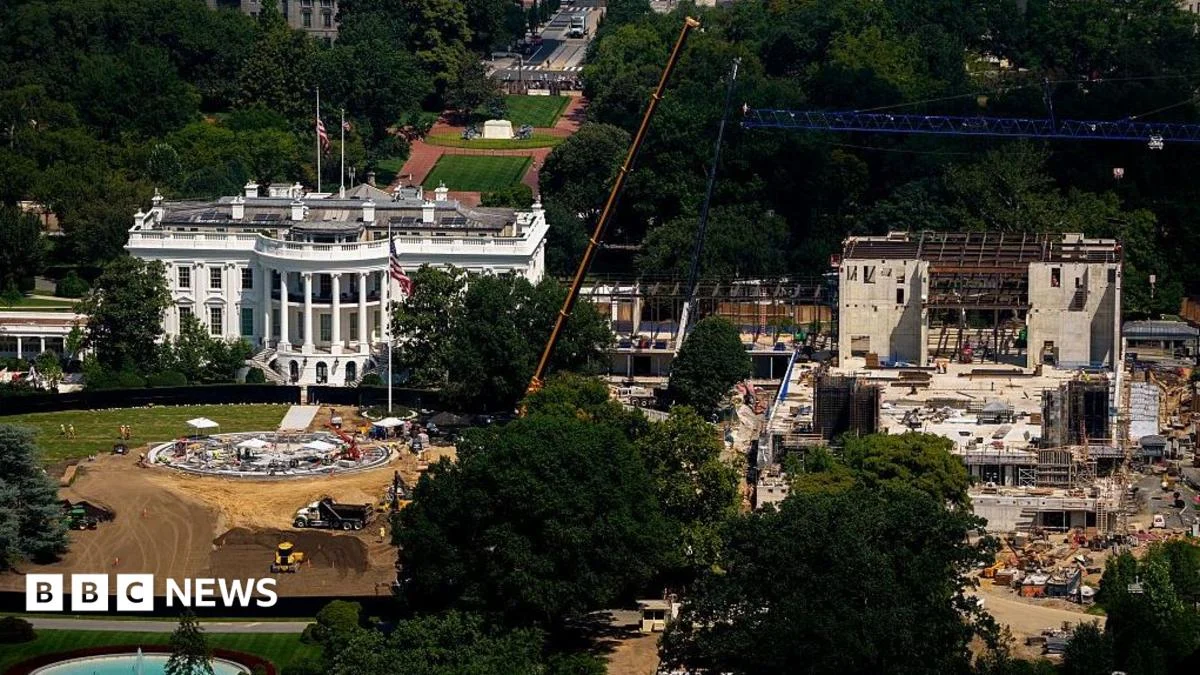
In a significant legal victory for President Donald Trump’s ambitious vision for transforming Washington D.C.’s iconic cityscape, a federal appeals court has ruled in favor of the administration’s controversial plan to construct a new ballroom adjacent to the White House. The ruling effectively dismisses a lawsuit filed by the National Trust for Historic Preservation, which argued that the proposed building would inflict irreparable damage on a cherished historical landmark. Reacting swiftly to the decision, President Trump expressed his "pleased" sentiment, stating that the "baseless" lawsuit had failed to derail the much-anticipated construction. He further declared, "We are living in the Golden Age of America, and this Building will be one of the Greatest ever constructed in Washington, DC."
This legal battle is intrinsically linked to President Trump’s long-standing assertion that the White House requires enhanced facilities, particularly a larger events space, and more recently, a heightened emphasis on security. The urgency for an expanded ballroom was underscored following an alleged assassination attempt at the White House Correspondents’ Association dinner in April, a stark reminder of the vulnerabilities inherent in hosting high-profile events within the confines of the historic residence. The President’s proponents argue that a dedicated, secure ballroom would not only streamline large-scale events but also provide a more controlled environment for presidential security protocols.
However, the National Trust for Historic Preservation, a prominent advocate for the preservation of America’s historical sites, maintained a staunch opposition to the project. Their core argument centered on the irreversible damage the construction would inflict upon a national treasure. This position was powerfully articulated by preservationist Alison Hoagland, a resident of Washington D.C. and a member of the Trust’s board of trustees. Hoagland, who visits the neighborhood monthly, submitted a declaration asserting that the proposed ballroom, "of the proposed form and scale," would result in "professional and personal injuries, including to my aesthetic, cultural and historical interests." Her statement painted a vivid picture of the potential detriments to the historical integrity and aesthetic appeal of the area surrounding the White House.
The dissenting opinion within the appeals court, penned by Judge Roberts, offered a glimmer of hope for preservationists. Roberts argued that the injuries claimed by Hoagland were indeed substantial enough to warrant the lawsuit proceeding. This dissent, while not altering the outcome of the immediate ruling, highlighted the significant concerns raised by those dedicated to safeguarding historical sites. The National Trust for Historic Preservation, while expressing disappointment in the court’s ultimate decision, nonetheless welcomed Roberts’ "strong dissent" as a validation of their concerns. In a statement, the Trust reiterated its fundamental belief: "Each President is a temporary steward of the People’s House and does not have the unilateral authority to demolish and redesign it without the approval of Congress." This statement underscores a broader philosophical debate about presidential power and its limitations when it comes to altering national landmarks.
The approved ballroom project is not an isolated endeavor but rather a component of President Trump’s expansive agenda to reshape Washington D.C.’s urban landscape. This agenda extends beyond the immediate vicinity of the White House, encompassing a series of ambitious and often controversial projects. Among these is the planned renovation of the Lincoln Memorial Reflecting Pool, a project intended to enhance the grandeur and functionality of one of the nation’s most solemn and iconic monuments. Even more audacious is the proposed "Arc de Trump," a monumental arch envisioned to dwarf the Arc de Triomphe in Paris, signifying a bold assertion of American architectural and cultural ambition. Additionally, the construction of a helipad on the South Lawn of the White House is also part of this broader transformation, aimed at improving logistical capabilities and security for presidential travel.
The rationale behind these grand designs, as articulated by the administration, often centers on themes of national pride, security, and the creation of a more fitting and impressive presidential presence. For the ballroom, the security imperative, especially in light of recent events, has been a primary driver. The current event spaces at the White House are perceived by some as outdated and insufficient for the demands of modern diplomacy and public engagement. The proposed ballroom is envisioned as a state-of-the-art facility, capable of hosting larger delegations, state dinners, and significant public events with enhanced security features. This, proponents argue, would elevate the stature of presidential events and provide a more secure environment for dignitaries and guests.
However, the preservationist perspective offers a critical counterpoint. Critics argue that the scale and design of the proposed ballroom are out of character with the existing architectural fabric of the White House complex and its surrounding historic districts. The National Trust for Historic Preservation, in particular, has voiced concerns about the potential visual impact, the disruption of historical sightlines, and the introduction of modern construction elements that could detract from the historical authenticity of the area. The argument is not simply about adding a new building, but about how that building integrates with, and potentially compromises, the existing historical narrative and aesthetic of a site of immense national and international significance.
The legal framework governing such projects often involves a delicate balancing act between executive authority and the preservation of historical assets. The National Historic Preservation Act of 1966, for instance, establishes a process for federal agencies to consider the effects of their undertakings on historic properties. However, the interpretation and application of these laws can be contentious, as evidenced by the protracted legal battle over the White House ballroom. The appeals court’s decision, in this instance, appears to have prioritized the executive branch’s assessment of its needs and security concerns over the preservationist arguments, at least for the time being.
The broader context of President Trump’s engagement with the built environment in Washington D.C. is also noteworthy. His administration has shown a consistent inclination towards grand architectural statements and a willingness to challenge established norms. The "Arc de Trump," if realized, would be a powerful symbol of this ambition, aiming to create a monument that not only rivals but surpasses its European counterpart. Similarly, the renovation of the Lincoln Memorial Reflecting Pool speaks to a desire to enhance iconic American landmarks, imbuing them with a renewed sense of grandeur and purpose. These projects, taken together, suggest a president with a distinct vision for the capital city, one that prioritizes bold statements and a modernization of its most significant sites.
However, the economic and logistical implications of such large-scale construction projects are also significant. The cost of these endeavors, the disruption they cause during the construction phase, and the long-term maintenance requirements are all factors that warrant careful consideration. While the administration may emphasize the symbolic value and functional benefits of these projects, critics often point to the substantial financial investment and the potential for aesthetic or historical compromise.
The debate surrounding the White House ballroom and other proposed architectural interventions in Washington D.C. encapsulates a larger national conversation about how we balance progress with preservation, and how we define and express national identity through our built environment. The legal victory for the Trump administration, while significant, does not necessarily extinguish the concerns of preservationists. The "strong dissent" by Judge Roberts serves as a reminder that these issues are complex and that differing interpretations of law and historical responsibility will continue to shape the future of these iconic spaces. As construction on the ballroom is now poised to proceed, the eyes of many will remain on Washington D.C., observing the realization of President Trump’s ambitious vision and its lasting impact on the nation’s capital. The narrative of transforming Washington’s cityscape is far from over, with each project representing a chapter in an ongoing dialogue about heritage, progress, and the enduring power of architecture to shape public perception and national pride.
