
 By Lina Irawan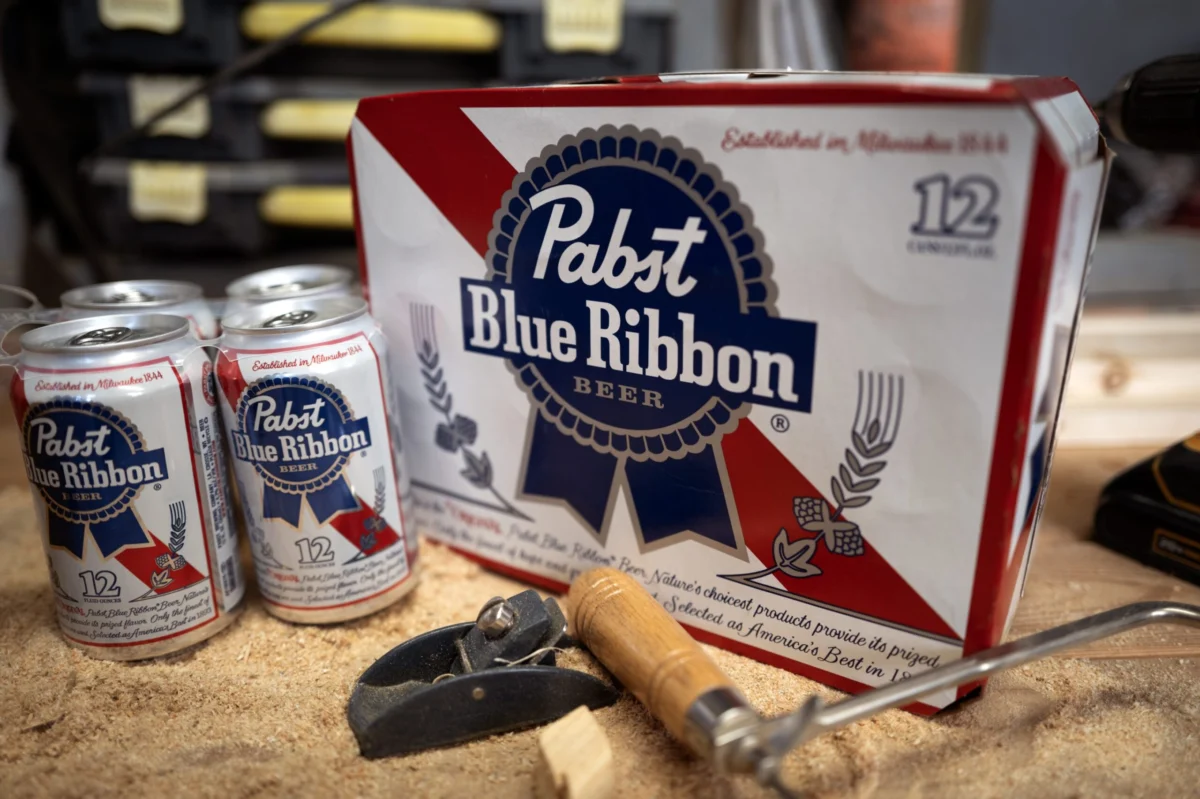
This unsettling scenario is precisely what a group of cargo thieves now faces after Pabst Blue Ribbon, the iconic American lager brand, publicly appealed for assistance in locating truckloads of its beer stolen from a major distribution center in Montclair, California. The audacious heist has not only captivated public attention but also shone a spotlight on the growing sophistication of cargo theft operations, particularly within the lucrative food and beverage sector.
Pabst Blue Ribbon, a brand deeply woven into the fabric of American culture since its founding in 1844, known for its distinctive blue ribbon and often associated with working-class roots and hipster appeal, took to Instagram to broadcast the theft. “STOLEN—40,000 lbs of beer,” the company posted, adopting a tone that blended urgency with its characteristic brand irreverence. “We don’t fault you for wanting to brag to your friends how much PBR you have, we just wish you obtained it the honorable way.” This social media outreach quickly went viral, turning a serious criminal investigation into a public spectacle.
The company’s post, which many initially speculated might be a marketing stunt due to its playful nature, gave the alleged thieves a peculiar deadline of “18 days and 44 minutes” to return the stolen goods with “no questions asked.” This specific timeframe is widely believed to be a subtle nod to Pabst’s founding year of 1844, though the company has not officially confirmed this connection. Alongside this unconventional ultimatum, Pabst also promised a reward for information leading to the recovery of the beer, hoping to leverage public engagement in its pursuit of justice, or at least, its missing inventory.
Montclair police, however, quickly dispelled any notions of a publicity stunt, confirming the gravity of the situation. In a press release, the department detailed an active investigation into two distinct cargo thefts that occurred on the same day, August 17, both originating from the Anheuser-Busch distribution center in Montclair. The choice of an Anheuser-Busch facility, a giant in the global beverage industry, underscores the scale and strategic planning likely involved in such an operation, even if the primary target product was Pabst Blue Ribbon.
The first incident, reported around 10 a.m., involved a shipment valued at approximately $45,000. This cargo was picked up as scheduled but never reached its intended destination in Tucson, Arizona. Just about an hour later, a second, even more elaborate theft transpired. In this instance, a purported subcontracting company used sophisticated fraudulent documentation to arrange the pickup of roughly $25,000 worth of product, comprising both Anheuser-Busch and Pabst Blue Ribbon brands. This method, often referred to as "fictitious pickup" or "strategic cargo theft," highlights a growing trend in organized crime.
Pabst Blue Ribbon meticulously itemized its losses, tallying a staggering 1,602 cases containing 33,984 cans of beer. This haul included 860 cases of 25-ounce PBR cans, packed 15 per case, and 546 cases of 12-ounce cans, packed 30 per case. Intriguingly, the thieves also made off with 196 cases of nonalcoholic Old Milwaukee, suggesting either an indiscriminate grab or a broader market for various beverage types. The combined weight of the stolen goods, including pallets and packaging, exceeded 40,000 pounds – equivalent to roughly 18 metric tons. This immense volume translates to the aforementioned 4,496.33 gallons, or approximately 17,020 liters of beer. Montclair police were keen to clarify that despite some online confusion fueled by Pabst’s quirky social media posts, "no trucks were stolen. Just the cargo," emphasizing the specific nature of the theft as a diversion of goods rather than vehicle appropriation.
While the PBR heist is substantial, it pales in comparison to some of history’s most epic beer thefts. A notable example occurred in 2010 in Germany’s Rhineland during the fervor of World Cup celebrations. Thieves exploited the festive distraction to break into a storage facility and, over a long weekend, hauled off an astounding 10 truckloads of beer. This colossal theft amounted to approximately 300,000 liters, with an estimated value of $3 million, dwarfing the Montclair incident by a considerable margin. Such large-scale heists underscore the enduring appeal of alcoholic beverages as high-value, easily liquidatable targets for organized crime.
The Evolving Landscape of Cargo Theft: Beyond "No Questions Asked"
The Montclair incident serves as a stark reminder of the evolving and increasingly sophisticated nature of cargo theft. "Fictitious pickup," where criminals use fake paperwork and impersonate legitimate carriers to pick up shipments, is far from a new phenomenon. Fortune magazine reported on this tactic nearly a decade ago, noting that fraud accounted for roughly one in ten cargo thefts, with food and beverages being particularly attractive targets. The reason is simple: unlike electronics or other serialized goods, food and drink products often lack unique identifiers, making them difficult to trace once they enter the black market and are resold through unscrupulous distributors.
However, the methods employed by cargo thieves have become significantly more advanced. Organized criminal groups are now leveraging cyber-enabled tactics, employing spoofed emails, meticulously crafted fake URLs, and creating elaborate "ghost carriers"—entirely fictitious trucking companies—to hijack freight. This digital sophistication prompted a recent FBI warning about these tactics, highlighting how criminals are exploiting vulnerabilities in digital logistics and supply chain communications. The global supply chain, already strained by various factors, faces immense pressure from these organized operations, which lead to significant financial losses for businesses, increased insurance premiums, and ultimately, higher costs for consumers. Industry reports from organizations like CargoNet and BSI Supply Chain Services consistently rank food and beverage as a top target for cargo thieves due to its universal demand and ease of resale.
Pabst’s offer of a reward with "no questions asked" might seem like a straightforward path to recovering the stolen beer, but the legal reality is far more complex. While a reward represents a private contract where a company promises payment for specific information or actions, it possesses no power to unilaterally prevent legal action. The decision to prosecute a crime rests solely with the state, not the victim. A district attorney, or in some cases a federal agency acting in concert with one, holds the exclusive authority to grant immunity from prosecution, and this typically requires a formal, legally binding agreement, not a casual social media post.
One of the most widely publicized examples illustrating this legal principle involves superstar Lady Gaga. In 2021, her two French bulldogs, Koji and Gustav, were stolen at gunpoint in Los Angeles, and her dog walker was shot and injured during the incident. Gaga, distraught, offered a $500,000 reward for their safe return, explicitly stating "no questions asked." Jennifer McBride subsequently brought the dogs back, seeking the hefty reward. However, Los Angeles prosecutors charged McBride with receiving stolen property, among other offenses, leading to her eventual plea of no contest.
When McBride later sued Lady Gaga for the reward money plus an additional $1.5 million in damages, arguing that the offer was unconditional, a judge unequivocally sided with Gaga. The court determined that McBride’s own admission meant she knew the dogs were stolen goods. Crucially, the judge reiterated that Gaga’s private promise, regardless of its wording, never held the power to shield McBride from the state’s prosecutorial authority. The underlying criminal act remained, and the state had every right to pursue charges.
Applying this precedent to the Pabst Blue Ribbon case, even if the thieves were to return the beer in response to the "no questions asked" offer, they would not be automatically absolved of criminal liability. The Montclair Police Department’s investigation would continue, and the district attorney’s office would retain full discretion to file charges for grand theft, cargo theft, or any other applicable offenses. The reward offer serves primarily as an incentive for information or the return of goods, a tool for recovery, but not a get-out-of-jail-free card.
As of Pabst’s most recent social media update, the fate of the 40,000 pounds of beer remains unknown. The brand’s pithy comment, “Beer is getting warmer, trail is getting colder. Clock’s still ticking,” injects a sense of urgency and humor into an otherwise serious criminal matter. The stolen beer, if not properly stored, is indeed losing its quality by the day, making its ultimate market value diminish. For the Montclair Police Department, the clock is ticking on an investigation that underscores the increasing challenges faced by law enforcement and businesses in combating sophisticated cargo theft operations. The incident serves as a potent reminder that while an ice-cold PBR might be a simple pleasure, the journey from brewery to consumer is fraught with complex logistical and security challenges, sometimes attracting the most audacious of criminals.
