
 By admin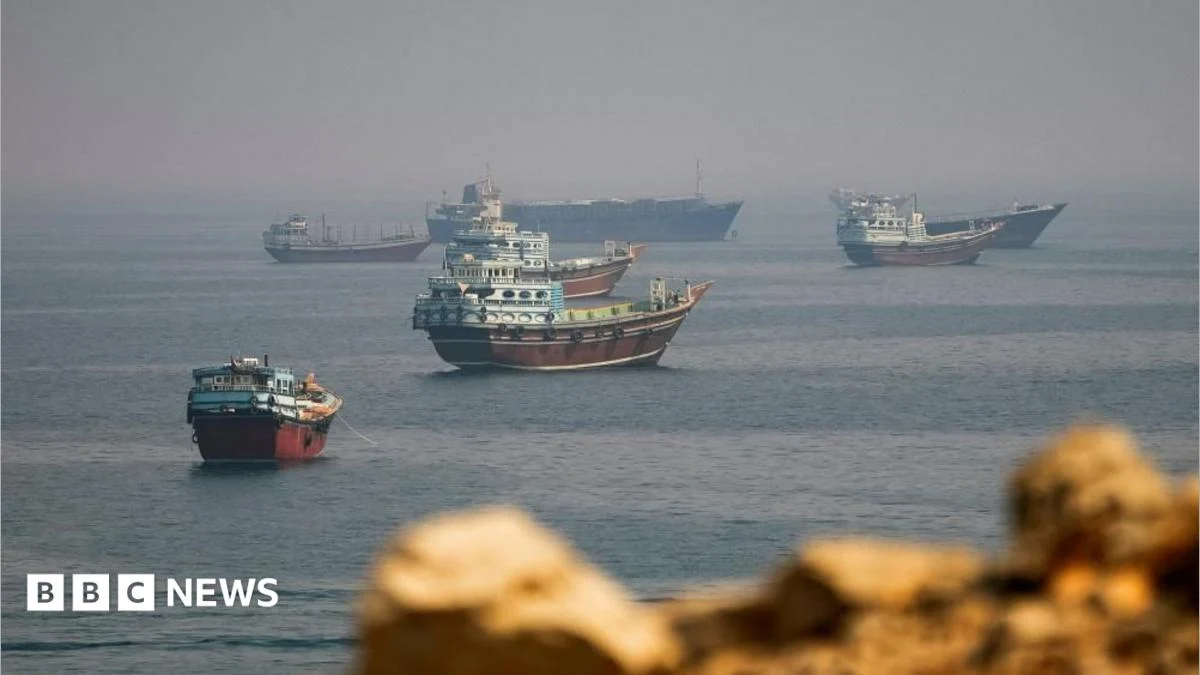
American forces reignited a significant offensive against Iran on Tuesday, initiating a series of strikes that US Central Command (Centcom) confirmed were a direct response to "recent attempted attacks" by the Islamic Revolutionary Guard Corps (IRGC) targeting commercial shipping in the vital Strait of Hormuz. The renewed hostilities mark a dramatic escalation in the already volatile geopolitical landscape of the Middle East, with far-reaching implications for regional stability and international maritime security.
Centcom’s statement detailed that the US strikes commenced at 12:00 ET (16:00 GMT) and concluded by early Wednesday morning, focusing on IRGC targets. However, reports emerging from Iranian state media painted a grim picture of civilian casualties. The Iranian Red Crescent stated that four individuals, including a young child, were killed and over 50 others injured when shrapnel from a US missile attack struck a home in Sirik, southern Iran, where a wedding celebration was reportedly underway. Additional reports indicated that projectiles also impacted areas around Chabahar and Konarak, an airport in Jiroft, with explosions heard on Qeshm Island and in Bandar Abbas.
In a swift and forceful retaliation, Iran launched a barrage of ballistic missiles and drone attacks against US military bases in Iraq and Jordan, as well as targeting locations in Kuwait and Bahrain, according to local state media and official military statements. The IRGC, in a defiant declaration, vowed that the US would "regret" its actions. By early Wednesday, Iran’s semi-official Tasnim news agency reported that the IRGC had unleashed a volley of ballistic missiles at a US Marine base in Aqaba, Jordan, explicitly framing it as retaliation for the civilian deaths in Sirik.
The Jordanian Armed Forces confirmed the missile barrage, stating that they had successfully intercepted 13 ballistic missiles. Ten of these were destroyed, while three landed in remote areas, resulting in no casualties or injuries. The network also disclosed that the country’s national security center had issued a temporary warning to residents in the Aqaba and Mafraq governorates regarding potential falling debris, a warning that has since been lifted. Meanwhile, the Kuwaiti army reported that its air defense systems were actively responding to Iranian missile attacks in the early hours of Wednesday. In Bahrain, Iranian state media reported multiple explosions following Iranian attacks.
The unfolding events have been met with strong rhetoric from former US President Donald Trump, who, upon the announcement of the US strikes on Tuesday afternoon, issued a stern warning that Iran would face "a much harder and higher level" of retaliation if it chose to respond. Trump further characterized Tuesday’s "large and powerful" strikes as a direct consequence of Iran’s "initial targeting" of a US military base in Jordan, adding that Iran had "failed" in its attempts to deploy sea mines in the Strait of Hormuz. He also ominantly suggested that a significantly larger-scale attack was "waiting in the wings."
This latest exchange follows closely on the heels of the first known US strikes on Iran since late July, which occurred earlier in the week. During that operation, US forces attacked two rocket launchers on Larak Island in the Strait of Hormuz. Tehran’s response then included firing missiles at air bases in Jordan and a drone strike targeting the United Arab Emirates.
The current escalation can be understood within a broader context of escalating tensions and a breakdown of diplomatic frameworks. The US and Israel launched extensive strikes on Iran on February 28th, prompting Iran to retaliate with attacks on Israel, US bases, and allied states in the Gulf, which effectively disrupted maritime traffic in the Strait of Hormuz. A crucial element in the preceding period was a US-Iran agreement, known as the Memorandum of Understanding, aimed at extending a ceasefire between the two nations, which was signed in June. However, the expiration of this agreement has led to a resumption of overt hostilities. Both the US and Iran have engaged in actions against maritime traffic, with Tehran targeting vessels it claims attempted to transit the Strait without authorization, and the US enforcing a naval blockade of Iranian ports.
Adding to the pressure, Washington announced a new sanctions campaign on August 24th, designed to further isolate Tehran and expand secondary sanctions against its allies. At a G20 finance ministers meeting, US Treasury Secretary Scott Bessent highlighted that numerous US allies had pledged to "do whatever is necessary" regarding these sanctions. Iranian officials and state media have largely downplayed these measures, framing them as a continuation of existing US economic policies and a response to Washington’s perceived military failures in recent conflicts.
Despite the hardening rhetoric and military actions, a glimmer of potential de-escalation emerged on Tuesday when Iranian President Masoud Pezeshkian was quoted by state media expressing a willingness to reciprocate if the US returned to committing to the agreement. This statement, however, stands in stark contrast to the actions taken by the IRGC and the subsequent US military response.
US Navy Captain Tim Hawkins, speaking on behalf of Centcom, acknowledged the reports from Iranian state media concerning the attack in Sirik. He emphasized, "The US military never targets civilians, unlike the IRGC," a statement aimed at drawing a clear distinction between US operational doctrine and the alleged actions of the Iranian forces. This assertion seeks to frame the US strikes as precise military responses to Iranian provocations, rather than indiscriminate attacks.
The economic dimension of the conflict remains a significant factor. The recent US sanctions campaign, coupled with the ongoing disruption to shipping in vital waterways like the Strait of Hormuz, has had tangible effects on Iran’s economy and its ability to engage in international trade. The effectiveness and impact of these sanctions are a subject of ongoing debate, with the US government asserting their deterrent effect and Iran characterizing them as a continuation of long-standing economic warfare.
The strategic importance of the Strait of Hormuz cannot be overstated. This narrow waterway is a critical chokepoint for global oil supplies, with a significant percentage of the world’s crude oil passing through it daily. Any disruption or conflict in this region has the potential to send shockwaves through global energy markets, impacting prices and supply chains worldwide. The IRGC’s repeated attempts to interfere with commercial shipping in the Strait have been a primary driver of US military responses, as Washington seeks to maintain freedom of navigation and ensure the unimpeded flow of international commerce.
The cycle of retaliation and counter-retaliation creates a precarious situation, where miscalculation or escalation could lead to a wider regional conflict. The involvement of various actors, including the US, Iran, and their respective allies, further complicates the dynamics. The current events underscore the fragility of peace in the Middle East and the persistent challenges in de-escalating tensions between Iran and the United States. The pronouncements from both sides suggest a hardening of positions, making a swift return to diplomatic engagement and de-escalation an increasingly difficult prospect. The world watches with bated breath as this dangerous spiral of conflict continues to unfold.
