
 By admin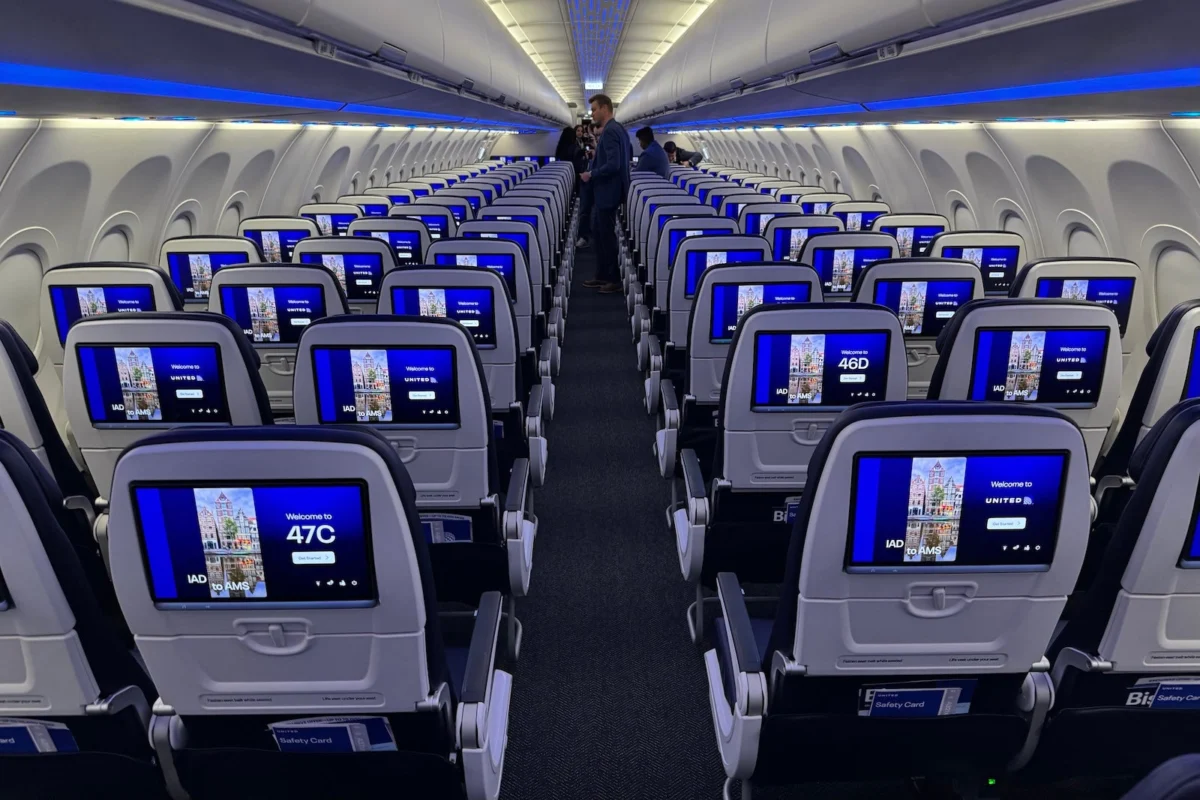
The fundamental question that governs the world of award travel remains as pertinent as ever: what is a point or a mile actually worth? In the complex ecosystem of modern loyalty programs, the answer is rarely a static figure. Value is a fluid concept, dictated by the intersection of travel goals, individual flexibility, and the strategic maximization of specific loyalty currencies. As we enter September 2026, the landscape of travel rewards has undergone a significant transformation, driven by airline fleet modernizations, a shift toward dynamic pricing, and the rise of highly specialized transferable currencies. To navigate this environment, travelers must understand not just the numbers, but the market forces driving them.
In the realm of transferable rewards—the "gold standard" of the points world—the competition for dominance has reached a fever pitch. According to the latest valuations, Bilt Rewards has maintained its position at the top of the hierarchy, with points valued at an impressive 2.2 cents each. This valuation is a testament to the program’s unique ability to capture spend on rent—a category once thought unreachable for rewards—and its robust portfolio of high-value transfer partners. Following closely behind is Chase Ultimate Rewards at 2.05 cents per point, a currency that continues to benefit from its "trifecta" of cards and its exclusive partnership with World of Hyatt. American Express Membership Rewards remains a powerhouse at 2.0 cents, supported by its vast network of international airline partners, while Citi ThankYou Rewards and Capital One miles round out the top tier at 1.9 cents and 1.85 cents, respectively.
The high valuation of Bilt Points is particularly noteworthy. While other programs have struggled with the inflationary pressure of dynamic award pricing, Bilt has managed to sustain value by positioning itself as a lifestyle brand for the modern urban traveler. By allowing members to earn points on rent without transaction fees and offering "Rent Day" promotions that frequently include transfer bonuses of 50% to 100%, Bilt has created a high-velocity ecosystem. This strategy, overseen in part by advisors like TPG founder Brian Kelly, has effectively forced legacy issuers like Chase and American Express to innovate their own "transfer bonus" calendars to keep pace.

Transitioning to the airline sector, the month of September brings a flurry of activity centered on massive network expansions for the summer 2027 season. The headline news is United Airlines’ historic announcement of 10 new international destinations across 13 routes. This represents the largest international expansion in the carrier’s history, marking a bold foray into "thin" long-haul markets that were previously inaccessible via nonstop service. For the first time, U.S. travelers will be able to fly nonstop to destinations such as Ljubljana, Slovenia, and Luxembourg. Not to be outdone, American Airlines responded just days later by adding seven new international routes, including service to Vienna, Reykjavik, and Porto. This competitive maneuvering ensures that American will become the only U.S. carrier serving Vienna when the route launches in May 2027.
The catalyst for this expansion is the widespread deployment of the Airbus A321XLR. This aircraft is a game-changer for the industry, offering the range of a wide-body jet with the economics of a single-aisle plane. By utilizing the A321XLR, airlines can profitably fly to smaller European cities that do not have enough demand to fill a 300-seat Boeing 787 or 777. However, the "XLR era" brings a different passenger experience. While the convenience of a nonstop flight is undeniable, travelers may find the single-aisle configuration less spacious than traditional long-haul aircraft. In business class, the configuration often features seats angled toward the aisle rather than the window to maximize space, and economy passengers may face longer waits for a limited number of lavatories.
From a redemption perspective, these new routes present both opportunities and challenges. Because United and American have largely moved toward dynamic award pricing, seats on these highly anticipated new routes—especially during peak summer months—can command exorbitant mile requirements. A flight to Slovenia in July might cost 150,000 miles one-way in business class if booked directly through United MileagePlus. To combat this, savvy travelers are increasingly looking toward partner programs. For instance, searching for United-operated flights through Air Canada’s Aeroplan or American-operated flights through British Airways Executive Club can often yield lower, fixed-rate pricing, provided that "saver" level availability is released to partners. A pro tip for the September booking window is to target the very beginning or end of the seasonal schedules, typically in late May or early September, where demand is lower and award seats are more plentiful.
A significant shift in the airline loyalty landscape this year is the rise of Atmos Rewards, the rebranded and integrated loyalty program of the Alaska Airlines and Hawaiian Airlines merger. Valued at 1.55 cents per point, Atmos Rewards has emerged as the most valuable airline currency in the United States. This valuation is driven by the program’s unique "hybrid" nature; it retains a distance-based award chart for many partners while offering seamless redemptions across a massive network spanning the Mainland U.S., Hawaii, and the South Pacific. The September 2026 offer of the month features a suite of Atmos Rewards credit cards offering up to 80,000 bonus points and the legendary companion fare, which remains one of the best values in the industry for West Coast and transpacific travelers.

In the hotel sector, the valuation story is one of "Fixed vs. Flexible." Accor Live Limitless (ALL) leads the pack with a valuation of 2.3 cents per point. This high number is deceptive to some, as Accor uses a fixed-value system where 2,000 points always equals 40 Euros (approximately $46). While this prevents "outsize value" on expensive nights, it provides a reliable floor that protects members from the devaluations seen in other programs. Conversely, World of Hyatt remains the darling of the points community at 1.65 cents per point. Despite several years of category changes, Hyatt’s commitment to a published award chart allows members to achieve values of 3 or 4 cents per point during peak periods or at luxury brands like Park Hyatt and Alila. This stands in stark contrast to Marriott Bonvoy and Hilton Honors, which have fully embraced dynamic pricing, making it increasingly difficult to find redemptions that exceed 0.8 cents per point without significant effort.
The broader economic context of late 2026 also plays a role in these valuations. As cash prices for international airfare have stabilized at higher post-pandemic levels, the "cents per point" value of a redemption has naturally increased. However, this is offset by the fact that airlines and hotels have become more sophisticated in managing their "award buckets" using AI-driven revenue management systems. This means that while a point might be worth more on paper, the availability of that point for a specific "dream trip" requires more advanced planning than it did five years ago.
For travelers looking to earn and burn in the final quarter of the year, the strategy should focus on diversification. Holding a balance of transferable points like Chase or Amex provides a hedge against any single airline’s devaluation. Furthermore, the "mid-tier" credit card market has become incredibly lucrative. Cards like the American Express® Gold Card now offer 4X points at restaurants and U.S. supermarkets on up to $50,000 in spend—a significant increase from previous years—reflecting the banks’ desire to capture daily "lifestyle" spend rather than just travel purchases.
Ultimately, the valuations provided for September 2026 serve as a benchmark rather than a rule. A mile is worth zero if it expires or remains unused, and it is worth infinitely more than its stated valuation if it facilitates a life-changing trip that would otherwise be financially out of reach. As the A321XLR opens up the hidden corners of Europe and new loyalty ecosystems like Atmos Rewards mature, the savvy traveler is the one who remains flexible, stays informed on partner arbitrage, and understands that in the world of points and miles, knowledge is the most valuable currency of all. Whether you are eyeing a nonstop flight to the mountains of Slovenia or a luxury stay in a Hyatt villa, the tools to maximize your travel have never been more powerful, provided you know how to use them.
