
 By admin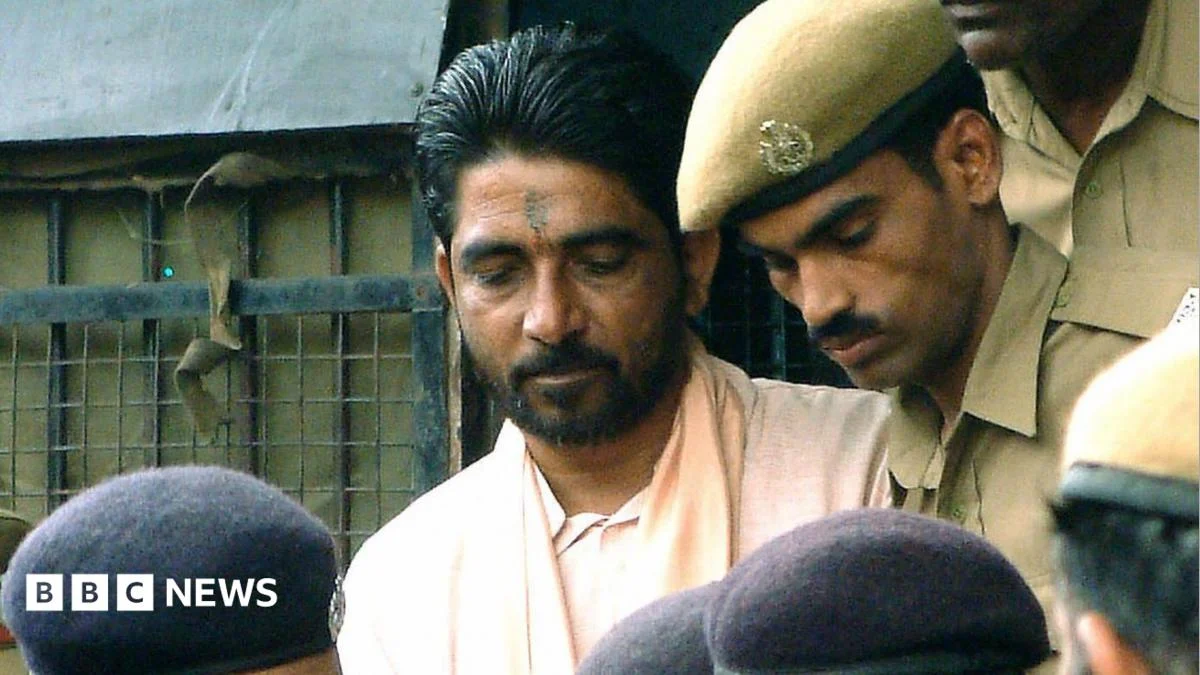
More than a quarter of a century after one of India’s most egregious acts of anti-Christian violence sent shockwaves across the globe, the nation’s highest court is once again examining the case. The Supreme Court is currently hearing a petition for the release of Dara Singh, whose real name is Rabindra Kumar Pal, the man convicted of the brutal murder of Australian Christian missionary Graham Staines and his two young sons in 1999. Singh has been incarcerated since his arrest in 2000, serving a life sentence for the horrific act of burning alive the missionary and his sons, aged six and ten, in the eastern state of Odisha, then known as Orissa.
Graham Staines had dedicated three decades of his life to serving the marginalized, working tirelessly with leprosy patients in Baripada, within the Mayurbhanj district. His work extended to the local tribal communities, where he was a beacon of hope and compassion. However, Singh and his associates, reportedly from hardline Hindu nationalist groups, accused Staines of forcibly converting impoverished Hindus, particularly those from disadvantaged castes and tribal backgrounds, to Christianity. These accusations, widely disseminated by extremist elements, created a climate of fear and animosity.
The sheer brutality of the crime – the immolation of a humanitarian worker and his innocent children – elicited widespread condemnation from India’s minority Christian community and ignited global outrage. Now, the prospect of Singh’s potential release has resurrected the painful memories of this heinous act for many.
The chilling events unfolded on the night of January 22, 1999. Staines and his sons had attended a Christian gathering in Manoharpur, a remote village in the neighboring Keonjhar district. After the event, they retired to sleep in their jeep. It was at this vulnerable moment that a mob, numbering between 60 and 70 individuals and reportedly led by Dara Singh, descended upon them. The mob surrounded the jeep, set it ablaze, and callously prevented any escape, ensuring the horrific demise of the missionaries.
Following the murders, Singh evaded capture, becoming the subject of a statewide manhunt. Police plastered posters across Odisha, offering a substantial reward of 800,000 rupees (approximately $18,000 at the time) for information leading to his arrest. Reports from that period suggest he received assistance from villagers and tribal members who lauded him as a local hero, a "modern-day Tarzan" capable of extraordinary feats. He was eventually apprehended a year later, during an overnight raid on a jungle hideout.
In a revealing interview conducted from prison a few months after his arrest, published by India Today, Singh, while denying direct involvement in the killings, expressed his strong disapproval of Graham Staines and his missionary activities. He stated, "Missionaries have been targeting our religion. They have been converting Hindus by deceit and inducements. Our religion is under siege. As a true Hindu, it was my responsibility to oppose them." He further asserted that his prominence in the region led to his implication in the murders by the police. Singh declared himself "prepared to be a martyr for the cause of Hindus," expressing an unfounded belief that he would ultimately escape conviction.
His optimism proved misplaced. In 2003, a trial court handed down a death sentence to Singh and life imprisonment to twelve others involved in the crime. However, two years later, the high court commuted his death sentence to a life term, upholding the life sentence for one accomplice, Mahendra Hembram, while acquitting eleven others due to insufficient evidence. In January 2011, the Supreme Court affirmed Singh’s life sentence, rejecting the prosecution’s plea to reinstate the death penalty.
The Staines murder was not the sole instance of Singh’s violent actions against religious minorities. In 2007, he was convicted for two other separate heinous crimes committed in 1999, the same year he murdered the Staines family. He received life sentences for leading a mob that set fire to a church, resulting in the death of Catholic priest Arul Das, who was fatally struck by an arrow as he attempted to escape the inferno. In a second conviction, he was found guilty of beating and burning to death a Muslim garment trader, Shaikh Rahaman.
Further allegations against Singh included involvement in the hijacking of trucks carrying cows, an animal revered by many Hindus, from Muslim traders. Police registered ten cases related to such incidents. While Singh denied personal involvement in the hijackings, attributing them to his supporters, he openly admitted to being "actively involved in the movement against illegal trade in cows and cow slaughter," asserting that it "had to be stopped at any cost."
Church leaders at the time alleged that these attacks were orchestrated by the hardline Hindu organization Bajrang Dal. However, Singh denied membership in the group, and a subsequent inquiry commission, headed by retired Supreme Court judge D.P. Wadhwa, concluded that Singh had acted alone.
Graham Staines’ widow, Gladys, who remained in India with their daughter Esther until July 2004, famously stated that she had "forgiven" Dara Singh in the spirit of Christian teachings, emphasizing that "forgiveness opens up the path of healing."
In July of this year, Singh submitted a plea for remission to the Supreme Court, arguing that his eligibility for release stemmed from having served over 25 years in prison. He claimed good conduct during his incarceration and expressed remorse for his past actions. In his petition seeking early release, the now 62-year-old Singh attributed his crime to "the fervour of youth." He stated, "The petitioner acknowledges and deeply regrets the transgressions committed more than two decades ago. In the fervour of youth, fuelled by impassioned reactions to the brutal history of India, the petitioner’s psyche momentarily lost restraint and it is imperative for the court to scrutinise not merely the actions but the underlying intent, noting that there was no personal animosity harboured towards any victim."
Last year, the Supreme Court had directed the Odisha state government to decide on his plea. However, the authorities have yet to formally communicate their decision to the court. During the last hearing on August 19th, the state informed the court that the Sentence Review Board (SRB), tasked with examining Singh’s petition, was awaiting additional documentation and requested an adjournment. The bench, comprising Justices Manoj Misra and Vijay Bishnoi, expressed their dissatisfaction with the repeated adjournments sought by the state, warning that if the SRB failed to decide Singh’s plea by September 2nd, the court would intervene. "You take a decision, whichever way you want. If you do not take a decision, then we will," the bench stated. However, the case was not heard on Wednesday, and a date for the next hearing is still pending.
The possibility of Singh walking free has generated considerable disquiet within India’s 30-million-strong Christian community. This unease is amplified by Singh’s past statements, particularly from his 2000 interview. In that interview, he chillingly declared he had "no regrets" and "will never regret" killing Staines’ children. He questioned the perceived disparity in grief, stating, "When Hindus die, others don’t cry. Why should we weep when others die? Whatever has happened is right. Whatever will happen will also be right." He further indicated that upon release, he would resume his activism, stating, "I will go back to what I have been doing – oppose cow slaughter and conversions." He ominously added, "The government must stop them. If they are not stopped, more people might get killed. Anything can happen."
John Dayal, a prominent human rights and Christian political activist, recently wrote on the Union of Catholic News (UCN) website that while remission for long-serving prisoners is a common practice in India and reflects a humane principle of reform and reintegration, the anxiety among religious minorities in Odisha is not abstract. He pointed to the state’s history of anti-Christian violence, citing the Kandhamal riots of 2008, which resulted in numerous deaths and the displacement of tens of thousands. Dayal characterized the Staines murders as "a public, theatrical act of terror, intended to be seen and understood as a warning," and noted that the killings of Father Arul Doss and Sheikh Rehman carried the same message. He concluded that the focus should not solely be on whether Singh will eventually be released, but on how the government manages the decision-making process and whether minority communities receive any reassurance. The Supreme Court’s upcoming decision, and the state government’s eventual response, will undoubtedly be closely watched, carrying significant implications for the ongoing dialogue on religious tolerance and justice in India.
