
 By admin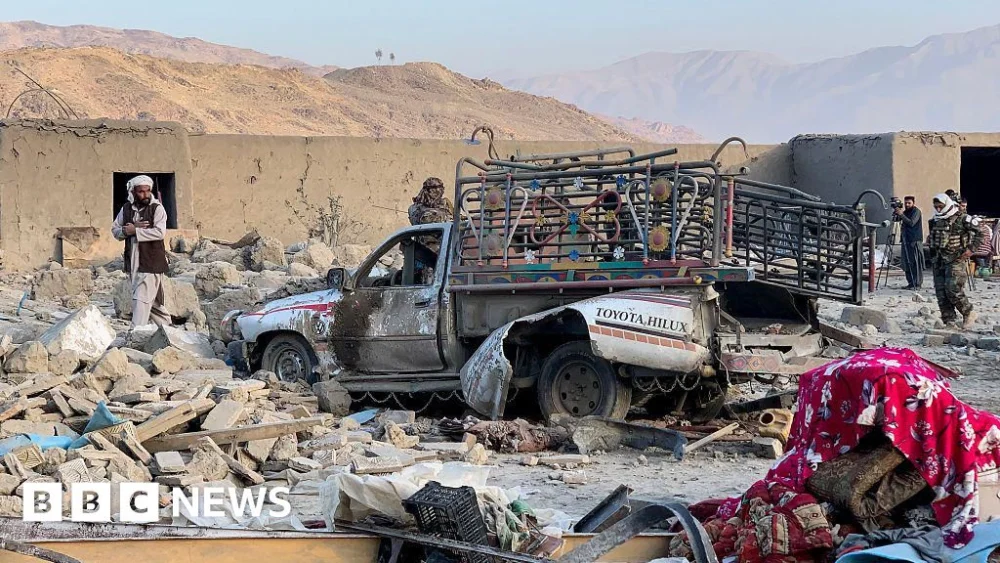
In a significant escalation of cross-border tensions, Pakistan launched a series of overnight airstrikes targeting alleged militant camps and hideouts within Afghanistan, resulting in the deaths of at least 18 people, including women and children, according to Afghan authorities. Islamabad stated that the strikes, which hit seven locations near the Pakistan-Afghanistan border, were a direct response to a recent spate of suicide bombings that have plagued Pakistan. The Afghan Taliban, however, vehemently condemned the attacks, asserting that they struck civilian residences and a religious school, thereby violating Afghanistan’s territorial integrity and international law.
The latest military action shatters a fragile ceasefire that was established in October following intense cross-border exchanges. While subsequent skirmishes have occurred, this is the most significant military engagement between the two neighboring countries since the Taliban regained control of Afghanistan in 2021. The Pakistani Ministry of Information and Broadcasting detailed its operation as "intelligence-based selective targeting of seven terrorist camps and hideouts," naming the banned Tehreek-i-Taliban Pakistan (TTP), which it refers to as "Fitna al Khawarij," along with their affiliates and the Islamic State-Khorasan Province (IS-KP) as the intended targets. The ministry characterized the strikes as a "retributive response" to recent terror attacks in Pakistan, which it claims were orchestrated by militant groups harbored by Kabul.
The targeted attacks by Pakistan come in the wake of several high-profile suicide bombings that have rocked Pakistan in recent weeks. These include an attack on a Shia mosque in the capital, Islamabad, earlier this month, and a series of bombings in the northwestern Khyber Pakhtunkhwa province that began with the start of the holy month of Ramadan. Pakistan has repeatedly accused the Afghan Taliban of failing to curb the activities of these militant groups, asserting that it possesses "conclusive evidence" that the attacks were carried out by militants acting under the direct instruction of their leadership in Afghanistan. This accusation highlights a deep-seated distrust and ongoing dispute over the Taliban’s commitment to preventing its territory from being used as a base for attacks against its neighbors.
The Taliban’s Ministry of Defense issued a strong condemnation on the social media platform X, labeling the Pakistani strikes as a "blatant violation of Afghanistan’s territorial integrity" and a "clear breach of international law." The ministry issued a stark warning, stating that "an appropriate and measured response will be taken at a suitable time." It further pointed to the targeting of civilian and religious institutions as indicative of a failure in Pakistan’s intelligence and security apparatus. This rhetoric suggests a potential for further retaliation, raising concerns about a wider regional destabilization.
The human cost of the Pakistani airstrikes has been particularly devastating in civilian areas. In Girdi Kas village, located in the Bihsud district of Nangarhar province, a resident named Shahabuddin recounted the horror of the attack, pointing to the rubble of his destroyed home. He stated that of the 23 members of his family who were present, only five had survived. Local Taliban spokesman Sayed Taib Hamd corroborated this account, reporting that 18 members of the family had perished in the strike. Initial reports had suggested around 20 fatalities, underscoring the severity of the loss of life. While no deaths have been officially reported in other affected areas, a guesthouse and a religious school in the Bermal and Urgun districts of Paktika province were also targeted. Local officials and residents informed the BBC that these establishments were fortunately empty at the time of the attacks, averting further casualties. The image of destroyed homes and the profound grief of survivors paint a grim picture of the conflict’s impact on civilian populations.
The geopolitical context surrounding these strikes is complex and fraught with historical animosity. Pakistan and Afghanistan share a long and porous border, approximately 1,600 miles (2,574 km) in length, characterized by rugged mountainous terrain. This border has historically been a conduit for cross-border movements of militants, smugglers, and refugees. For years, Pakistan has been a victim of terrorist attacks, many of which it attributes to groups operating from Afghan soil. The Taliban’s takeover of Afghanistan in August 2021, after the withdrawal of US and NATO forces, has intensified these concerns for Islamabad, which fears a resurgence of militant activity and a lack of effective counter-terrorism cooperation from the new Afghan administration.
The TTP, a militant group that has waged a long insurgency against the Pakistani state, has become increasingly emboldened since the Taliban’s return to power. The group shares ideological kinship with the Afghan Taliban and is believed to have found safe haven and support in Afghanistan. Pakistan’s government has accused the Taliban of not only tolerating but actively supporting the TTP, a charge that Kabul has consistently denied. This divergence in claims and the perceived inaction by the Afghan authorities have led to increasing frustration in Islamabad, culminating in the decision to conduct unilateral strikes.
The inclusion of IS-KP as a target is also significant. The IS-KP is an enemy of both the Taliban and Pakistan, and has been responsible for numerous deadly attacks in Afghanistan and Pakistan. However, the Taliban has been engaged in its own campaign against IS-KP within Afghanistan. Pakistan’s decision to target IS-KP alongside the TTP within Afghan territory, without explicit Afghan consent, further complicates the regional security landscape and underscores Pakistan’s willingness to take direct action to protect its perceived security interests.
The recent release of three Pakistani soldiers who were captured in Kabul during border clashes last October, facilitated by Saudi Arabian mediation, offered a brief glimmer of hope for improved relations. However, this diplomatic breakthrough appears to have been short-lived, overshadowed by the current military confrontation. The incident of the captured soldiers itself underscored the volatile nature of the border and the persistent security challenges.
The airstrikes raise serious questions about regional stability and the future of Pakistan-Afghanistan relations. The Taliban’s warning of retaliation, coupled with Pakistan’s assertion of its right to self-defense against groups operating from Afghan territory, creates a volatile situation with the potential for further escalation. International observers will be closely monitoring the reactions of both countries and the broader implications for counter-terrorism efforts in the region. The effectiveness of Pakistan’s intelligence in identifying and targeting "terrorist camps" versus the claims of civilian casualties will likely be subject to intense scrutiny and verification. The narrative from both sides is starkly different, highlighting the deep chasm of trust and understanding that persists between these two neighboring nations. The long-term consequences of this latest confrontation could have a profound impact on the already fragile security and humanitarian situation in Afghanistan and the broader geopolitical dynamics of South and Central Asia. The international community faces the challenge of de-escalating the conflict and promoting dialogue to prevent a wider conflagration that could have devastating consequences for millions.
