
 By admin
A new judicial chapter opened on Tuesday with the commencement of a retrial into the death of football icon Diego Maradona, a year after the initial proceedings were dramatically halted by a mistrial. Seven members of his medical team stand accused of negligent homicide, a grave charge stemming from the legendary player’s passing at the age of 60 due to a heart attack. The defendants have vehemently denied all allegations. Should they be found guilty, they face a potential prison sentence ranging from eight to 25 years, a stark reminder of the legal ramifications of alleged medical malpractice.
The first attempt to bring this case to justice collapsed in May of the previous year under deeply unfortunate circumstances. The trial, which was being heard by a panel of three judges, was derailed when one of the judges was forced to resign. The reason cited for this unprecedented departure was the alleged unauthorized filming of court proceedings for a documentary, a serious breach of judicial protocol that undermined the integrity of the trial. This initial collapse cast a long shadow of frustration and disappointment, particularly for those seeking accountability for Maradona’s death.
Diego Maradona, a figure who transcended the sport to become a global cultural icon, died in 2020 at his residence in Tigre, a suburb of Buenos Aires, Argentina. At the time of his death, he was recuperating from a critical surgery to remove a blood clot from his brain. This procedure, while intended to improve his health, ultimately became part of the complex narrative surrounding his final days. Investigators, in their initial classification of the case, labeled it as "culpable homicide," a legal designation akin to involuntary manslaughter in many jurisdictions. This classification was based on the assertion that the accused medical professionals were fully cognizant of the precariousness of Maradona’s health condition but, according to the prosecution, failed to implement the necessary and timely measures that could have potentially saved his life.
The preliminary autopsy report provided crucial details regarding the immediate cause of death. It confirmed that Maradona suffered from acute pulmonary edema, a severe condition characterized by the accumulation of fluid in the lungs. This condition, often a consequence of cardiac distress, played a direct role in his fatal heart attack. The findings of this autopsy formed a cornerstone of the prosecution’s case, suggesting a direct link between the medical care provided and the ultimate outcome.
Further bolstering the prosecution’s argument, a panel of medical experts was specifically tasked by prosecutors to conduct an independent review of the care provided by Maradona’s medical team. Their findings were damning. The expert panel concluded that the treatment Maradona received at his home was not only "deficient" but also "reckless." This strong condemnation suggested a systemic failure in the approach to his post-operative care. The experts’ report went on to state unequivocally that the celebrated footballer "would have had a better chance of survival" had he received adequate treatment in a properly equipped medical facility, implying that the home environment and the care provided within it were fundamentally inadequate for his complex medical needs.
The individuals currently standing trial are prominent figures within Maradona’s inner medical circle. Heading the list of the accused is his main medical advisor, Dr. Leopoldo Luque, a neurosurgeon who oversaw the brain surgery. Also facing charges is his psychiatrist, Dr. Agustina Cosachov, who was reportedly involved in managing his mental and emotional well-being during his recovery. It is worth noting that a former nurse, Dahiana Gisela Madrid, who was also implicated, will be facing a separate trial, indicating a potentially complex legal strategy by the prosecution.
The current trial, presided over by a new set of judges, is expected to be a lengthy and emotionally charged affair. Approximately 100 individuals are slated to testify before the court, including Maradona’s daughters, Dalma and Gianinna Maradona, whose poignant testimonies are anticipated to shed further light on their father’s final days and their perceptions of the care he received. The proceedings are projected to continue until July, underscoring the thoroughness with which the court intends to examine the evidence.
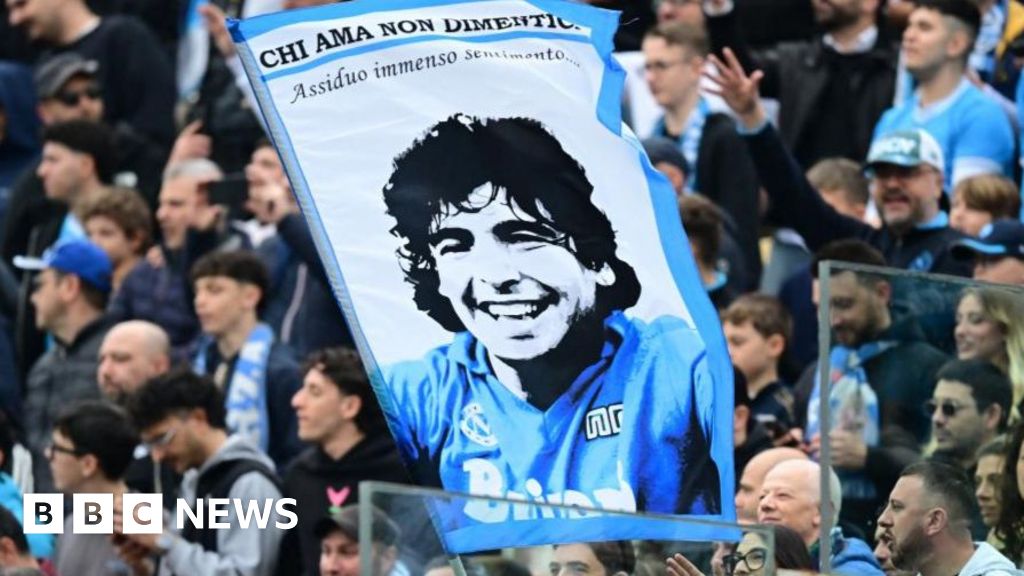
The death of Diego Maradona on November 25, 2020, sent shockwaves across Argentina and the global football community. The outpouring of grief was immense, prompting then-President of Argentina, Alberto Fernandez, to declare three days of national mourning. In a heartfelt tribute, President Fernandez articulated the profound sense of loss felt by the nation, stating, "Thank you for having existed, Diego. We’re going to miss you all our lives." This sentiment captured the deep affection and admiration the Argentine people held for their sporting hero.
Maradona’s journey in football was nothing short of legendary. He began his illustrious career at Argentinos Juniors, a club that provided him with his initial platform. His talent quickly propelled him onto the international stage, where he represented Argentina in four World Cups. Over the course of these tournaments, he scored a remarkable 34 goals for his country, etching his name in football history. Among his most iconic moments was the infamous "Hand of God" goal scored against England in the 1986 World Cup quarter-finals, a moment that continues to be debated and remembered for its controversial nature and its pivotal role in Argentina’s eventual triumph.
Beyond his on-field brilliance, Maradona’s life was also marked by significant personal struggles. During the latter part of his career and in his post-playing years, he battled with cocaine addiction. This addiction led to a 15-month ban from football in 1991 after he tested positive for the drug. His fight with addiction was a well-documented aspect of his life, highlighting the immense pressures and challenges faced by athletes at the pinnacle of their careers.
He officially retired from professional football in 1997, precisely on his 37th birthday, during his second tenure with the renowned Argentine club Boca Juniors, bringing an end to a storied playing career. His influence, however, extended far beyond his playing days.
In 2008, Maradona transitioned to management, taking the helm as head coach of the Argentine national team. He led his country through the 2010 World Cup, where their campaign ended in the quarter-finals with a defeat against Germany. Following his stint with the national team, he ventured into coaching roles in the United Arab Emirates and Mexico, continuing his engagement with the sport he loved. At the time of his passing, he was managing the Argentinian club Gimnasia y Esgrima, a testament to his enduring passion for football and his desire to remain involved in the game. The retrial now seeks to provide clarity and closure on the circumstances surrounding the death of this beloved, yet complex, sporting legend.
