
 By Isnaini Azizah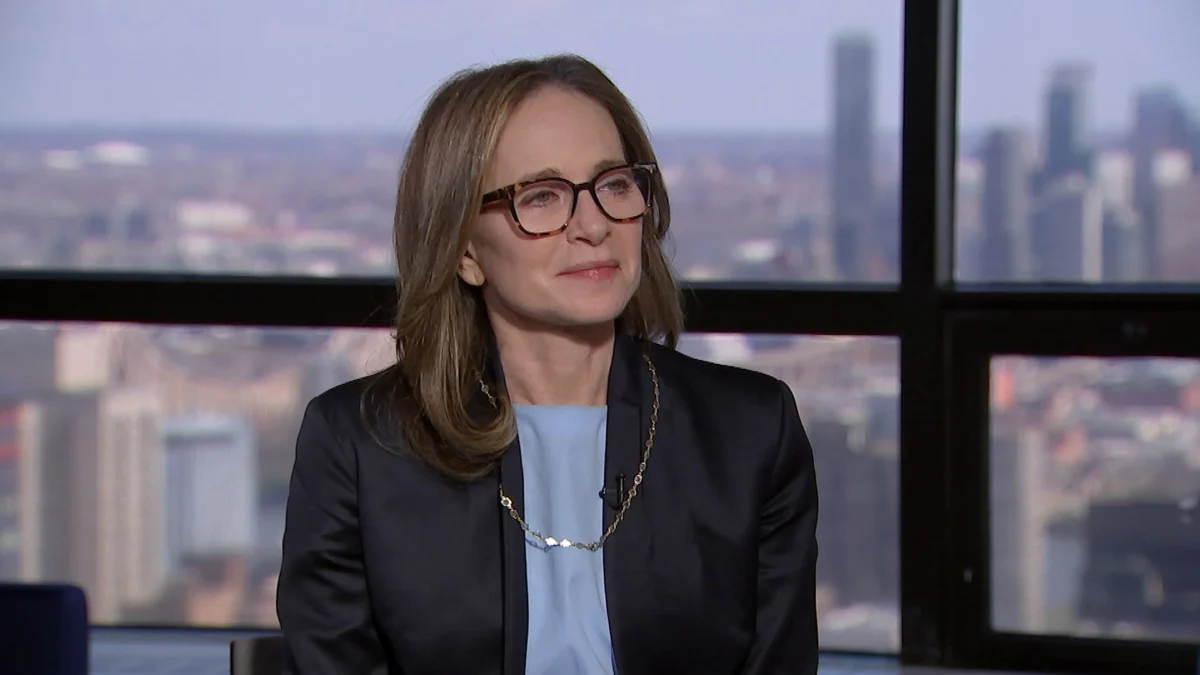
The private credit market, a behemoth that has swelled to nearly $1.7 trillion globally, is currently facing its most significant "stress test" since the global financial crisis. As interest rates remain elevated and economic uncertainty lingers, the industry is grappling with a surge in redemption requests that has forced some of the world’s largest asset managers to pull the emergency brakes. Amidst this backdrop of mounting anxiety, Joan Solotar, the Global Head of Blackstone Private Wealth, is offering a staunch defense of the asset class, suggesting that the narrative of an impending systemic collapse is vastly overblown. Solotar, who oversees a massive $300 billion portfolio within Blackstone’s wealth management arm, argues that the current volatility is not a sign of structural failure but rather a natural evolution in a maturing market.
The recent unease in the private credit sector was catalyzed by a wave of redemption requests that hit several high-profile funds. Last month, industry titans including Ares Management and Apollo Global Management took the rare step of capping investor withdrawals from their respective private credit vehicles. These "gates," designed to protect the integrity of the funds by preventing a fire sale of illiquid assets, have historically triggered alarm bells among retail and institutional investors alike. However, Solotar views the situation through a different lens. Speaking on the current climate of fear, she noted that the dire warnings of a systemic crisis do not align with the underlying health of loan portfolios. "In my view, you’ve had all these calls that the house is on fire, when what we see is maybe a piece of burnt toast," Solotar remarked, using a vivid metaphor to downplay the severity of the situation. Her perspective suggests that while there is some localized "scorching" in terms of underperforming loans, the broader structure remains sound.
To understand Solotar’s confidence, one must look at the mathematical resilience she attributes to private credit returns. Even in "worst-case" scenarios modeled by Wall Street analysts—which project loan default rates climbing as high as 15%—Solotar argues the impact on total returns would be manageable rather than catastrophic. If such a default rate were spread over a three-year period, the resulting loss to total annual returns would be approximately 300 basis points. In a market where many private credit funds currently deliver yields between 6% and 9%, a 300-basis-point hit would bring returns down to a range of 3% to 5%. While this represents a significant haircut, Solotar poses a rhetorical question to the skeptics: "Is a 3% to 5% return a disaster?" She points out that during periods of extreme volatility, public market equivalents often see their values plummet into negative territory. By comparison, a positive return of 3% to 5% in a "disaster" scenario represents significant outperformance over public equities or traditional fixed-income instruments.
However, the optimism radiating from Blackstone is met with sharp skepticism from other corners of the financial world. Critics argue that private equity firms and alternative asset managers are systematically understating the risks embedded in their portfolios. One of the primary areas of concern is the sector’s heavy exposure to the software industry. For years, software companies were the darlings of private credit lenders due to their recurring revenue models and high margins. But the landscape has shifted. The rapid emergence of generative artificial intelligence (AI) is now seen as a potential disruptor that could render certain software business models obsolete, threatening their ability to service debt. A recent investigation by The Wall Street Journal suggested that exposure to these vulnerable software firms among funds managed by Blackstone, Apollo, Ares, and Blue Owl might be deeper than their official filings indicate.
Solotar disputes this characterization of risk, specifically regarding AI. She asserts that less than 5% of the assets within Blackstone’s private wealth funds are truly vulnerable to AI-driven disruption. Furthermore, she addresses the long-standing criticism that private credit is a "shadowy" industry lacking transparency. Having spent years as a financial institutions analyst, Solotar argues that private credit funds actually offer more granular data to their investors than traditional banks. "The word ‘private’ only relates to the fact that these aren’t publicly traded," she explained. "But it doesn’t mean secret or shadowy. The banks do not let you know how they’re carrying any of their loans. We actually show you at the single, individual loan level." This level of transparency, she argues, allows investors to understand exactly what they own, provided they are willing to do the work of analyzing the quarterly reports.
The current friction in private credit mirrors the challenges faced by Blackstone’s flagship real estate investment trust, BREIT, in 2022. At that time, a surge in redemption requests from Asian investors, coupled with a cooling commercial real estate market, forced Blackstone to limit withdrawals from the $60 billion fund. The move sparked a media frenzy and led to predictions of BREIT’s demise. Yet, over the subsequent two years, Blackstone continued to honor redemptions in an orderly fashion, the portfolio stabilized, and the fund eventually returned to full liquidity. Solotar points to the BREIT experience as a blueprint for the current situation in private credit. She believes that once investors see that the "gates" are working as intended—to preserve value rather than hide losses—confidence will return.
The debate over private credit is not just about institutional portfolios; it has increasingly become a political and social issue as these assets move into the retirement accounts of everyday Americans. The industry’s push to include private assets in 401(k) plans has drawn the ire of veteran financiers, including former Goldman Sachs CEO Lloyd Blankfein. In a recent interview, Blankfein characterized the move toward "democratizing" alternative investments as "crazy," citing the opacity and inherent risk of these securities as unsuitable for retail investors who may not have the liquidity cushion to weather a multi-year lock-up. Blankfein questioned why firms are venturing into such "dangerous territory" just to grow their assets under management (AUM).
Solotar’s response to Blankfein was both a defense of the strategy and a subtle critique of the double standards in the industry. She emphasized the need for better education regarding how these structures work and how they interact with a broader portfolio. More pointedly, she suggested that the very critics who decry the "risks" for retail investors often hold substantial private investments in their own personal portfolios. The core of Blackstone’s argument is that if private investments are good enough to drive the outsized returns of Ivy League endowments, sovereign wealth funds, and billionaire family offices, then individual investors should not be barred from accessing those same engines of growth.
The growth trajectory of Blackstone’s private wealth division supports Solotar’s bullish outlook. In 2017, the division managed approximately $58 billion; today, that figure has skyrocketed to over $300 billion. The firm has set an ambitious target to reach $1 trillion in AUM in the coming years, driven by the belief that the "individualization" of institutional-quality portfolios is a secular trend that is only just beginning. "I like to say we are not even in the first inning, I think we’re still in spring training," Solotar said, highlighting the vast untapped potential in the retail market. Currently, while pension funds and endowments may allocate 30% or more of their capital to private markets, the average individual retirement account has an allocation of nearly zero.
As the private credit market navigates this period of heightened scrutiny, the divide between the "Alts" enthusiasts and the traditionalists remains wide. For Blackstone and Solotar, the path forward is clear: maintain transparency, manage liquidity through disciplined structures, and wait for the performance data to silence the skeptics. They contend that the "Golden Age of Private Credit" is not over; it is simply undergoing a necessary adjustment. Whether the current redemption wave is a mere "piece of burnt toast" or the first sign of a more significant conflagration remains to be seen, but for now, the leaders of the private market revolution are doubling down on their conviction that the future of finance is private. The "stress test" currently underway may ultimately serve to validate the asset class, proving that it can withstand the pressures of a high-rate environment and emerge as a permanent, stabilizing fixture in the modern investment portfolio.
