
 By admin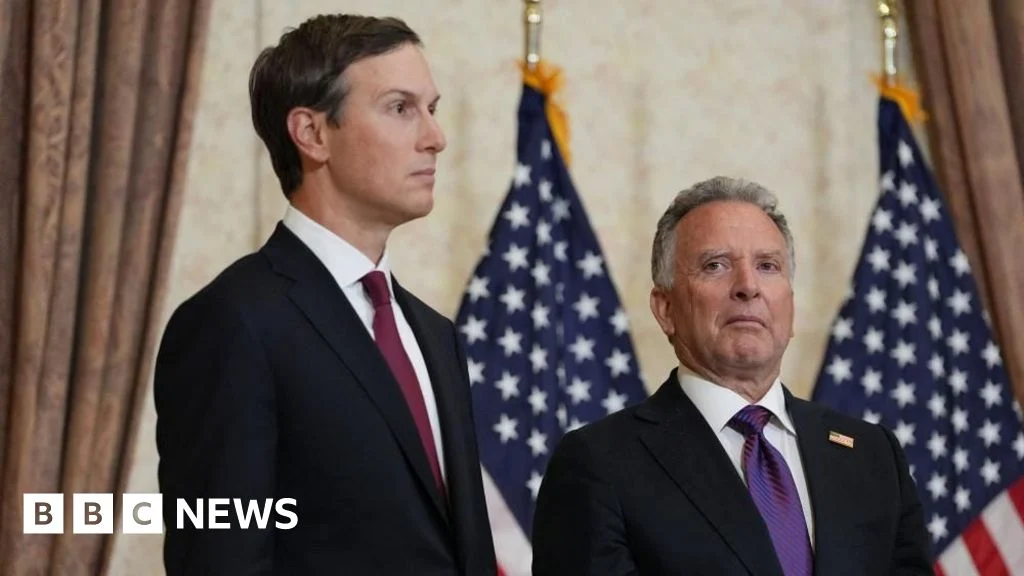
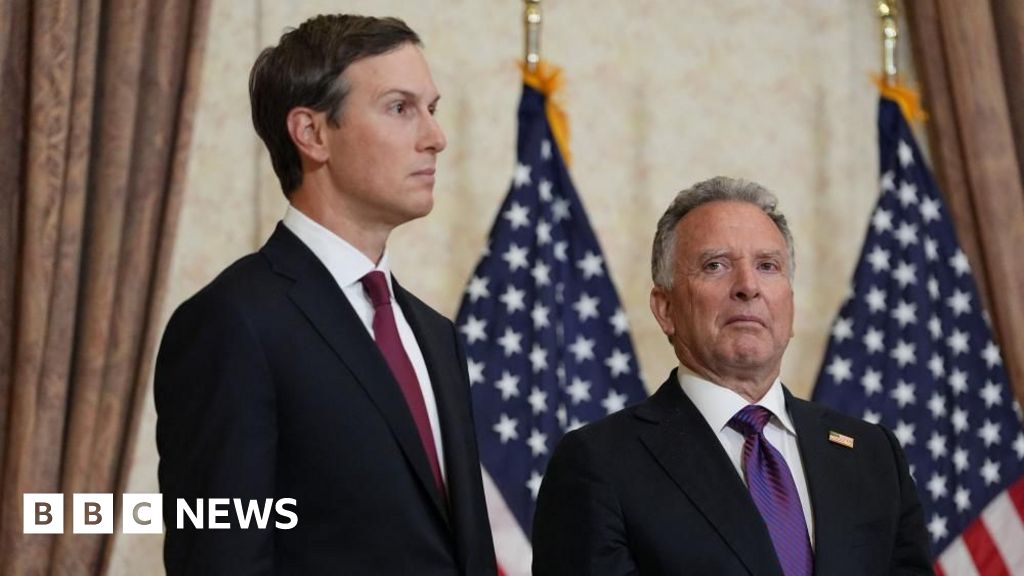
Washington D.C. – April 24, 2026 – In a significant diplomatic maneuver, Special Envoy Steve Witkoff and senior advisor Jared Kushner, son-in-law to former President Donald Trump, are en route to Pakistan for high-stakes peace talks with Iran. The White House confirmed the imminent arrival of the US delegation in Islamabad on Saturday morning, signaling a renewed, albeit delicate, push for de-escalation in the ongoing conflict that has dramatically impacted global oil markets and regional stability.
The initiative comes amid escalating tensions and a prolonged blockade of the Strait of Hormuz, a vital artery for global oil transportation, which was initiated by the US and Israel on February 28th, prompting retaliatory restrictions from Tehran. The conflict has already sent oil prices soaring, creating significant economic headwinds worldwide.
White House Press Secretary Karoline Leavitt stated, "The Iranians want to talk," a sentiment echoed by US Defence Secretary Pete Hegseth, who asserted that Tehran has a clear opportunity to forge a "good deal." Hegseth emphasized that Iran’s path to peace hinges on "abandoning a nuclear weapon and in meaningful and verifiable ways." He further warned that the US-led blockade of the Strait of Hormuz was "growing and going global," underscoring the far-reaching implications of the protracted standoff.
Adding a layer of complexity, Iran’s Foreign Ministry spokesman, Esmail Baqaei, announced his and Foreign Minister Abbas Araghchi’s arrival in Islamabad early Saturday. However, Baqaei clarified that "No meeting is planned to take place between Iran and the US." He indicated that Iran’s "observations would be conveyed to Pakistan," suggesting a mediated approach where Pakistan would act as an intermediary. This statement has led to speculation about the precise nature and directness of the forthcoming discussions.
Despite Baqaei’s assertion, White House officials, including Leavitt, maintain that Trump is "always willing to give diplomacy a chance" and that Witkoff and Kushner are traveling "to hear the Iranians out." Leavitt also hinted at some positive shifts, noting that "we’ve certainly seen some progress from the Iranian side in the last couple of days." This suggests a degree of optimism within the administration regarding the potential for dialogue, even if direct US-Iran engagement remains unconfirmed.
The Iranian embassy in Islamabad released a statement indicating that Minister Araghchi’s agenda includes "reviewing bilateral matters" and discussing "regional developments" with Pakistani high-level officials. This broader scope for the Iranian delegation’s meetings further emphasizes the role of Pakistan as a key diplomatic hub in this volatile situation.
The US administration has consistently maintained that it is not under pressure to end the war with Iran, a stance articulated by both President Trump and Secretary Hegseth. However, the very fact that US representatives are undertaking such a journey for talks, even if mediated, underscores a palpable behind-the-scenes effort to find an off-ramp from the current conflict. This divergence between public pronouncements of strength and private diplomatic overtures highlights the intricate balancing act the White House is performing.
The participation of Vice-President JD Vance was initially considered, with reports indicating he was "on standby" to travel if the talks showed promising signs of success. Vance led the US delegation in the first round of talks earlier this month, which were held in a neutral European capital. However, his absence from the Pakistan leg, if confirmed, could suggest that neither side anticipates an immediate, groundbreaking breakthrough, yet the continuation of the dialogue itself signifies a mutual interest in exploring potential diplomatic solutions.
This ongoing series of negotiations, despite the aggressive posturing and mixed signals from both Tehran and Washington, points to a shared, albeit perhaps grudging, recognition of the unsustainable nature of the current trajectory. The economic consequences, particularly the soaring global oil prices, coupled with the potential for further regional destabilization, are likely powerful motivators for seeking a resolution.
The blockade of the Strait of Hormuz, implemented by the US and Israel on February 28th, has had a profound impact on the global energy market. This critical chokepoint, through which approximately 30% of the world’s seaborne oil trade passes, has seen its traffic severely curtailed. The resulting supply disruptions have driven crude oil futures to multi-year highs, contributing to inflation and economic uncertainty across continents. The US naval presence and stringent inspections, coupled with Iran’s retaliatory measures, have created a tense and unpredictable environment for international shipping.
Prior to the current diplomatic push, Iranian parliamentary speaker Mohammad Bagher Ghalibaf had issued a stern warning on Wednesday, stating that the Strait of Hormuz could not be reopened due to "the blatant violations of the ceasefire" by the US and Israel. He specifically cited the US naval blockade of Iranian ports as an act of holding the "global economy hostage" and accused Israel of "warmongering on all fronts." These statements reflect a deep-seated resentment and a perception of unilateral aggression from Iran’s perspective.
In response to the escalating crisis, Iranian President Masoud Pezeshkian reiterated Tehran’s openness to negotiations with the US, but crucially added that "breach of commitments, blockade and threats are main obstacles to genuine negotiations." This underscores Iran’s demand for a lifting of sanctions and an end to the blockade as prerequisites for meaningful engagement.
Earlier this week, President Trump announced an indefinite extension of the existing ceasefire with Iran, which was initially slated to expire on Wednesday. This decision was framed as a gesture of goodwill to facilitate ongoing diplomatic efforts, signaling a willingness to keep the door open for dialogue even amidst continued hostilities.
The background to this complex situation lies in a protracted period of strained relations between the United States and Iran, exacerbated by Iran’s nuclear program and its regional influence. The US withdrawal from the Joint Comprehensive Plan of Action (JCPOA) in 2018, followed by the reimposition of stringent sanctions, significantly heightened tensions. The subsequent period saw a series of escalations, including attacks on oil tankers in the Persian Gulf and the US drone strike that killed Qassem Soleimani, a prominent Iranian military commander, in January 2020.
The current conflict, which began on February 28th, represents a dangerous escalation of these long-standing grievances. The US and Israel’s military actions, which have not been fully detailed but are understood to be targeted strikes, have been met with Iranian restrictions on shipping through the Strait of Hormuz. This tit-for-tat response has created a precarious military standoff, with the potential for miscalculation and unintended escalation remaining a significant concern.
Analysts suggest that the current diplomatic outreach, while potentially fragile, reflects a growing realization on both sides that a purely military solution is either unattainable or too costly. The economic ramifications of the Strait of Hormuz blockade are increasingly being felt globally, putting pressure on governments to seek a resolution. Furthermore, the potential for a wider regional conflict, drawing in other Middle Eastern powers, remains a persistent threat that incentivizes de-escalation.
The role of Pakistan as a mediator is significant. As a neighboring country with historical ties to both the US and Iran, Pakistan possesses a unique position to facilitate dialogue. Its proactive engagement in hosting these talks underscores its commitment to regional stability and its desire to de-escalate tensions that could have spillover effects.
The success of these talks will hinge on the willingness of both sides to compromise and to move beyond their entrenched positions. For Iran, the lifting of sanctions and the cessation of the blockade are likely non-negotiable demands. For the US, verifiable assurances regarding Iran’s nuclear program and its regional activities will be paramount. The "meaningful and verifiable ways" mentioned by Secretary Hegseth are likely to be a key focus of the negotiations.
The question remains whether the current diplomatic initiative can translate into tangible progress. The differing interpretations of the "talks" – whether direct engagement or mediated discussions – add another layer of uncertainty. However, the fact that senior figures like Witkoff and Kushner are traveling to Pakistan, coupled with Iran’s participation, suggests that both nations are at least willing to explore avenues for de-escalation. The coming days in Islamabad will be closely watched by the international community, as the world grapples with the economic and geopolitical consequences of this critical standoff. The journey towards peace is often fraught with challenges, but the current diplomatic push, however tentative, offers a glimmer of hope in a volatile global landscape.
