
 By admin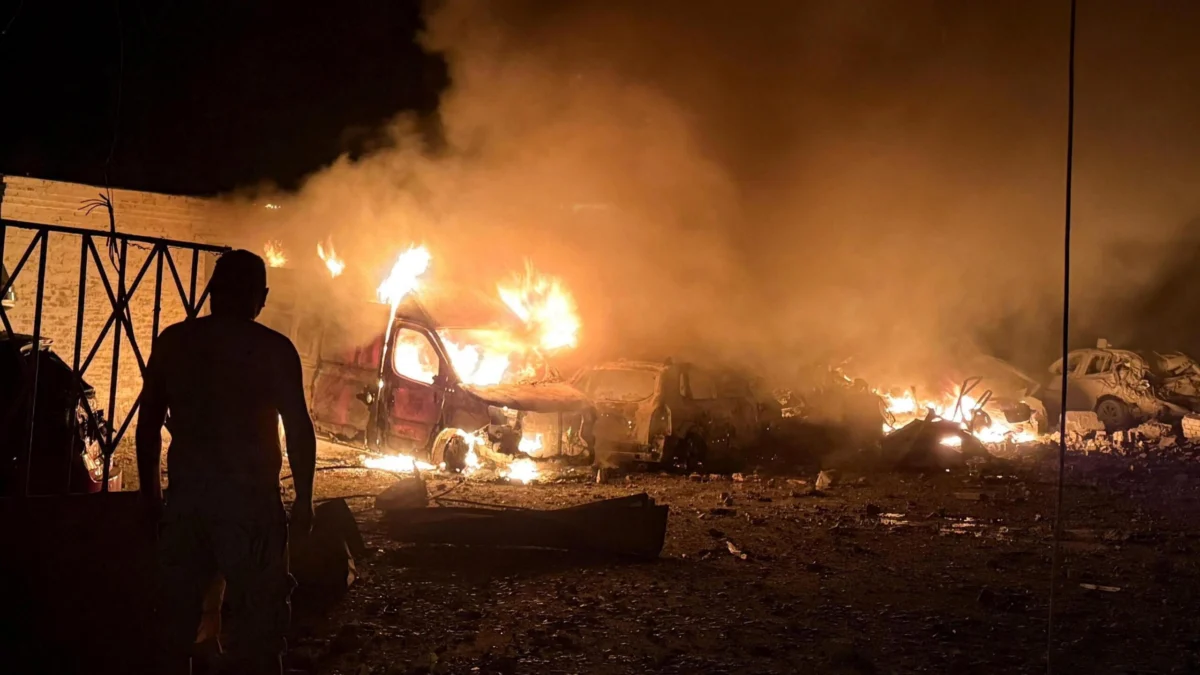
Kyiv, Ukraine – The Ukrainian capital, Kyiv, has been subjected to its first deliberate attack on critical infrastructure in several months, a grim escalation that Mayor Vitali Klitschko warns underscores the nation’s urgent need for increased international support. The overnight assault, which reverberated through the city, has resulted in a tragic toll of at least 17 lives lost, with residential buildings and vital warehouses bearing the brunt of the impact. The State Emergency Service of Ukraine confirmed the devastating casualties, adding that a children’s hospital and a school also sustained damage, leaving over 40 individuals injured.
In the immediate aftermath, Mayor Klitschko issued a somber warning to residents of the Desnyansky and parts of the Dnipro districts, informing them of potential disruptions to their hot water supply due to the damaged infrastructure. "Specialists are working to restore the damaged infrastructure," Klitschko stated via his Telegram channel, a testament to the ongoing efforts to mitigate the consequences of the relentless attacks.
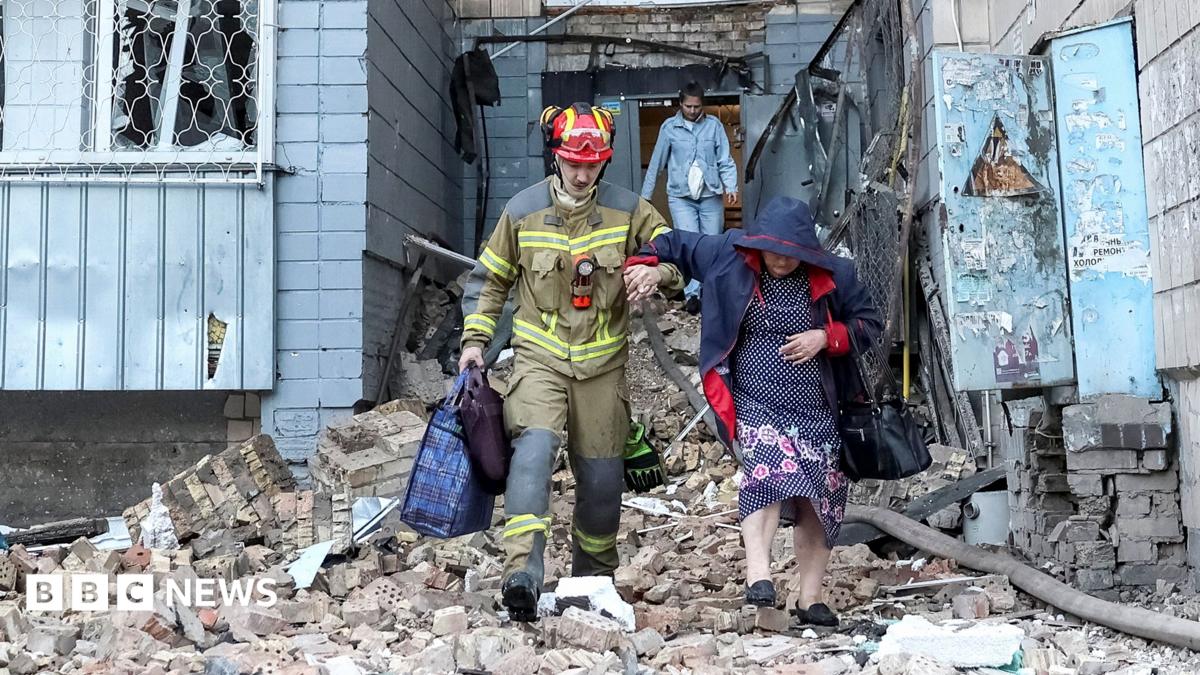
Speaking to BBC News from the scene of a devastated apartment block in Kyiv, Mayor Klitschko articulated the stark reality of Ukraine’s ongoing struggle. He highlighted a critical shortage of air defense missiles, emphasizing that the nation urgently requires "ammunition, anti-missile systems – we need support from our partners." This plea echoes the sentiment expressed by President Volodymyr Zelensky, who has consistently stressed that "as long as Ukraine does not have enough anti-ballistics, Russia will not seriously think about peace." Zelensky further elaborated on the dire need for interceptors, stating, "The interceptors for the Patriots have not yet been replaced, and they are needed every day. Each additional missile saves the lives of our people."
The Ukrainian Air Force’s morning update on Thursday provided a chilling implication: none of the Russian ballistic missiles launched overnight were intercepted. This failure is particularly concerning given Ukraine’s heavy reliance on American-supplied Patriot interceptor missiles, a critical defense against Russia’s ballistic missile arsenal. The United States, however, has significantly depleted its own stockpile of these crucial interceptors due to its involvement in conflicts with Iran.
The Russian Ministry of Defence, in its own statement, claimed responsibility for the attacks, asserting that it employed a combination of air, land, and sea-based weapons to target military facilities and warehouses. This claim, however, is juxtaposed against the widespread civilian casualties and damage to non-military infrastructure.
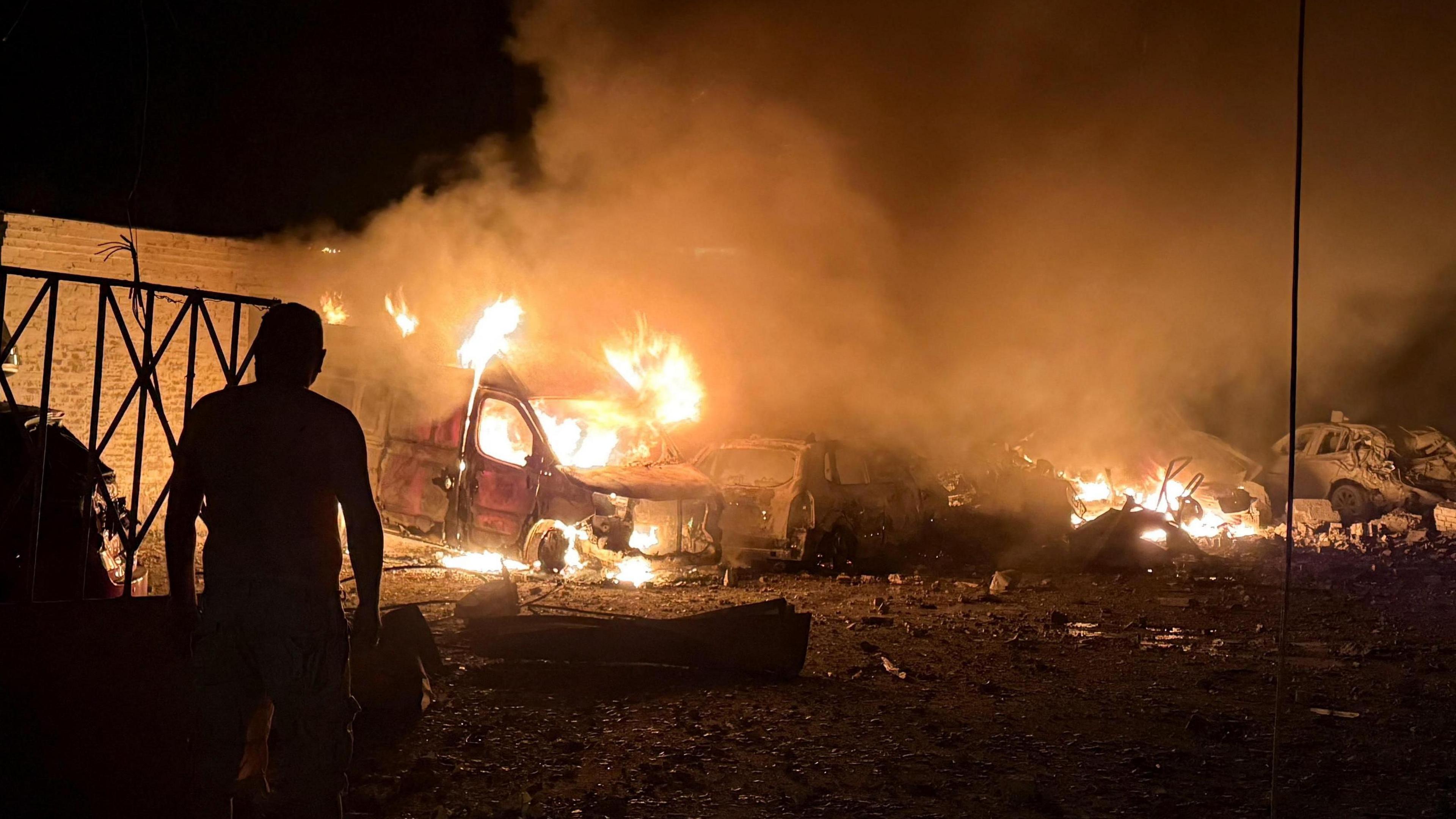
The latest wave of strikes on Kyiv commenced around midnight local time, as air raid sirens pierced the night, heralding the thunderous impact of Russian missiles. The attacks plunged parts of the Kyiv region into darkness, cutting off power to thousands of properties. A day of mourning has been declared for Friday, a somber acknowledgement of the immense loss and suffering inflicted upon the capital.
At a local school in the Solomyanski district, the impact of the strikes was palpable. Windows were shattered, and the school’s playing fields were strewn with debris. A nearby storeroom, identified as a laundry and boiler house responsible for supplying heating to surrounding apartment blocks, was obliterated, exposing its basement. Ukraine’s deputy intelligence chief, speaking to the BBC, characterized these attacks as part of Russia’s strategy to deliberately disrupt civilian life in anticipation of the winter months, aiming to sow despair and hardship.
The personal stories emerging from the rubble paint a harrowing picture of the human cost. Anastasiia Kovtun, a primary school teacher, recounted the terror she experienced in her shelter as explosions rocked her neighborhood. Her flat, situated in a nine-story building, was directly hit. "I felt like my head was going to blow," she told the BBC, describing the visceral fear. "It’s so frightening to realize it’s your house, you never think you’re going to be next." The image of Kovtun sitting amidst the debris of her former home serves as a stark reminder of the vulnerability of ordinary citizens caught in the crossfire.
For Valeria Bondaruk, the attack represents a devastating second displacement. Having moved to Kyiv from her bombed-out home in southern Ukraine in search of safety, she has now been forced to flee her new residence. The fear for her 13-year-old daughter’s future is palpable, and Bondaruk admitted to considering leaving Ukraine altogether. Her apartment, like many others, was left in ruins, with shattered windows and debris littering the interior.
Beyond the capital, the broader Kyiv region also suffered casualties. Attacks in the Brovary and Boryspil districts resulted in one fatality and seven injuries. In the Donetsk region, one person was killed and eleven were wounded, according to local officials.
Meanwhile, Russia’s Ministry of Defence reported a significant number of Ukrainian drone interceptions, claiming to have downed 726 drones launched at various regions across the country. This claim comes amidst a recent escalation in air strikes from both sides, which have resulted in dozens of fatalities in recent weeks. Ukraine has notably increased its drone attacks deep inside Russian territory, including a large-scale assault on Moscow involving 600 drones over the weekend. This week alone, two separate attacks on Russia have claimed the lives of at least 16 people, including a child.

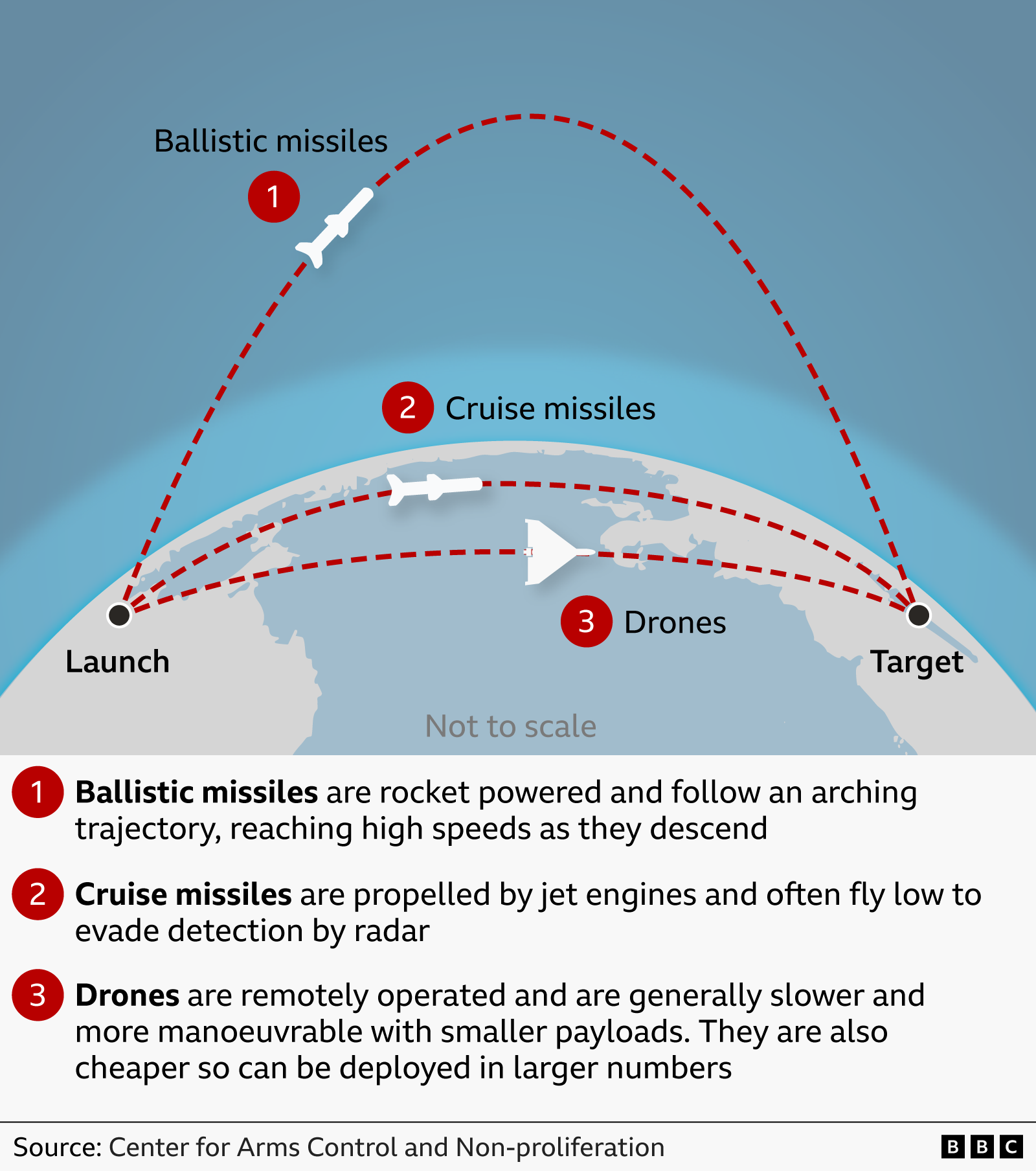
The graphic provided, comparing the flight paths of ballistic missiles, cruise missiles, and drones, illustrates the different types of aerial threats Ukraine faces and the complex challenges of air defense. Ballistic missiles, characterized by their high, arcing trajectory and rapid descent, are particularly difficult to intercept, especially when deployed in significant numbers. Cruise missiles, flying at lower altitudes and utilizing jet engines, pose a different kind of threat, while drones, though slower and more maneuverable, can be deployed in swarms due to their lower manufacturing costs.
The destruction in Solomyanski, where a missile strike obliterated cars and a building crucial for heating apartment blocks, underscores the indiscriminate nature of these attacks. The scene of burnt-out cars covered in ash and debris, with heavily damaged buildings in the background, is a recurring motif of the conflict.
Despite the ongoing violence and the clear vulnerabilities exposed on both sides, diplomatic efforts to broker a ceasefire have seen little tangible progress. Accusations of targeting civilians are frequently exchanged between Kyiv and Moscow, further complicating any potential path towards peace. Russia’s full-scale invasion of Ukraine began in February 2022, and the country currently occupies approximately one-fifth of Ukrainian territory, primarily concentrated in its eastern border regions.

The human toll of this protracted conflict is immeasurable, with families like Anastasiia Kovtun’s and Valeria Bondaruk’s bearing the brunt of the relentless aggression. The call for increased international support, particularly in the form of advanced air defense systems, is not merely a strategic imperative but a desperate plea to protect innocent lives and to prevent further destruction of civilian infrastructure. The cyclical nature of these retaliatory strikes, with both sides launching increasingly sophisticated aerial assaults, paints a grim picture of a conflict that continues to escalate, with devastating consequences for the people of Ukraine and the wider region. The international community faces mounting pressure to find a resolution that prioritizes de-escalation and the protection of civilian populations from the horrors of war.
