
 By Rifan Muazin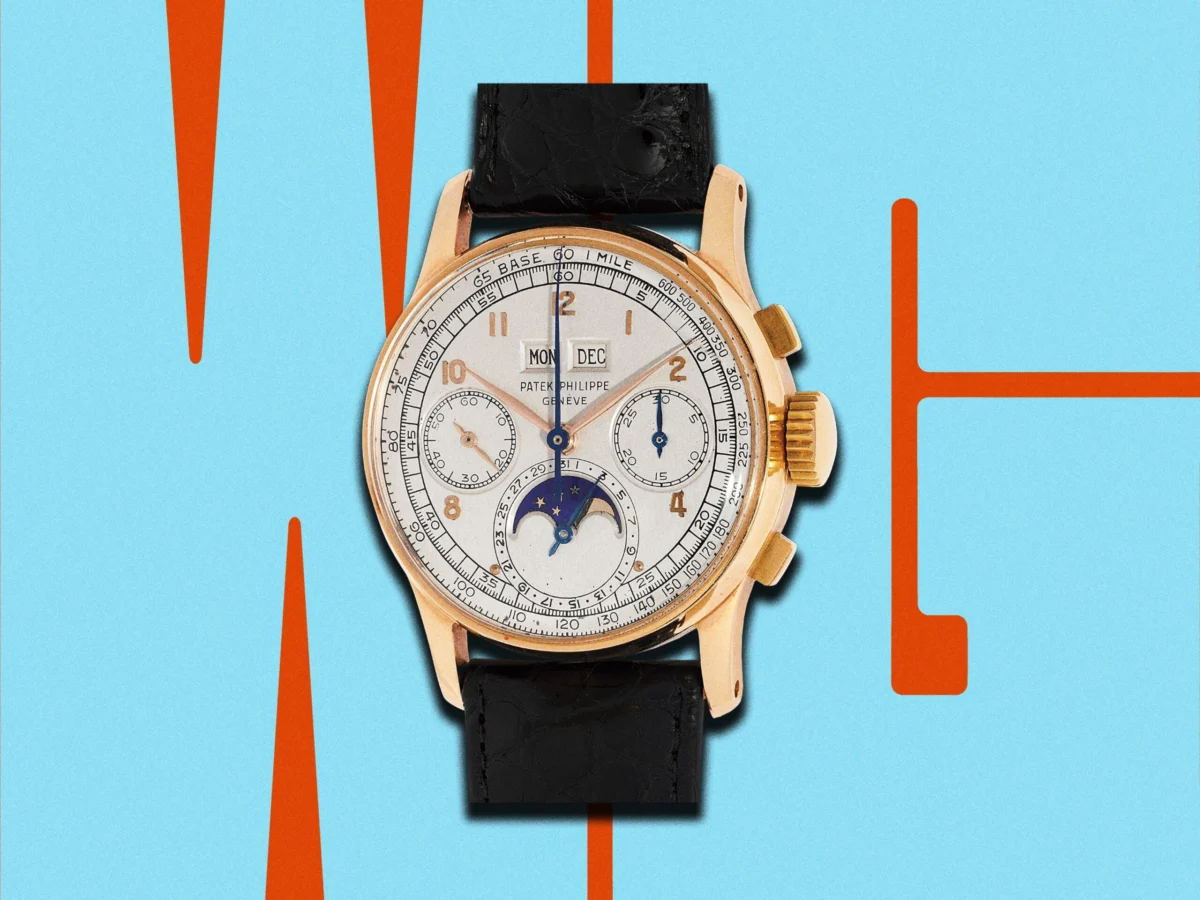
In the rarefied world of high horology, few lineages command as much reverence, academic study, and financial firepower as the Patek Philippe perpetual calendar chronograph. It is a complication pairing that has come to define the Geneva-based maison, representing a pinnacle of mechanical ingenuity and aesthetic restraint. While many contemporary brands now offer similar complications, Patek Philippe’s dominance in this category is rooted in a staggering eighty-five-year head start. In 1941, while the world was engulfed in the chaos of the Second World War, Patek Philippe achieved a feat of engineering that would remain unmatched for decades: the serial production of a wristwatch that could simultaneously track elapsed time via a chronograph and account for the irregularities of the Gregorian calendar, including leap years, via a perpetual calendar. To understand the gravity of this achievement is to understand the history of the modern wristwatch itself.
The mechanical complexity of a perpetual calendar, often referred to by the French term quantième perpétuel (QP), cannot be overstated. Unlike a simple calendar that requires manual adjustment at the end of every month with fewer than 31 days, a perpetual calendar uses a sophisticated mechanical "memory" to track months of 30 and 31 days, the 28 days of February, and the quadrennial appearance of February 29th. This is typically achieved through a 48-step cam or a series of complex levers that "program" the movement for a full four-year cycle. When this system is integrated with a chronograph—a stopwatch mechanism that requires its own dedicated gear train and power supply—the result is a "Grand Complication" that demands the highest level of miniaturization and synchronization.
Ref. 1518: The Genesis of a Legend (1941–1954)
The Reference 1518 was the spark that ignited the legend. Launched at the Basel Fair in 1941, it was the first perpetual calendar chronograph ever produced in a series. Before the 1518, such watches were almost exclusively unique pieces, commissioned by the world’s most affluent patrons, such as Henry Graves Jr. or James Ward Packard. By bringing this complication to serial production, Patek Philippe signaled its technical superiority over every other manufacture in Switzerland.

The 1518 was a product of the établissage system, a traditional Swiss method of watchmaking where specialized workshops produced specific components—cases, dials, and movement blanks—which were then assembled and finished by a central brand. The movement of the 1518 was based on a Valjoux 13”’ ébauche (a raw movement blank). However, Patek Philippe’s watchmakers modified this base so extensively, refining the finishing and adding the perpetual calendar module, that it became the Calibre 13”’130 Q.
Measuring a modest 35mm, the 1518 featured a dial layout that would become the blueprint for the next eight decades: two apertures at 12 o’clock for the day and month, and a moon phase indicator surrounded by a date scale at 6 o’clock. Only 281 examples were ever produced, mostly in yellow gold. The rarity of the 1518 has made it a titan of the auction world. While pink gold versions are exceptionally rare, the stainless steel 1518 is the ultimate "white whale" for collectors. Only four are known to exist, and in 2016, one such example sold at Phillips for over $11 million, setting a then-record for any wristwatch sold at auction.
Ref. 2499: The Mid-Century Masterpiece (1950–1985)
In 1950, Patek Philippe introduced the successor to the 1518: the Reference 2499. If the 1518 was the breakthrough, the 2499 was the perfection of the form. Over its 35-year production run, only 349 pieces were made—an average of fewer than ten watches per year. This scarcity, combined with its increased case size of 37.5mm and more muscular lug design, has led many experts to label the 2499 as the greatest wristwatch ever designed.
The 2499 is categorized by collectors into four distinct series, each reflecting the evolving design language of the 20th century. The first series featured square chronograph pushers and a tachymeter scale, closely echoing the 1518. The second series transitioned to round "pump" pushers. The third series removed the tachymeter scale for a cleaner, more modern look, and the fourth series introduced a sapphire crystal, marking the transition into the modern era. The 2499 remained powered by the Valjoux-based Calibre 13”’130 (later designated 27-70 Q), proving that Patek’s ability to refine an external movement was as prestigious as building one from scratch.
.jpg)
Ref. 3970: Defying the Quartz Crisis (1986–2004)
The mid-1980s were a precarious time for Swiss watchmaking. The "Quartz Crisis" had decimated the mechanical watch industry, leading many to believe that complex mechanical movements were obsolete. Patek Philippe responded with a defiant embrace of tradition, releasing the Reference 3970 in 1986.
The 3970 represented a significant shift in movement architecture. Patek moved away from the Valjoux base in favor of a highly modified Lemania 2310. This new movement, the Calibre CH 27-70 Q, allowed for the addition of two crucial indications: a leap year indicator and a 24-hour (day/night) display. Despite these additions, the 3970 was downsized to 36mm, a return to classic proportions that contrasted with the burgeoning trend of oversized watches. With approximately 4,000 units produced over nearly two decades, the 3970 is more accessible than its predecessors, yet it remains a cornerstone of any serious collection, often cited as the "best value" in the vintage Patek market.
Ref. 5970: The Modern Classic (2004–2011)
As the 21st century dawned, Patek Philippe sought to modernize the QP chronograph without losing its soul. The result was the Reference 5970. Released under the leadership of Thierry Stern, the 5970 increased the case size to 40mm, responding to modern tastes while maintaining an elegant thickness.
The 5970 is often called the "Goldilocks" of Patek chronographs. It retained the legendary Lemania-based movement—making it the last of the "great Lemania" Pateks—but updated the aesthetic with flared lugs and a more aggressive dial presence. It was produced for a relatively short seven-year window, with an estimated 2,800 pieces across all metals (yellow, pink, and white gold, plus platinum). Today, the 5970 is widely considered a "modern vintage" masterpiece, bridging the gap between the hand-crafted feel of the mid-century and the precision of 21st-century manufacturing.
.jpg)
Ref. 5270: The In-House Era (2011–Present)
The year 2011 marked a watershed moment for Patek Philippe. After 70 years of using external ébauches, the brand finally debuted its first fully in-house perpetual calendar chronograph movement: the Calibre CH 29-535 PS Q. This movement was housed in the Reference 5270.
The transition to an in-house movement was a response to a changing industry landscape where "manufacture" status had become the ultimate marker of prestige. The CH 29-535 PS Q featured six patented innovations, including optimized tooth profiles for the gears and a more efficient column-wheel cap. The 5270 increased the diameter to 41mm and introduced a more clinical, modern dial layout, including two small circular apertures for day/night and leap year cycles.
While early iterations of the 5270 (the "Series 1" and "Series 2") faced some criticism from purists regarding dial proportions—specifically the "chin" created by the date scale overlapping the tachymeter—Patek refined the design in subsequent versions. The current 5270P with a "salmon" dial or the 5270J in yellow gold are celebrated as the definitive modern expressions of the brand’s technical prowess.
The Cultural and Investment Landscape
The Patek Philippe perpetual calendar chronograph is more than a tool for telling time; it is a cultural icon. Its presence on the wrists of figures like John Mayer, Jay-Z, and Kevin Hart has cemented its status as the ultimate "flex" for the intellectually curious collector. Unlike the "hype watches" of the current era, such as the Nautilus or Royal Oak, the QP chronograph requires an appreciation for history and mechanical nuance.

From an investment perspective, these watches have historically outperformed almost every other asset class. The "Patek Tax"—the premium paid for the brand’s name—is backed by the reality of low production numbers and a rigorous commitment to quality. Auction houses like Phillips, Sotheby’s, and Christie’s treat a 1518 or 2499 as a fine art event rather than a mere sale of goods.
Conclusion: A Legacy of the Head Start
Today, the landscape is more crowded. A. Lange & Söhne’s Datograph Perpetual, Vacheron Constantin’s Traditionnelle, and Audemars Piguet’s Royal Oak Perpetual Calendar Chronograph are all formidable competitors. However, Patek Philippe remains the "North Star" of the category. This is not merely due to the beauty of their leaf-shaped hands or the mirror-polish of their cases, but because Patek Philippe defined the rules of the game in 1941.
By marrying the ephemeral nature of the chronograph with the eternal nature of the perpetual calendar, Patek Philippe created a mechanical paradox that continues to fascinate. It is a lineage that tells the story of human ingenuity: the ability to take a pile of brass, steel, and rubies and transform them into a machine that can track the moon, the years, and the seconds with unwavering grace. As Patek Philippe enters the next chapter of this storied complication, the perpetual calendar chronograph remains the definitive symbol of the brand’s enduring motto: "You never actually own a Patek Philippe. You merely look after it for the next generation."
