
 By admin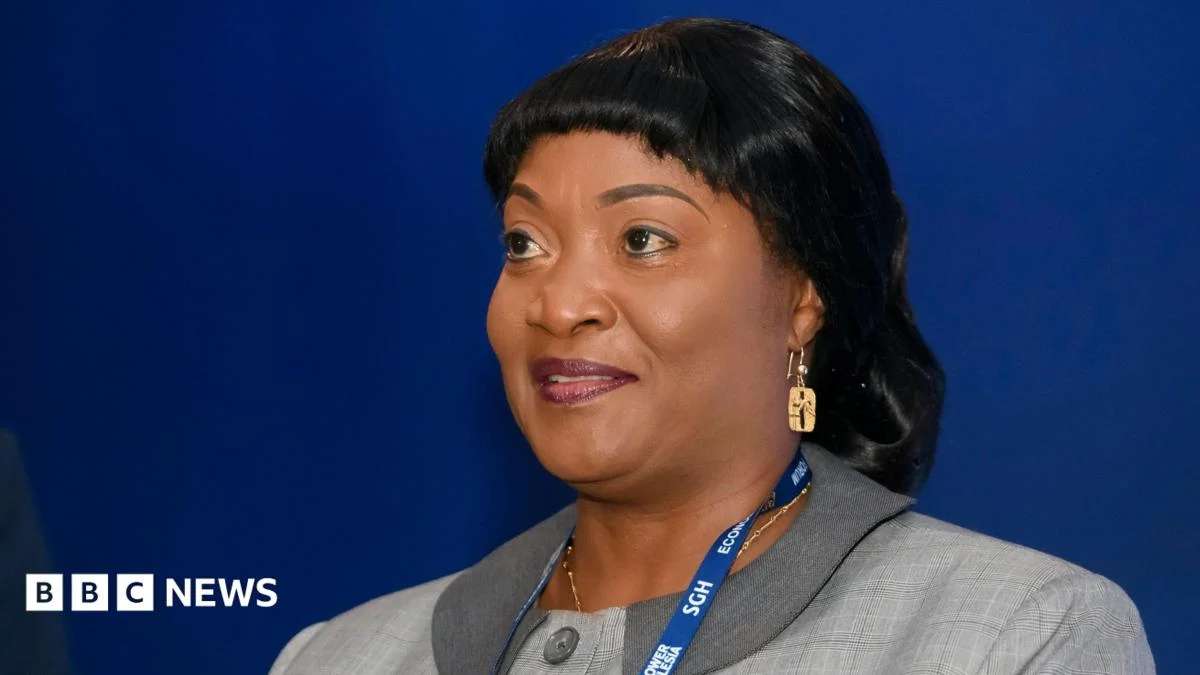
Liberia has dramatically escalated its fight against transnational crime, announcing the indictment of former Vice-President Jewel Howard-Taylor on serious charges including drug trafficking, money laundering, and a litany of other offences. This move is a central component of an extensive investigation targeting an alleged sophisticated international narcotics network that has reportedly been using Liberia as a key transit point. The gravity of the charges against a former high-ranking government official underscores the escalating concern over illicit drug trade in the West African nation.
The 63-year-old politician, a prominent figure in Liberian politics, was detained on Wednesday at Roberts International Airport in the capital, Monrovia, as she attempted to board a flight. The Justice Ministry of Liberia confirmed her apprehension, marking a pivotal moment in the nation’s judicial proceedings. Police Chief Gregory Coleman has explicitly linked Howard-Taylor to a substantial cocaine seizure last month, with an estimated street value of $317 million (£233 million). This seizure, described by authorities as Liberia’s largest drug bust, is believed to have been part of a larger operation destined for European markets.
As of the latest reports, Howard-Taylor has not issued any public statement regarding the accusations leveled against her. Her legal counsel has also maintained a tight-lipped stance, informing the BBC that they are unable to comment on the specifics of the case until Howard-Taylor is formally charged in a court of law. This silence from both the accused and her legal team adds a layer of intrigue to an already high-profile investigation.
Jewel Howard-Taylor’s political trajectory is deeply intertwined with the tumultuous history of Liberia. She entered the political arena following the departure of her then-husband, former President Charles Taylor, from power. Charles Taylor, a former rebel leader, served as Liberia’s president from 1997 to 2003. His presidency was marked by widespread allegations of human rights abuses and his subsequent conviction by a UN-backed court for aiding and abetting rebels in neighboring Sierra Leone during the brutal 1991-2002 civil war, a conflict that claimed approximately 50,000 lives. This historical context casts a long shadow over Liberian politics and raises questions about the enduring influence of figures associated with the Taylor regime.
More recently, Howard-Taylor served as the running mate to former President George Weah, a celebrated football icon. She held the position of Vice President from 2018 to 2024, a period during which the alleged drug trafficking network is believed to have been actively operating. Her inclusion on Weah’s ticket had been seen by many as a move to broaden political appeal, but her current predicament casts a significant stain on her political legacy and raises serious questions about due diligence within the Liberian political establishment.
The charges formally filed against Howard-Taylor are extensive and severe. They include the unlicensed importation, sale, and transportation of controlled drugs, illicit trafficking, criminal solicitation, and criminal facilitation. These charges suggest a deep and active involvement in the logistics and facilitation of the drug trade, going beyond mere association.
The investigation has also cast a wide net, identifying three foreign nationals as key figures within the alleged network. These individuals, two from Croatia and one from Ukraine, have been charged in absentia. Liberian Justice Minister Oswald Tweh has vowed to pursue all available domestic and international avenues to locate and apprehend these foreign nationals, signaling a commitment to a comprehensive prosecution that transcends national borders. This international dimension highlights the transnational nature of the alleged criminal enterprise and the complexities involved in bringing all perpetrators to justice.
Liberia’s intensified crackdown on cocaine trafficking is a direct response to the significant drug seizures that have occurred in June and July. The July raid, in particular, yielded almost four tonnes of cocaine, a staggering quantity believed to have been en route to Europe. Authorities have lauded this as a watershed moment, not only for the sheer volume of drugs intercepted but also for the intelligence gained regarding a sophisticated transnational trafficking network. This operation has reportedly penetrated various levels of the illicit trade, extending its reach to senior figures within Liberia’s security establishment.
The Liberian government has articulated a clear strategy, stating that its investigations are designed to identify not only the individuals directly involved in the physical transportation of drugs but also the financiers, organizers, and those accused of providing protection for these illegal operations. This comprehensive approach aims to dismantle the entire network, from the street-level operatives to the high-level facilitators. The government’s stern declaration, "No office is too high, no political connection is too powerful, no nationality provides immunity, and no individual is beyond the reach of the law," underscores its resolve to combat corruption and crime at all levels.
The strategic importance of West Africa as a transit route for cocaine originating from South America and destined for Europe cannot be overstated. Traffickers have exploited the region’s porous borders and, in some areas, weak law enforcement capabilities to facilitate their illicit trade. This has led to a significant increase in drug-related activities and associated criminal enterprises across several West African nations. Liberia, with its coastline and port infrastructure, is unfortunately vulnerable to exploitation by these international criminal organizations.
The economic implications of drug trafficking are profound, fueling corruption, undermining legitimate businesses, and contributing to social instability. The vast sums of money generated by the drug trade can be used to bribe officials, fund further criminal activities, and even influence political processes. The seizure of $317 million worth of cocaine represents a significant financial blow to the network, but the underlying demand and the motivation to profit from such activities remain a persistent challenge.
The involvement of a former Vice-President in such a case has far-reaching implications for Liberia’s international reputation and its efforts to attract foreign investment and aid. It raises serious concerns about the integrity of governance and the rule of law within the country. For international partners, such as the United States and European Union, who have historically supported Liberia’s development and democratic consolidation, this case will be closely watched. It tests the commitment of the Liberian authorities to transparency, accountability, and the impartial application of justice.
Analysts suggest that the success of this investigation and subsequent prosecution will depend on the Liberian judiciary’s independence and capacity. The pressure on the judicial system will be immense, given the prominence of the accused and the potential for political interference. International cooperation will also be crucial, particularly in tracing financial flows related to money laundering and in apprehending the foreign nationals charged in absentia.
The investigation into the alleged transnational narcotics network is likely to uncover further details about its modus operandi, its geographical reach, and the extent of its influence. The Liberian government’s commitment to pursuing all avenues, as stated by Justice Minister Tweh, suggests that this is just the beginning of a potentially extensive and complex legal battle. The nation will be looking to see if this crackdown represents a genuine shift towards robust law enforcement and a zero-tolerance policy for corruption, or if it is a targeted action with political undertones. The outcome of this case will undoubtedly shape Liberia’s future and its standing in the global fight against organized crime. The precedent set by the prosecution of a former Vice-President for such serious offenses will be a critical indicator of Liberia’s progress in its journey towards good governance and the rule of law. The international community will be observing closely, hoping that this signals a turning point in the nation’s struggle against the insidious influence of drug trafficking and corruption.
