
 By Rifan Muazin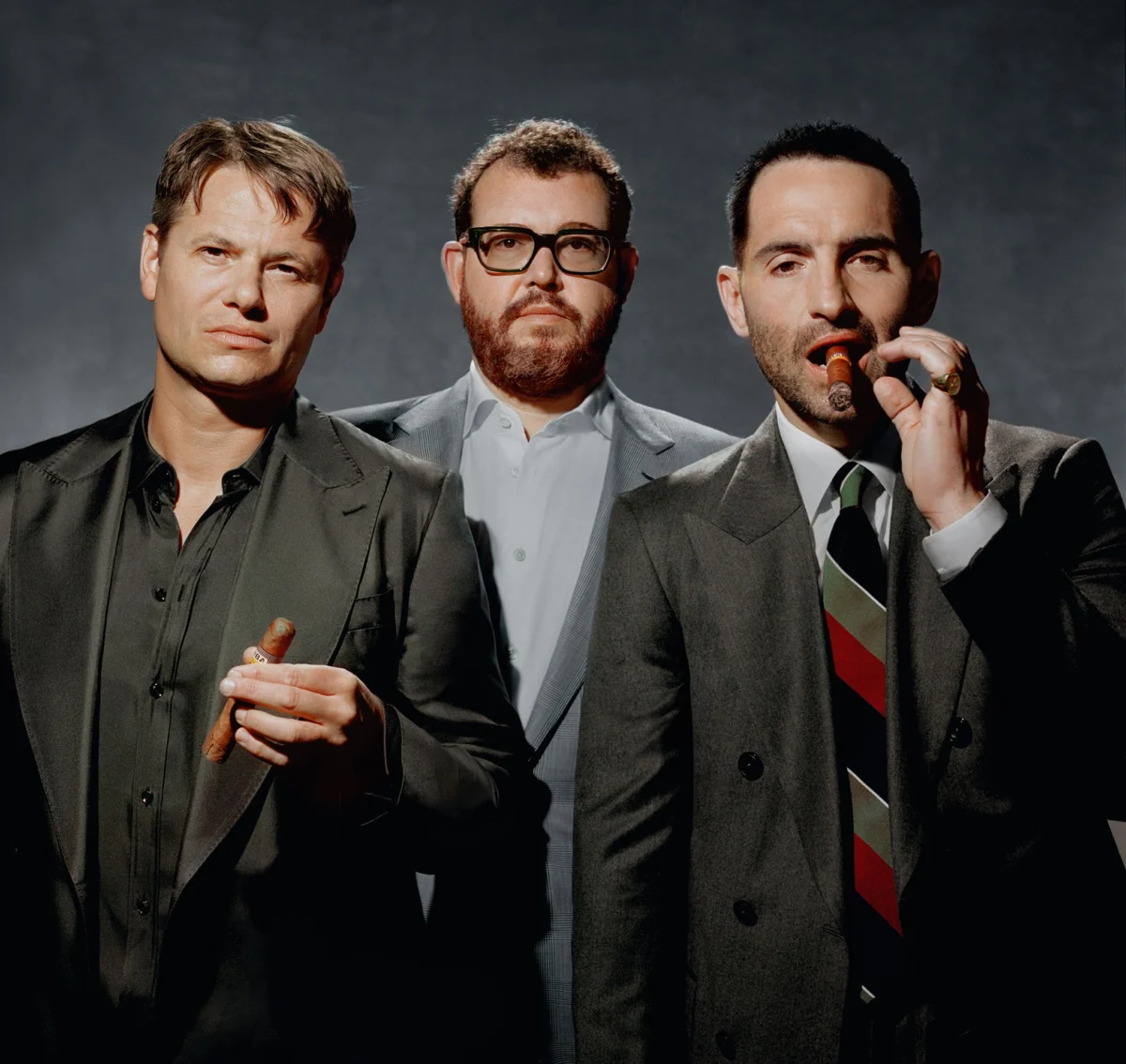
Since its founding in 2011, Major Food Group has evolved from a single ambitious red-sauce joint in Greenwich Village into a global juggernaut. Jeff, Mario, and Rich have spent fifteen years harnessing a specific, bombastic energy to create a portfolio of restaurants, residential towers, and private clubs where the underlying philosophy is simple: dinner is the show. This ethos of "more is more" has seen them expand with abandon, moving their base of operations from the grit of New York to the glitz of Miami during the pandemic, and subsequently to every corner of the globe from Dubai to London. At this juncture, the company is no longer just selling pasta; they are selling an entry point into a modern Gilded Age.

The evening’s rounds began at ZZ’s Club, a private members-only establishment in Miami’s Design District named after Zalaznick himself. Within its walls, Jeff moves with a benevolent insouciance, greeting billionaire patrons and staff alike with the familiarity of an old friend. In a room filled with the global elite, Zalaznick stands out—not just for his height and booming voice, but for his uniform of a black hoodie, a stark contrast to the well-heeled crowd. As he sipped a martini, he recounted his day spent in West Palm Beach with Stephen Ross, the 86-year-old owner of the Miami Dolphins. Ross is just one of several octogenarian billionaires Jeff counts as "closest friends," a demographic that has become a primary driver of MFG’s expansion. The group’s current function is often to act as the lifestyle layer for massive real estate developments; when a tycoon builds a city, they call MFG to build the soul.
Zalaznick’s trajectory toward Miami was a fluke of history. A grandson of the legendary financier and real estate developer Paul Milstein, Jeff found himself in Florida on spring break when the COVID-19 pandemic shuttered the world. While Mario and Rich remained in New York, navigating the logistical nightmare of keeping staff employed during lockdowns, Jeff realized that Miami was playing by different rules. In Florida, the pandemic-era restrictions were fleeting. Recognizing a vacuum in the market, MFG moved with predatory speed, securing a prime location on South Beach at First and Collins. When Carbone Miami opened in January 2021, it wasn’t just a restaurant; it was a cultural flashpoint. While New Yorkers were wearing masks and latex gloves, patrons at Carbone Miami were practically dangling from the chandeliers. It was, as Mario Carbone later described it, the "Prohibition era," and their restaurant was the ultimate speakeasy.

This "New Year’s Eve every night" atmosphere is the cornerstone of the MFG brand. To the group’s detractors, it is a waking nightmare of noise, indulgence, and exorbitant pricing. To their devotees, it is heaven on earth. The statistics support the latter: check averages at ZZ’s Club Miami hover around $216, while The Grill in New York averages $294 per person. In Dubai, the numbers are so high they border on the surreal. This financial success is built on a foundation of maximalism—flavorful food, theatrical service, Ken Fulk-designed interiors, and a relentless rotation of Julian Schnabel paintings. Whether one views this as a triumph of American entrepreneurship or a symptom of late-stage capitalism, the business logic is undeniable.
The tour continued through the group’s Miami holdings: Contessa, Sadelle’s, Dirty French, and Chateau ZZ’s. At the latter, a Mexican concept housed in a 1931 French-style chateau in Brickell, Mario Carbone joined the group. Even when he isn’t behind a stove, Mario is managing a global kitchen staff through WhatsApp, demanding photos of specific dishes for quality control. During the meal, the partners discussed the "structural integrity" of their tostada—a dish engineered to not shatter upon the first bite. It is a microcosm of the MFG experience: a solution to a problem most diners didn’t know they had, served at a price point that demands perfection.

Beyond the food, the business is increasingly focused on the "events" sector. The Pool in New York, once a sister restaurant to The Grill, is now exclusively an events space, booked every night for weddings and corporate galas. Jeff’s eyes are also fixed on the horizon of Brickell, where Ken Griffin’s Citadel is constructing its massive new headquarters. "You’re going to have a bunch of new guys making over a million dollars a year, and they need a place," Jeff noted. MFG intends to be that place—the "cafeteria to the banks," a role they already play for the financial titans of Midtown Manhattan from their stronghold in the Seagram Building.
However, the rapid expansion has not been without its friction. While the group’s American outposts are almost universally packed, their foray into London was met with a critical evisceration. Critics in The Spectator and on social media platforms like Reddit pilloried the London Carbone as a symbol of American decadence and "oligarch" culture. Jeff and Mario, however, remain unfazed. They argue that the impact of traditional critics has waned in the era of social media and that the 300 people dining there every night provide the only review that matters. To them, a critic’s resentment of a $100 veal Parmesan is less about the food and more about a feeling of being excluded from a world built for the ultra-wealthy.

The story of Major Food Group began in a much humbler setting: Torrisi Italian Specialties on Mulberry Street in 2009. There, Mario and Rich gained fame for a $7 house-brined turkey sandwich, a dish that remains a touchstone of their culinary identity. It was at the Jane Ballroom in 2010 that Jeff Zalaznick pitched the vision that would become Carbone: taking the nostalgia of the "tired" Italian-American red-sauce joint and elevating it to the highest possible level of craft and theater. They leaned into the "Old New York" aesthetic, hired career steakhouse waiters, and famously priced their veal Parmesan at an eye-popping $50—a dish that now commands $98.
While Jeff and Mario have embraced the Miami lifestyle and global expansion, Rich Torrisi has remained the group’s anchor in New York. He views his flagship restaurant, the new Torrisi in the Puck Building, as the group’s "shield of excellence." While the other two focus on real estate deals and international outposts, Rich is dedicated to high-level culinary innovation. His menu is a "New Yorkese" melting pot, featuring elevated takes on Jamaican beef patties, Chinese bao buns, and Jewish deli pickles. It is a strategy that has paid off; the New York Times recently ranked Torrisi as the third-best restaurant in the city, a validation of Rich’s "limitless canvas" approach to cooking.

The future of MFG involves a staggering array of projects: a private food-focused golf club in Aspen with million-dollar memberships, new Carbones in Mexico City, São Paulo, and Tokyo, and a takeover of Robert De Niro’s iconic Tribeca Grill. They are also moving into the residential space with Villa Miami, a luxury condo tower that is already 80 percent sold. The building will feature a helipad, a private boat dock, and, naturally, a suite of MFG dining options. For the MFG partners, the goal is to provide the "style of an entire life," not just a meal.
As the night concluded at The Grill in Manhattan, the gravity of their success was palpable. The room, designed by Philip Johnson in 1958, remains one of the most beautiful dining spaces in the world. Amidst the "moves"—the duck press, the Seussian dessert trolley, the bead-chain curtains—there is an undeniable sense of occasion. Major Food Group restaurants are not for the restrained or the budget-conscious; they are for those who want to "live with the stream of life," as George Orwell once wrote. In an era of uncertainty, Jeff, Mario, and Rich have bet everything on the idea that people will always be willing to pay for the "big night." As Jeff looked over the private dining rooms filled with Warhols and world-class wine collections, he noted that the prices are only going up. In the world of Major Food Group, the show never ends, and the audience is more than happy to pay for the encore.
