
 By admin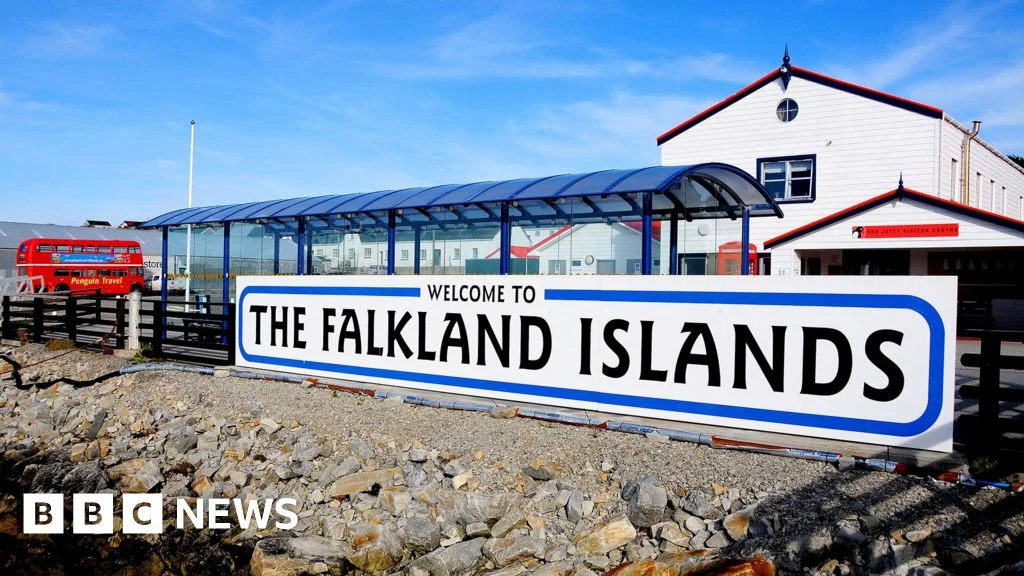
The United Kingdom has unequivocally asserted that sovereignty over the Falkland Islands "rests with the UK," a firm declaration made by Downing Street in response to reports suggesting a potential review of the United States’ stance on Britain’s claim to the remote South Atlantic territory. The genesis of this diplomatic ripple lies in an internal Pentagon email, revealed by Reuters, which purportedly explored options for penalizing NATO allies perceived as insufficiently supportive of the US-led global initiatives. While a Pentagon spokesperson declined to confirm the email’s existence, they articulated a broader sentiment, stating the administration’s intent to "ensure that the president has credible options to ensure that our allies are no longer a paper tiger and instead do their part." This sentiment was echoed by the spokesperson’s reference to President Trump’s previous remarks, highlighting a perceived lack of reciprocal support from NATO allies despite substantial American contributions.
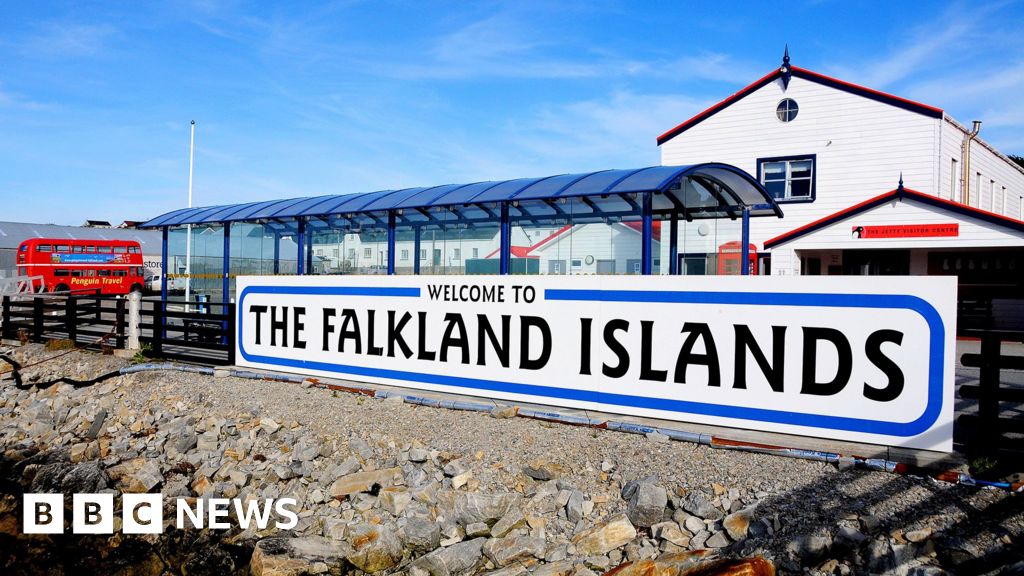
The Falkland Islands, a British Overseas Territory strategically located in the south-west Atlantic Ocean, have long been at the heart of a persistent sovereignty dispute between the United Kingdom and Argentina. This historical contention has been reignited by the recent reports, prompting a swift and resolute response from the British government. A spokesperson for Number 10, addressing the matter on Friday, emphasized the overwhelming democratic mandate of the islanders, stating, "The Falkland Islands have hugely voted overwhelmingly in favour of remaining a UK overseas territory, and we’ve always stood behind the islanders’ right to self-determination and the fact that sovereignty rests with the UK." This sentiment was further reinforced by the Prime Minister’s official spokesman, who declared, "We could not be clearer about the UK’s position," reiterating that "sovereignty rests with the UK and the islanders’ right to self-determination is paramount." The spokesman also underscored the consistent communication of this position to successive US administrations, affirming that "nothing is going to change that."
Historically, various US administrations have acknowledged the United Kingdom’s de facto administration of the islands without formally taking a definitive position on the sovereignty question itself. This nuanced approach has maintained a degree of diplomatic flexibility, but the recent reports suggest a potential shift in that long-standing policy. The Falkland Islands’ government, in a statement, expressed unwavering confidence in the British government’s commitment, declaring, "The Falkland Islands has complete confidence in the commitment made by the UK government to uphold and defend our right of self-determination."
The reported US consideration has also drawn strong reactions from prominent UK political figures. Kemi Badenoch, the Conservative leader, dismissed the notion as "absolute nonsense," asserting, "We need to make sure that we back the Falklands. They are British territory." Similarly, Nigel Farage of Reform UK declared the issue "utterly non-negotiable," stating unequivocally, "There is no way we’re even going to have a debate about the sovereignty of the Falkland Islands." Farage also indicated his intention to raise the matter directly with Argentina’s President Javier Milei during an upcoming meeting.
The timing of these reports is particularly sensitive, as they emerge just days before King Charles and Queen Camilla are scheduled to embark on a state visit to the United States, which includes a meeting with US President Donald Trump at the White House. While the White House has yet to officially comment on the Reuters report, it has the potential to exacerbate existing diplomatic tensions between the US and the UK. President Trump has previously voiced his dissatisfaction with the level of UK support during US engagements in Iran, and the UK’s stance on the Falklands could become another point of contention in these high-level discussions.
The implications of the reported US email extend beyond the Falklands dispute. The communication also alluded to the possibility of the US pushing for Spain’s expulsion from NATO. In response, an official from NATO clarified that the alliance’s founding treaty "does not foresee any provision for suspension of Nato membership, or expulsion." Spain’s Prime Minister Pedro Sanchez also weighed in, emphasizing the importance of official channels, stating, "We do not work based on emails. We work with official documents and official positions taken, in this case, by the government of the United States."
The historical context of the Falkland Islands dispute is crucial to understanding its enduring significance. The islands have been under continuous British administration since 1833. However, Argentina maintains a historical claim, asserting its right to the territory based on its inheritance from the Spanish Crown and the islands’ geographical proximity to the South American mainland. This territorial claim escalated into open conflict in 1982 when Argentina’s military junta, under Leopoldo Galtieri, ordered an invasion of the islands. The ensuing 10-week war saw a decisive British victory, with a naval task force dispatched to reclaim the territory. The conflict resulted in significant loss of life, with 649 Argentine military personnel, 255 British military personnel, and three Falkland Islanders losing their lives.

Despite the outcome of the 1982 conflict and subsequent referendums, Argentina continues to assert its sovereignty over the islands, which it refers to as "Las Malvinas." The islands are situated approximately 300 miles (483 kilometers) east of Argentina’s coast. In recent decades, the inhabitants of the Falkland Islands have consistently and overwhelmingly reaffirmed their desire to remain a British territory. A landmark referendum held in 2013 saw 1,672 eligible voters participate, with all but three casting their ballots in favor of continuing their status as an overseas territory, achieving an impressive turnout of over 90%. This clear expression of self-determination is a cornerstone of the UK’s position, aligning with the principles of international law as enshrined in the United Nations Charter, which successive British governments have consistently upheld.
Argentina’s current president, Javier Milei, a right-wing leader and known ally of Donald Trump, has also spoken about the Falklands. In a recent livestream, Milei stated that his government is undertaking "everything humanly possible" to ensure the islands are brought under Argentine control. He described sovereignty as "not negotiable" but stressed that its pursuit "must be done judiciously." Previously, Milei had outlined his intention to present a "roadmap" for the islands’ integration into Argentina. He has also acknowledged that resolving the dispute could take decades, and has criticized Argentine politicians for what he perceives as empty rhetoric regarding sovereignty.
The potential shift in the US position, if realized, could have significant geopolitical implications, particularly within the NATO alliance and in its broader foreign policy engagements. The unwavering stance of the UK government, bolstered by the explicit will of the Falkland Islanders, remains a powerful counterpoint to any potential re-evaluation of established diplomatic norms. The situation underscores the complex interplay of historical claims, national interests, and evolving international relations, particularly in the context of a shifting global power dynamic. The upcoming royal visit to the US will undoubtedly be closely watched for any further indications of how these delicate diplomatic currents may unfold.
