
 By admin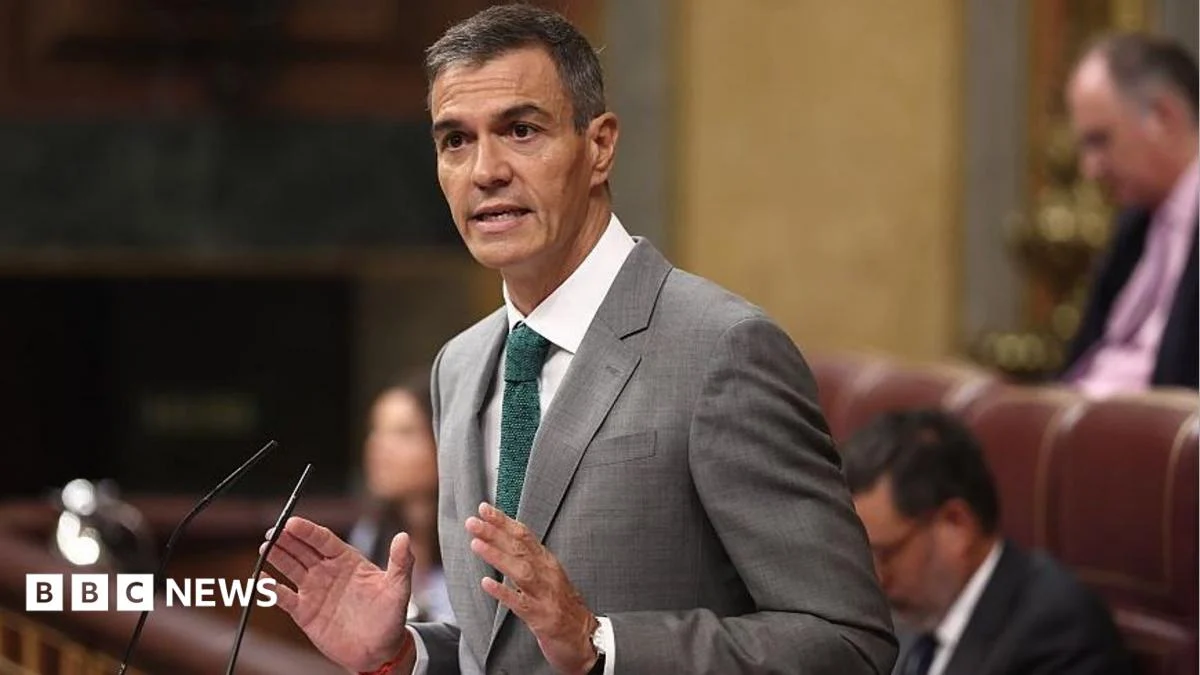
Spanish Prime Minister Pedro Sánchez is grappling with intense scrutiny and mounting pressure following an unprecedented influx of approximately 72,000 migrants into the Spanish exclave of Ceuta, located on the North African coast. The crisis has exposed deep political divisions within Spain and strained diplomatic relations with Morocco, as opposition parties accuse the government of mismanagement and a lack of preparedness. Sánchez, however, has vehemently defended his administration’s response, asserting that no one could have anticipated the sheer scale of the migration event.
"It’s absurd to think that the government knew and did nothing," Sánchez declared in a defiant address to the Spanish parliament on Thursday. His remarks came just hours after tens of thousands of citizens, mobilized by opposition parties, participated in widespread protests across the country, underscoring the public’s dissatisfaction and anger. The demonstrations, ostensibly held to express solidarity with the beleaguered residents of Ceuta, quickly morphed into a broader expression of discontent with the Sánchez government’s handling of the unfolding humanitarian and administrative challenge.
Adding to the complexity of the situation, Sánchez maintained that there was no concrete evidence to suggest direct Moroccan government involvement in orchestrating the mass crossing. He emphasized a narrative of "close co-ordination" between Spain and Morocco, framing the event as a shared challenge. However, this assertion starkly contrasts with findings from a Spanish police report that highlighted the "total permissiveness" of Moroccan security forces during the influx. While senior Spanish officials have attempted to downplay the report’s implications, suggesting it doesn’t explicitly implicate Rabat, the document’s revelations have fueled suspicions of tacit approval, if not active facilitation, from Moroccan authorities.
The ramifications of this uncontrolled border crossing are starkly visible on the ground in Ceuta. Although Spanish authorities have managed to repatriate the vast majority of the arriving migrants, an estimated 5,000 individuals, including a significant contingent of 1,400 children, remain on the streets and beaches of the city, creating a severe humanitarian and logistical challenge. The sheer number of arrivals overwhelmed local resources, leaving many vulnerable individuals without adequate shelter, food, or medical attention.
Further complicating Sánchez’s defense are reports indicating that Spanish officials had received prior warnings about an impending surge in sea arrivals at Ceuta. These warnings, allegedly stemming from a Spanish court ruling that many migrants misinterpreted as an assurance of safe passage if they swam across the border, suggest a degree of foreknowledge that the government now appears to be downplaying. This alleged lack of proactive measures in response to these warnings has become a central tenet of the opposition’s criticism.
The leader of the opposition People’s Party, Alberto Núñez Feijóo, has been a vocal critic, directly accusing the government of deception and a cover-up. Feijóo has called for Prime Minister Sánchez’s resignation, arguing that his handling of the crisis has been abysmal and has damaged Spain’s international standing. The political fallout from the Ceuta crisis has also extended beyond domestic borders, with some of Spain’s European partners expressing concern. Italy, for instance, responded by imposing border restrictions on arrivals from Spain, a move that signals a broader erosion of trust and cooperation within the European Union concerning migration management.
The political discourse surrounding the crisis is heavily influenced by Morocco’s historical track record of leveraging its border with Spain as a diplomatic bargaining chip when grievances arise. Politicians across the political spectrum, from the left to the right, have pointed to this pattern as a likely factor in the Ceuta events. The police report, which details the inaction of Moroccan security forces and even quotes some migrants alleging guidance from Moroccan gendarmes, is widely interpreted as corroborating this theory. Despite these indications, Sánchez continues to maintain that there is no irrefutable evidence of direct state involvement from Morocco.
The commissioned police report, undertaken at the behest of a High Court judge, meticulously documented the apparent lack of intervention from Moroccan security forces. It stated that these forces "made no serious attempt" to prevent the mass crossing, a finding that directly challenges the narrative of spontaneous migration. The testimonies collected from migrants further add weight to the argument that the influx was not entirely unplanned, raising serious questions about the extent of Moroccan awareness and complicity.
Responding to these revelations and prior media reports hinting at an impending crisis, Feijóo articulated a clear accusation in parliament: "The crisis originated in Morocco, was consented to by Morocco, and there are indications that Morocco co-ordinated it, and the government knew because it had been warned about it." This statement encapsulates the core of the opposition’s critique, highlighting a perceived failure of foresight and decisive action on the part of the Sánchez administration. Morocco, for its part, has consistently denied any role in orchestrating or facilitating the mass crossing.
In an effort to demonstrate resolve and reassure the public, Prime Minister Sánchez announced that King Felipe VI would undertake visits to both Ceuta and Melilla in the coming weeks. This royal visit is intended to convey Spain’s unwavering commitment to the sovereignty and integrity of these two enclaves. While no specific dates have been set, the symbolic gesture aims to project stability and reinforce national unity in the face of external pressures.
Sánchez also took the opportunity to commend the actions of the Ceuta police force, praising their decision to prioritize "defend[ing] human life" over strictly enforcing border control during the chaotic influx. He further highlighted the swift and effective cooperation with Moroccan authorities in repatriating over 90% of the migrants within the subsequent 72 hours, characterizing this as a testament to successful bilateral relations.
Acknowledging the profound impact of the crisis on the residents of Ceuta, Sánchez spoke of the "difficult times" they have endured. He described the events of July 30th and 31st as an "episode in which numerous actors and interests converge," reiterating his assertion that misinformation and rumors spread via social media were primary catalysts for the crisis. This explanation, however, has been met with skepticism by many who believe it oversimplifies a complex geopolitical situation.
Earlier in the crisis, Sánchez had already attributed blame to trafficking gangs and had controversially pointed fingers at Russia and Israel for allegedly spreading disinformation via social media, alongside an "international far-right movement." While he maintains that there is no evidence of state actors directly involved, his continued emphasis on the alleged role of accounts linked to these countries has been a point of contention. He characterized the situation in Ceuta as both a "humanitarian crisis and also an administrative challenge within the city itself," emphasizing the multifaceted nature of the problem.
The protracted nature of the crisis, coupled with the political recriminations and international implications, has placed Prime Minister Sánchez in a precarious position. The pressure from opposition parties, the widespread public discontent evident in the protests, and the concerns raised by European partners all contribute to a challenging political environment. The future handling of this complex migration issue will undoubtedly be a defining test of Sánchez’s leadership and his government’s ability to navigate both domestic and international complexities. The ongoing situation in Ceuta, with thousands of vulnerable individuals still on its streets, serves as a stark reminder of the persistent human dimension of these political crises and the urgent need for sustainable and humane solutions. The debate over responsibility, preparedness, and the effectiveness of Spain’s foreign policy in relation to Morocco and the broader Mediterranean migration routes is far from over, and will likely continue to shape the political landscape for months to come.
