
 By Lina Irawan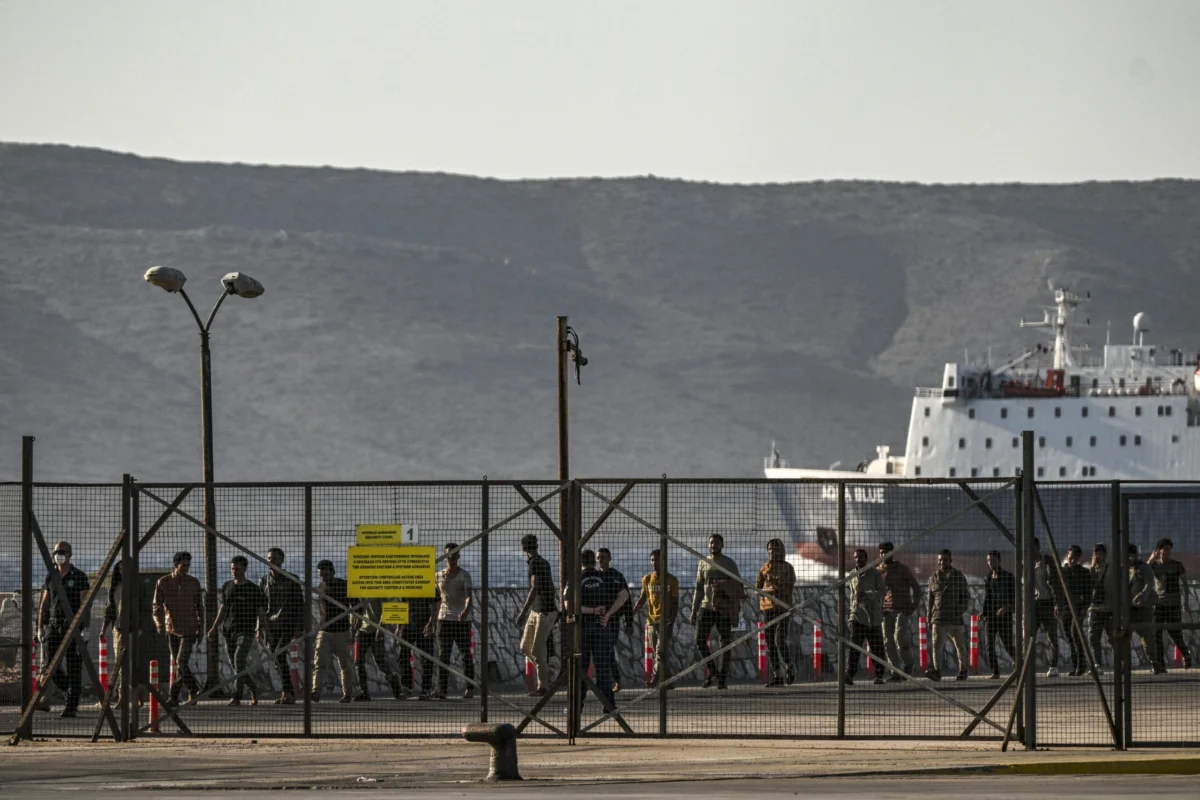
The announcement, made after a pivotal one-day meeting in Copenhagen, marks a significant escalation in efforts by several EU member states to externalize their asylum processing and management of rejected asylum seekers. This bold initiative, championed by Denmark, Germany, the Netherlands, Austria, and Greece, represents a pioneering move within the European Union, aiming to fundamentally reshape the continent’s approach to irregular migration.
Morten Bødskov, Denmark’s Minister of Immigration and Integration, underscored the gravity of the development, stating, “We are moving forward toward what is actually a fundamental transformation of the common European migration and asylum system.” He briefed reporters alongside his counterparts, signaling a united front among these five nations that have been actively negotiating with governments, primarily in Africa, to identify potential sites for these controversial centers. Their collective endeavor is intended to serve as a blueprint for the entire EU bloc, pushing the boundaries of traditional asylum policies.
The concept of “return hubs” has ignited fierce criticism from human rights organizations and international legal experts, who argue that relocating asylum processing and deportation to third countries risks compromising the fundamental rights of migrants and asylum seekers. Concerns center on the ability of European nations to guarantee the respect of human rights, ensure due process, and provide adequate protection outside the EU’s legal jurisdiction.
Bødskov, however, vehemently rejected the characterization of “return hubs” as a mere euphemism for detention and deportation centers. He portrayed them instead as facilities offering “opportunities, for a new chance for irregular migrants who cannot return to their own country today and who have no legal grounds to be in our countries.” To bolster this assertion, he claimed that the International Organization for Migration (IOM) and the U.N. Refugee Agency (UNHCR) would monitor the centers. This claim, however, was swiftly met with cautious statements from the agencies themselves.
The UNHCR informed The Associated Press that it “has not been approached with details of such a proposal,” and therefore “cannot comment on the specific arrangements being discussed or on what any potential role for UNHCR might entail.” Similarly, IOM stated that no decision had been made on its potential role, clarifying that “discussions remain exploratory,” and it had only provided “technical advice to some EU Member States on safeguards and operational considerations.” An IOM spokesperson further emphasized that any such initiative “must comply with EU regulatory and legal frameworks, protect migrants’ rights, respect partner countries’ interests, and ensure individuals’ access to meaningful, sustainable solutions.” This divergence in statements highlights a significant gap between the political aspirations of the EU ministers and the operational realities and ethical considerations faced by international humanitarian organizations.
‘Return hubs’ abroad would be first for EU migration policy
While the participating ministers remained tight-lipped about the specific third countries under consideration, Bødskov expressed optimism about reaching the first agreement by early 2027. He acknowledged that the very concept of “return hubs” was “mocked only a few years ago and deemed incompatible with EU and international law.” This candid admission underscores the dramatic shift in European political discourse and legal frameworks concerning migration.
Indeed, EU laws have undergone significant changes, largely driven by escalating public and political pressure for tougher measures against irregular migration. The rise of populist and far-right parties across Europe, often campaigning on anti-immigration platforms, has pushed migration to the forefront of national and European political agendas. This pressure culminated in a crucial vote by European lawmakers in June, which allowed member states to set up centers outside the EU, either individually or in small coalitions. This legislative amendment explicitly permits the transfer of rejected asylum seekers to these external centers instead of their home countries, a policy move that critics argue circumvents the principle of non-refoulement and shifts responsibility away from EU borders.
“This is something new and it’s groundbreaking,” affirmed Bart van den Brink, the Netherlands’ Minister of Asylum and Migration, reflecting the sentiment of the pioneering countries. This collective ambition represents a significant departure from the EU’s historical approach to asylum, which has primarily focused on processing applications within its borders.
The push for externalization is not entirely new; it echoes similar proposals and debates from previous decades, often resurfacing during periods of heightened migratory flows. However, the current political climate, coupled with a perceived "crisis" in the EU’s common asylum system, has provided unprecedented momentum for these initiatives. The New Pact on Migration and Asylum, adopted by the EU, has also been interpreted by some as creating a more permissive environment for such externalization policies, even if it doesn’t explicitly endorse them.
Rwanda in negotiations with European nations
One country that has openly engaged in discussions with European nations regarding hosting asylum seekers is Rwanda. In early August, Rwandan government spokesperson Yolande Makolo confirmed that it “was natural” for her government to negotiate with European countries and others to potentially host asylum seekers who are not allowed to live elsewhere. Rwanda has previously engaged in similar agreements, notably with the United Kingdom, for processing asylum claims, a deal that has faced numerous legal challenges and has yet to result in any transfers.
Makolo highlighted Rwanda’s existing emergency transit mechanism, established in Gashora in 2018, which has provided refuge for individuals evacuated from Libya, allowing them to stay until resettled in third countries. She described the idea under discussion as offering a “safe place” where individuals with no other recourse could receive medical care, training, and rest while their asylum applications were processed, with the ultimate goal of either returning home safely or being resettled to another country. “We want to be part of a solution to a big global problem,” Makolo asserted, framing Rwanda’s involvement as a humanitarian contribution.
However, the precise benefits for host countries like Rwanda remain largely undefined. While financial aid, development assistance, and strengthened diplomatic ties are often cited as potential incentives, the ethical implications of wealthier nations effectively "outsourcing" their international legal obligations to less affluent countries raise significant concerns. Critics argue that such arrangements risk creating a transactional system where human rights are traded for economic or political gain, potentially undermining the integrity of the international refugee protection regime.
Rights groups concerned about enforcement of law outside EU
The concerns voiced by migrant rights groups and international bodies are profound and multifaceted. They criticize European efforts to establish migrant centers abroad where monitoring and enforcement of human rights could prove exceedingly difficult, if not impossible. The geographic distance, coupled with potential political complexities in host countries, could create what human rights advocates describe as “human rights black holes.”
Michael O’Flaherty, the Council of Europe Commissioner for Human Rights, issued a stern warning, stating that “vague assurances of compliance with human rights law are not enough.” He emphasized the need for concrete “guardrails necessary to prevent setting up human rights black holes,” highlighting the risk of individuals being deprived of their fundamental rights, including the right to seek asylum, access to legal representation, and protection against arbitrary detention and ill-treatment.
Brussels-based rights group PICUM (Platform for International Cooperation on Undocumented Migrants) condemned the Copenhagen meeting, with director Michele LeVoy stating, “EU leaders may call these centers an ‘innovative solution,’ but outsourcing migration control is an old tactic to simply move people out of sight and evade human rights obligations.” This sentiment is echoed by other major human rights organizations such as Amnesty International and Human Rights Watch, who argue that such policies violate the spirit, if not the letter, of the 1951 Refugee Convention and the European Convention on Human Rights. They fear that these external centers could lead to prolonged detention, lack of access to effective asylum procedures, and an increased risk of refoulement, where individuals are returned to countries where they face persecution.
The European ministers in Copenhagen, while acknowledging the criticisms, reiterated their commitment to ensuring the new hubs would abide by European and international law. Van den Brink, the Dutch immigration minister, assured that technical talks and missions to potential partner countries would be conducted “to gain more insight into the human rights situation and the living conditions of the refugees.” He concluded, “Because we want to do this in a European way, in line with our values and international law and human rights at its core.”
This emphasis on "European values" and adherence to international law stands in stark contrast to the skepticism expressed by legal scholars and human rights advocates. They question how effective such monitoring can be in practice, particularly in countries with potentially weaker rule of law or human rights records. The legal frameworks governing these hubs, including the specific safeguards for asylum seekers, mechanisms for appeals, and independent oversight, remain largely opaque, fueling concerns about accountability and transparency.
The long-term implications of these "return hubs" for the global refugee protection system are also a subject of intense debate. Critics argue that by externalizing responsibility, EU countries risk setting a dangerous precedent that could encourage other nations to shirk their international obligations, thereby undermining the principle of shared responsibility for refugees and asylum seekers. The potential for a race to the bottom, where states compete to make themselves less attractive to asylum seekers by transferring them elsewhere, is a serious concern for the future of international protection.
The path to implementing these "return hubs" by 2027 is fraught with significant diplomatic, legal, and ethical challenges. Securing agreements with third countries, establishing robust monitoring mechanisms, and navigating potential domestic and international legal challenges will require considerable political will and resources. While the five pioneering EU nations view this as a necessary evolution in migration policy, it simultaneously opens a new and controversial chapter in the ongoing global debate about migration, sovereignty, and human rights.
Ciobanu reported from Warsaw, Poland, and Brito reported from Barcelona, Spain. Philipp Jenne in Vienna and Sam McNeil in Brussels contributed to this report.
