
 By admin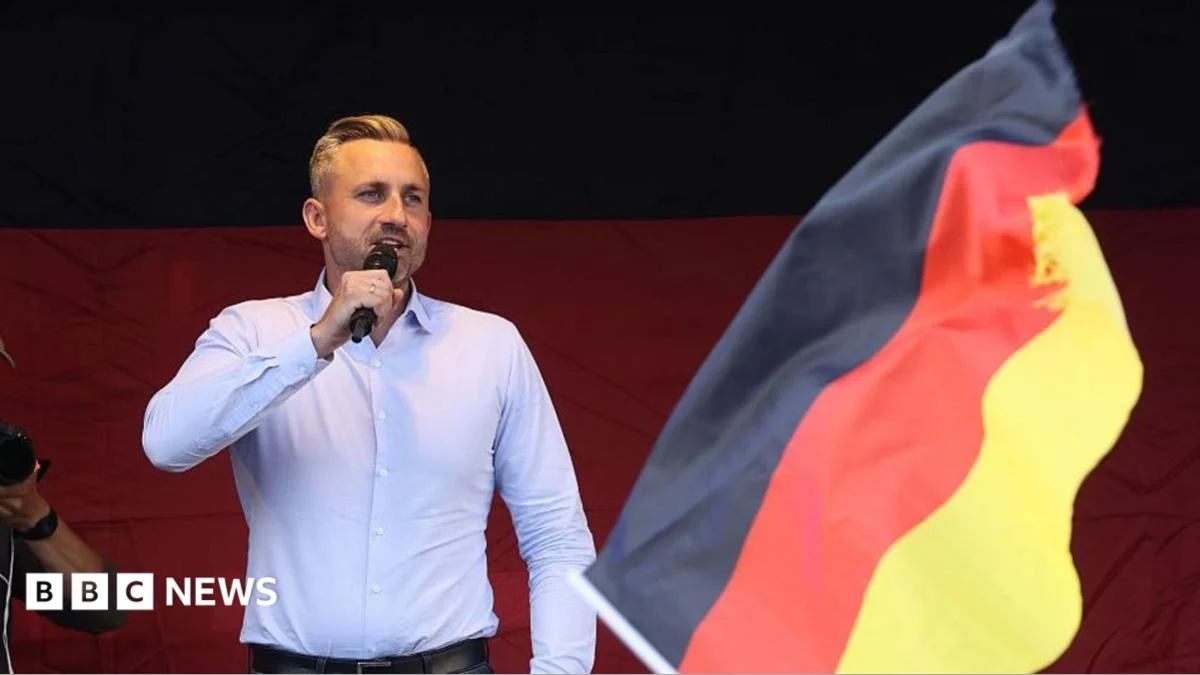
Germany is on tenterhooks this weekend as a seismic election unfolds in the country’s eastern state of Saxony-Anhalt, with the Alternative für Deutschland (AfD) party setting its sights on securing a majority in the regional parliament. An outright victory for the AfD would represent a watershed moment in post-war German history, marking the first time a far-right party has attained state-level governmental power. For the AfD’s political adversaries, this prospect represents a grave peril, while the party itself views it as a crucial stepping stone towards its ultimate ambition of nationwide influence. This election carries the potential to reshape the trajectory of German politics.
The outcome in Saxony-Anhalt could also exacerbate the existing troubles of the embattled conservative Christian Democratic Union (CDU) leader, Friedrich Merz. Persistent rumors swirl regarding his ability to complete his term as party chairman, a position he assumed with the stated aim of halting the rise of the far-right. Ironically, Merz, who has been subjected to boos during recent public appearances and is hardly perceived as an electoral asset, now faces the very phenomenon he pledged to confront, with the AfD’s popularity surging. His earlier commitment to curb the far-right’s advance may now be viewed as a miscalculation, given the current political climate.
In stark contrast, the AfD’s lead candidate in Saxony-Anhalt, Ulrich Siegmund, appears to have relished the media spotlight and the opportunity to dominate public discourse. Dubbed "Germany’s Most Dangerous Man" by the influential magazine Der Spiegel, Siegmund has largely dismissed concerns regarding individuals with alleged neo-Nazi affiliations holding influential positions within his inner circle. The 35-year-old Siegmund is frequently depicted, including in his own prolific social media posts, interacting with enthusiastic crowds or enjoying leisurely rides on a retro East German scooter. This imagery, coupled with a broader appeal to lingering nostalgia for the past and a palpable dissatisfaction with the present, has significantly fueled the AfD’s popularity in its eastern strongholds.
Voters in Saxony-Anhalt, and indeed across much of eastern Germany, have voiced a litany of frustrations that the AfD has skillfully tapped into. These grievances encompass concerns about immigration, public safety, the nation’s struggling economy, soaring energy costs, and the financial and military aid being channeled to countries like Ukraine. These are complex issues that resonate deeply with a segment of the electorate seeking tangible solutions and a perceived return to order and national pride.
The AfD’s policy proposals, as articulated in its manifesto and public statements, reveal a deeply conservative and nationalistic agenda. The party advocates for the segregation of child refugees into special classes, with the stated aim of conveying to them that "their stay in Germany is only temporary." This stance reflects a broader narrative of prioritizing national interests and questioning the long-term integration of asylum seekers. Furthermore, the manifesto asserts that "sexual deviations and non-reproductive lifestyles" have been aggressively promoted over "normal family" structures, indicating a conservative social agenda that seeks to reassert traditional values. The party’s proposals extend to banning LGBT rainbow flags from being flown at schools, a move that critics argue infringes upon the rights and visibility of LGBTQ+ individuals. Instead, the AfD suggests that children should be taught less about the atrocities of the Nazi era and more about what it terms the "positive aspects of German history," a controversial proposition that has raised concerns about historical revisionism and the potential downplaying of past crimes.
On the critical issue of immigration, the AfD has outlined plans to establish a task force dedicated to detaining and deporting migrants who no longer possess the legal right to remain in the state. This policy proposal underscores the party’s hardline stance on border control and its commitment to reducing immigration levels. The AfD also calls for an end to "illegal, culturally alien" mass migration, a phrase that critics argue is laden with xenophobic undertones and aims to create a divisive narrative around immigrant communities.
The AfD’s pro-Russia sympathies have also cast a shadow over its electoral prospects and raised serious questions about its trustworthiness on matters of national security. This was brought into sharp relief when a Russian army mug was observed in the office of a leading AfD figure in Saxony-Anhalt, Hans-Thomas Tillschneider. Tillschneider dismissed the item as a mere souvenir and stated, "it’s not our war," a sentiment that clashed starkly with recent geopolitical developments. Just days prior, Berlin had publicly accused Moscow of orchestrating a failed drone attack on Leipzig/Halle Airport, an allegation that the Kremlin has vehemently denied. This incident, coupled with the AfD’s perceived alignment with Russian interests, has fueled concerns among political opponents and intelligence agencies.
Adding another layer of complexity, German security sources have warned of escalating Russian-backed disinformation campaigns, often targeting AfD rivals. These campaigns, according to intelligence reports, aim to sow discord and influence the political landscape. Moscow’s representatives, however, have characterized these accusations as part of an "anti-Russian hysteria," further complicating the already tense geopolitical narrative. The interplay between domestic political aspirations and external geopolitical influences is a significant factor in the current electoral climate.
State-level governments in Germany wield considerable power over crucial policy areas, including local education, policing, and cultural affairs. Moreover, delegates from these state governments participate in the federal government’s second chamber, the Bundesrat, granting them a voice in national legislative processes. An AfD-led government in Saxony-Anhalt would therefore possess the capacity to implement its agenda at the local level and amplify its influence on the national stage. While the AfD remains strongest in the former communist East Germany, its polling numbers have also shown an upward trend nationwide, indicating a broader appeal beyond its traditional base.
This surge in popularity has occurred despite persistent warnings that the AfD has fundamentally transformed from its origins as a Eurosceptic party founded in 2013 into a movement that actively courts or attracts extremist support. The visibility of individuals at AfD rallies wearing T-shirts emblazoned with "Arisch" – the German word for Aryan, a term heavily utilized by the Nazis to promote their pseudo-scientific theories of a master race – serves as a stark reminder of the potential ideological undercurrents within the party. While the exact affiliation of such individuals with the party remains unclear, their presence at rallies raises legitimate concerns about the broader ideological spectrum represented within the AfD’s supporter base.
Saxony-Anhalt is among several German states where the AfD is officially classified as a right-wing extremist organization by domestic intelligence agencies. These agencies accuse the local AfD branch of being permeated by a "racist ideology" and pursuing anti-constitutional aims. The AfD, for its part, vehemently rejects these designations, asserting that it is a conservative, libertarian movement and dismissing comparisons with National Socialism as politically motivated smears. The party’s consistent denial of extremist leanings and its portrayal of itself as a legitimate political force present a complex challenge for those seeking to counter its influence.
In a provocative statement, Ulrich Siegmund has not ruled out the possibility of dismantling the domestic intelligence agency (BfV) in Saxony-Anhalt should the AfD secure a parliamentary majority. This proposition, if realized, would represent a significant challenge to the established security apparatus and raise further questions about the AfD’s commitment to democratic institutions.
Meanwhile, other mainstream political parties have maintained a steadfast refusal to form coalition governments with the AfD, adhering to a principle known as the "Brandmauer" or firewall, designed to prevent the far-right from gaining governmental power. This established political consensus means that for the AfD to secure power in Saxony-Anhalt, it must achieve an outright parliamentary majority, a daunting task that necessitates overcoming significant electoral hurdles. The current strategy in Saxony-Anhalt appears to be not merely about creating cracks in the firewall but rather attempting to circumvent it entirely.
The success of this strategy hinges on whether smaller parties can surpass the 5% electoral threshold required to gain representation in parliament. The intricacies of German electoral mathematics, while often convoluted, play a crucial role in determining the final outcome. However, should the AfD achieve a decisive victory, the party, which has thrived on anti-establishment rhetoric, will face an unprecedented test. While it may still attribute grievances to the federal government in Berlin, the AfD would no longer be able to solely critique those in power, as it would itself be part of the governing establishment. Saxony-Anhalt, though a relatively small state in terms of population, is poised to host an election of profound national and potentially international significance, one that could irrevocably alter the political landscape of Germany.
