
 By Rifan Muazin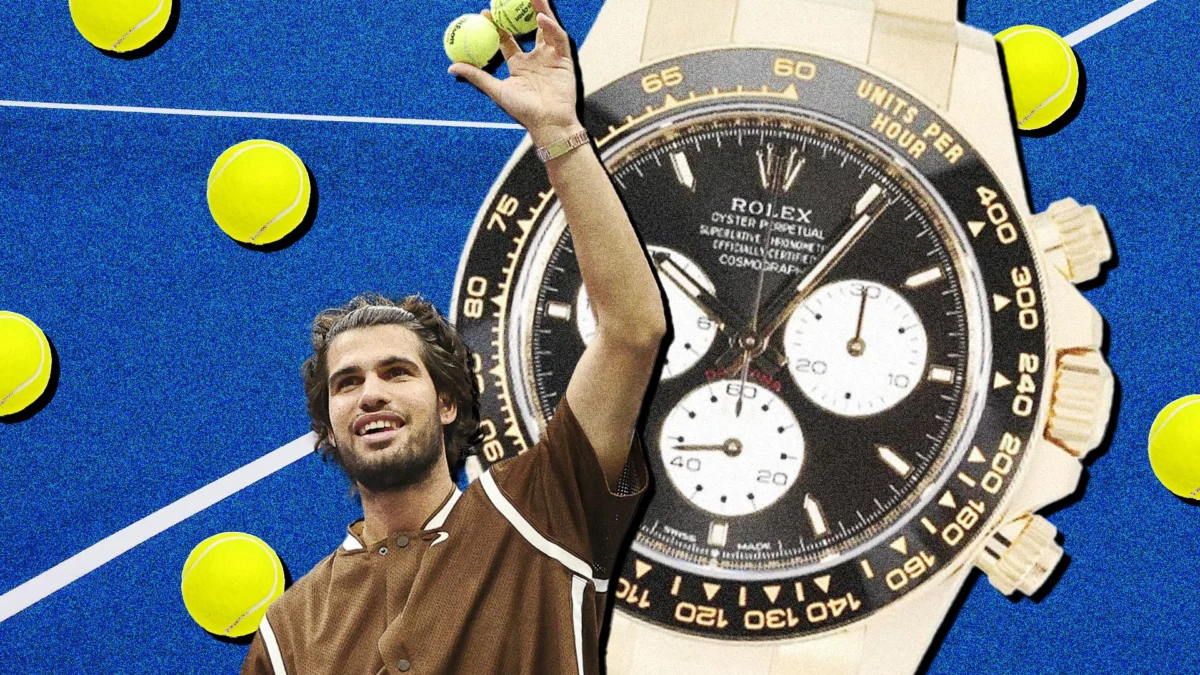
The return of Carlos Alcaraz to the hallowed blue courts of the USTA Billie Jean King National Tennis Center marks more than just the resumption of a sporting career; it signals the rebirth of a global icon who has spent 139 days in the shadows of recovery. After a grueling hiatus necessitated by a persistent wrist injury that sidelined him during the peak of the 2026 season, the Spaniard stepped onto Arthur Ashe Stadium on Monday night, not merely to play tennis, but to reassert his dominance over the cultural and athletic landscape. The tennis world had grown restless in his absence, missing the explosive "ruthless" charm that has defined his rise as the heir apparent to Rafael Nadal. While the compression sleeve on his right wrist served as a subtle reminder of the fragility of elite performance, Alcaraz’s straight-sets demolition of Roman Safiullin proved that his competitive fire remains undiminished. "I’m just really, really happy that I was able to compete again," Alcaraz remarked in his post-match interview, a sentiment echoed by thousands of fans who witnessed a masterclass in power, precision, and renewed style.
The 139-day layoff was the longest of Alcaraz’s professional career, a period of forced introspection and physical rehabilitation. Wrist injuries are notoriously precarious for tennis players, often altering swing mechanics or dampening the confidence required to hit the ball with maximum topspin. However, against Safiullin, Alcaraz showed no signs of hesitation. The compression sleeve, which he wore as a precautionary measure, did little to hinder his signature forehand—a shot that remains one of the most feared weapons in the modern game. This return to the US Open is particularly significant given Alcaraz’s history in New York, where he captured his first Grand Slam title and became the youngest world number one in ATP history. His presence in the draw immediately recalibrates the power dynamics of the tournament, setting up a potential collision course with perennial rivals like Jannik Sinner and veteran legends still haunting the bracket.
Beyond the baseline rallies and tactical drop shots, Alcaraz’s return was a masterclass in personal branding and aesthetic evolution. The most jarring change was undoubtedly his hair. Moving away from the clean-cut buzzcut that defined his early years on tour, Alcaraz debuted a longer, curling mane held back by an Alice band. This stylistic pivot has been described as having a "distinct Premier League energy," drawing comparisons to the effortless cool of European football stars who blend athletic intensity with high-fashion sensibilities. The Alice band, once a staple of players like Björn Borg and later David Beckham, suggests a more mature, expressive Alcaraz—one who is comfortable stepping into his role as a global celebrity whose influence extends far beyond the confines of a tennis court.
This aesthetic transformation was bolstered by a high-profile collaboration with Nike and the Houston-born rapper Travis Scott. Alcaraz took to the court in a full kit designed by Scott, featuring the signature "Cactus Jack" aesthetic that has revolutionized streetwear. The partnership represents a strategic move by Nike to bridge the gap between performance sports and the "hype" culture of the music and fashion industries. Accompanied by a pair of custom Jordans, Alcaraz’s outfit was a loud declaration that he is the face of a new generation—one that values the intersection of sport, art, and street style. This collaboration with Travis Scott is not just about apparel; it is about positioning Alcaraz as a cultural vanguard, much in the same way Andre Agassi challenged tennis traditions with his neon kits and denim shorts in the early 1990s.
However, for the horological community and luxury enthusiasts, the real headline was strapped to Alcaraz’s wrist. After years of being synonymous with a turquoise-dial Rolex Daytona—a watch so frequently seen on him that collectors began referring to it as "The Alcaraz"—the Spaniard unveiled a new piece for his 2026 comeback. On his wrist was the special-edition Rolex Daytona "Le Mans" in 18k yellow gold. This timepiece is a monumental entry in the Rolex catalog, originally released in a stainless steel version in 2023 to commemorate the 100th anniversary of the legendary 24 Hours of Le Mans endurance race. The yellow-gold edition worn by Alcaraz, which followed in 2024, is an "off-menu" rarity that represents the pinnacle of the Cosmograph Daytona line.

The Rolex Daytona "Le Mans" is not merely a gold watch; it is a technical marvel with specific nods to the world of endurance racing. The most striking detail is the "100" on the tachymeter scale, highlighted in vibrant red ceramic to honor the centenary of the Le Mans race. Furthermore, the movement—the Calibre 4132—was specifically modified for this edition. While a standard Daytona chronograph tracks up to 12 hours, the Le Mans edition allows the wearer to track a full 24 hours, directly reflecting the duration of the world’s most famous endurance race. This technical tweak is a rarity for Rolex, a brand known for its incremental changes rather than structural modifications to its movements. For Alcaraz, the choice of this watch is deeply symbolic. The 24 Hours of Le Mans is a test of stamina, resilience, and the ability to perform under pressure for extended periods—traits that Alcaraz himself had to summon during his 139-day recovery and which he must now employ to navigate the two-week marathon of a Grand Slam.
Alcaraz’s relationship with Rolex has become one of the most lucrative and visible partnerships in sports. He is the fourth variant of the legendary chronograph that he has been spotted in, cementing his status as the brand’s premier ambassador in the post-Roger Federer era. His collection is a "greatest hits" of modern Rolex design: the yellow gold Daytona with a rubber Oysterflex strap and a meteorite dial he wore after his 2024 Wimbledon victory; the ultra-rare platinum Daytona with diamond markers and Eastern Arabic numerals; and the beloved turquoise-dial "Alcaraz" Daytona. Each watch marks a milestone in his career, acting as a permanent marker of his achievements. The "Le Mans" Daytona, however, feels different. It is a watch for the connoisseur, a piece that signals a deep dive into the "Daytona-shaped hole" of horological obsession.
The significance of Alcaraz’s choice also reflects broader trends in the luxury market. Athletes are no longer just "wearing" brands; they are curating personas. By choosing a watch with such specific historical and technical links to endurance, Alcaraz is aligning his brand with the concept of longevity. At 23 years old (in the context of 2026), he is transitioning from a "young prodigy" to a "seasoned champion." The yellow-gold Daytona is a "classically blingy" choice, yet its "if you know, you know" (IYKYK) details—like the red 100 and the 24-hour sub-dial—provide a layer of sophistication that appeals to serious collectors. It suggests that while Alcaraz is having fun with his appearance, his approach to his legacy is calculated and profound.
As the tournament progresses, the focus will inevitably shift back to the tennis. Safiullin was a formidable first-round opponent, known for his flat hitting and ability to pull off upsets, but Alcaraz’s movement appeared fluid and his court coverage as relentless as ever. The 139 days away from the tour may have even provided a much-needed mental break from the "grind" of the ATP circuit, which has come under fire recently for its grueling schedule and lack of an off-season. For Alcaraz, the US Open is the ultimate test of whether his body can withstand the rigors of best-of-five-set matches on hard courts.
In the wider context of the sport, Alcaraz’s return is a boon for the ATP and broadcasters. With the "Big Three" era firmly in the rearview mirror, the rivalry between Alcaraz and Sinner has become the central narrative of men’s tennis. Alcaraz’s flair—both in his playstyle and his fashion—provides a necessary contrast to Sinner’s more stoic, clinical approach. The 2026 US Open is positioned as a defining moment for this rivalry. If Alcaraz can lift the trophy in two weeks’ time, wearing his Travis Scott kit and hoisting the silver cup with the "Le Mans" Daytona on his wrist, it will solidify his position as the undisputed king of the new era.
Ultimately, Carlos Alcaraz’s comeback is a story of convergence. It is where the grit of physical rehabilitation meets the glamour of high fashion; where the precision of a 24-hour chronograph meets the raw power of a 130-mph serve. He has returned not just as a player, but as a multi-faceted brand—a charming, ruthless Spaniard who understands that in the modern world, how you look and what you wear is just as much a part of the game as the scoreline. As he moves into the second round, the message is clear: Carlos Alcaraz is back, he is healthy, and he is timed for endurance.
