
 By admin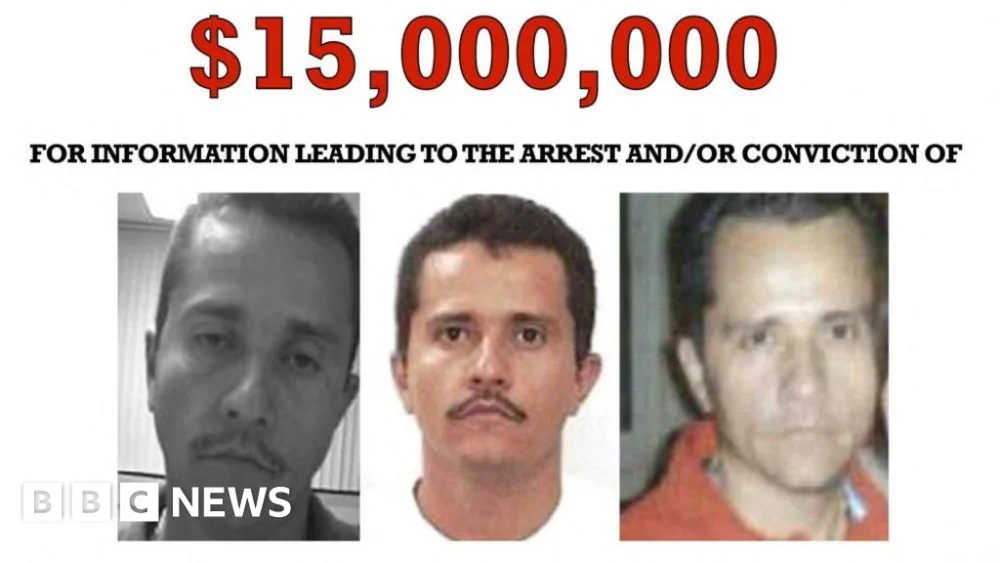
Mexico’s most wanted man and the notorious leader of the feared Jalisco New Generation (CJNG) drug cartel, Nemesio Oseguera Cervantes, known internationally as "El Mencho," has been killed during a high-stakes security operation to apprehend him. The tragic end to his reign of terror came on Sunday as he was being transported to the capital, Mexico City, after sustaining serious injuries during violent clashes between his loyalists and the Mexican army. The operation, a culmination of intelligence sharing between Mexico and the United States, dealt a significant blow to one of the world’s most powerful and violent criminal organizations.
The precise details of El Mencho’s demise unfolded in the town of Tapalpa, located in the central-western state of Jalisco, the cartel’s traditional stronghold. During the intense confrontations, four CJNG members were killed, while three army personnel sustained injuries. This lethal engagement marked the critical phase of an operation that had been meticulously planned and executed by Mexico’s elite special forces, bolstered by aerial support from the Mexican Air Force and the National Guard. The success of the operation was significantly aided by intelligence provided by the United States Department of State, underscoring the vital binational cooperation in combating transnational organized crime.
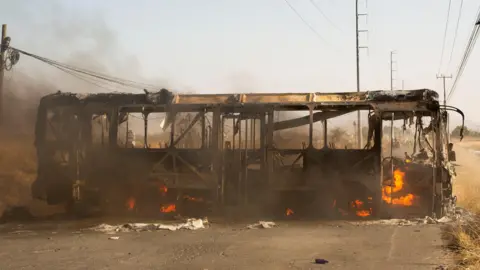
In response to the impending capture and subsequent death of their leader, the CJNG unleashed a wave of retaliatory violence across eight Mexican states. The cartel’s operatives responded with a coordinated effort to sow chaos and disrupt security, setting cars ablaze, constructing makeshift roadblocks, and launching attacks against security forces. This aggressive retaliation prompted the US Department of State to issue a swift shelter-in-place warning for American citizens residing in or visiting the states of Jalisco and Tamaulipas, as well as specific areas within Michoacan, Guerrero, and Nuevo Leon. The rapid escalation of violence served as a stark reminder of the CJNG’s formidable reach and its capacity for widespread disruption.
Mexican President Claudia Sheinbaum Pardo urged citizens to remain "calm" amidst the heightened tensions. In a post on the social media platform X, she emphasized that "in most parts of the country, activities are proceeding normally," attempting to allay public fears and signal a return to stability. However, the visual evidence of plumes of smoke rising over major cities, including Guadalajara – one of the host cities for the forthcoming FIFA World Cup – painted a more volatile picture. The tourist hotspot of Puerto Vallarta, situated on the Jalisco coast, found itself in a precarious situation, with potentially thousands of tourists trapped in resorts due to the widespread unrest. Throughout Sunday, harrowing reports of armed confrontations and gunmen on the streets in Jalisco and other affected regions circulated widely.
The governor of Jalisco, Pablo Lemus Navarro, took to social media to advise residents of his state to adhere to a "code red warning" and remain indoors, underscoring the severity of the ongoing security crisis. He also announced the suspension of public transport within the state, further limiting movement and contributing to the sense of unease. The ripple effects of the cartel’s violent response extended to international travel, with US carriers United Airlines and American Airlines, along with Air Canada, announcing the cancellation of flights to Puerto Vallarta and Guadalajara, highlighting the significant disruption to tourism and commerce.
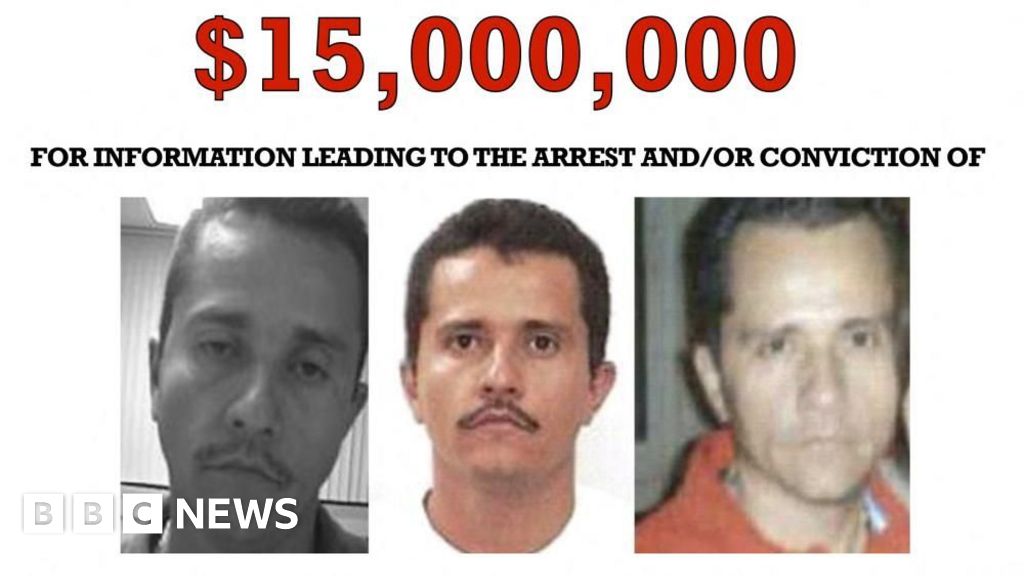
El Mencho, a 59-year-old former police officer, rose from relative obscurity to become one of the most feared and elusive drug kingpins in recent history. He commanded a vast and sophisticated criminal enterprise responsible for trafficking immense quantities of illicit narcotics, including cocaine, methamphetamine, and the particularly deadly synthetic opioid fentanyl, into the United States. His criminal empire was known for its brutality, employing extreme violence as a tool for intimidation, territorial control, and eliminating rivals. The US Department of State had placed a substantial bounty of $15 million (£11.1 million) on information leading to his capture, reflecting the immense threat he posed to both national and international security.
Former US ambassador to Mexico and Deputy Secretary of State Christopher Landau characterized El Mencho on social media as "one of the bloodiest and most ruthless drug kingpins," adding that his death was "a great development for Mexico, the US, Latin America, and the world." This sentiment echoed the broader view that El Mencho’s demise represents a significant victory for Mexican President Sheinbaum in her ongoing battle against the country’s entrenched drug cartels. It also holds potential implications for her relationship with US President Donald Trump, who had previously threatened to launch direct military action against cartels operating on Mexican soil. In January, Trump had stated his intention to "start now hitting land," asserting that "the cartels are running Mexico." President Sheinbaum had previously countered such aggressive rhetoric, stating that a US troop deployment across the southern border was "not on the table." However, the sustained violent response from the CJNG could test the resolve of the Mexican administration and potentially influence future diplomatic relations on security matters.
The killing of El Mencho is a pivotal moment, but the ultimate success of this operation will hinge on the Mexican security forces’ ability to swiftly quell the cartel’s violent backlash and prevent a complete erosion of public order. The Jalisco cartel has gained a fearsome reputation for its audacious and brutal tactics. These have included downing an army helicopter with a rocket-propelled grenade, assassinating dozens of state officials, and engaging in gruesome displays of violence, such as hanging the bodies of victims from bridges to terrorize rivals and instill fear in communities. These acts underscore the cartel’s deep-seated ruthlessness and its willingness to challenge state authority at every turn.
CJNG Cartel – Mexico’s Major Drug Trafficking Player
The Jalisco New Generation (CJNG) cartel, which first established its power base in Jalisco in 2010, has experienced an explosive growth in influence and operational reach. It is now a pervasive presence across Mexico, challenging the dominance of established cartels and expanding its territories through relentless violence and strategic alliances. The US Drug Enforcement Administration (DEA) regards the CJNG as a formidable rival to the Sinaloa cartel, another powerful criminal organization with a presence in all 50 US states. The CJNG’s influence extends far beyond Mexico’s borders, making it a critical supplier of illicit drugs to the US market and a significant earner of billions of dollars, particularly from the production and trafficking of fentanyl.
Most Fentanyl Enters US via Mexico
The scale of the drug trafficking problem, particularly concerning fentanyl, is starkly illustrated by recent seizures. According to figures released by US Customs and Border Patrol (CBP) in June 2025, since October 2024, an astonishing 9,200 pounds (4,182 kilograms) of fentanyl have been seized within the United States. The overwhelming majority of these seizures, a staggering 96%, occurred at the southwest border with Mexico, highlighting the critical role of the southern border in the flow of this dangerous synthetic opioid into the US. Less than 1% of the seized fentanyl was intercepted along the northern US border with Canada, with the remainder being captured through maritime routes or other US checkpoints. This data underscores the profound impact of Mexican-based cartels, like the CJNG, on the ongoing opioid crisis in the United States. The death of El Mencho, while a significant victory, does not signal an end to this complex and deadly trade, but rather a potential shift in the power dynamics within the criminal underworld.
