
 By admin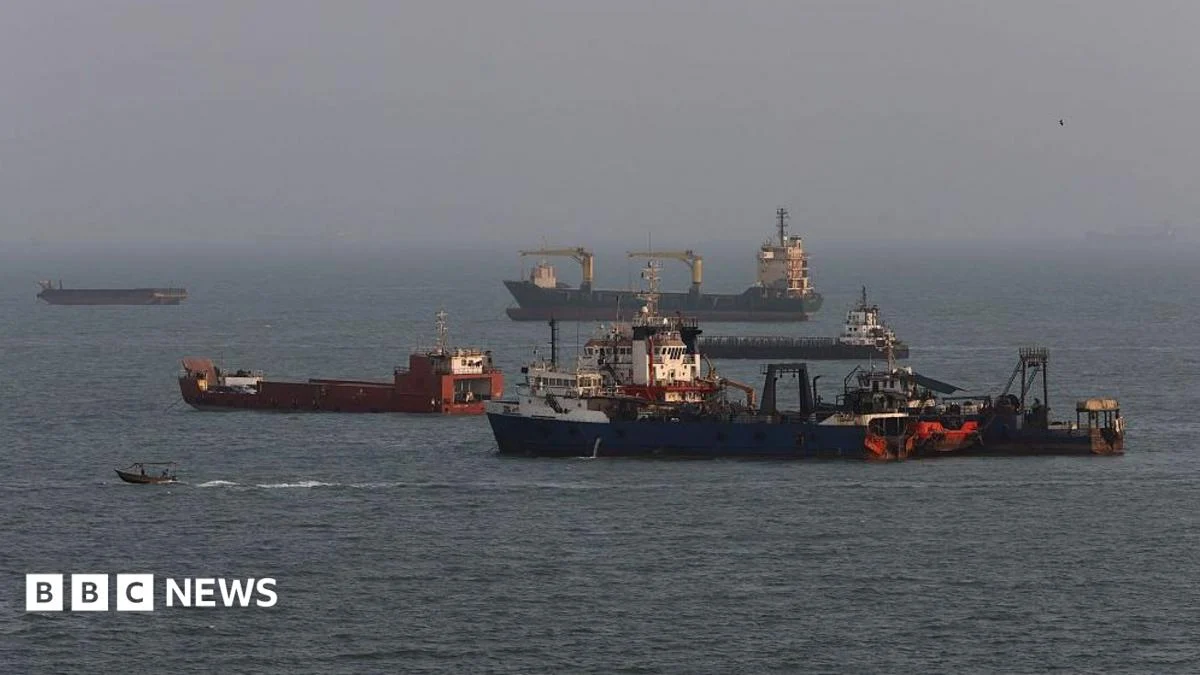
In a dramatic escalation of the simmering conflict, Iranian state media reported on Sunday that the nation’s Navy had successfully intercepted and attacked an American remote-controlled vessel attempting to navigate the strategically vital Strait of Hormuz. However, this assertion was swiftly and unequivocally refuted by the United States military, casting further doubt on the veracity of Tehran’s claims amidst an increasingly volatile regional security landscape. Captain Tim Hawkins, a spokesperson for U.S. Central Command (Centcom), dismissed the report as a "total lie," as quoted by the Associated Press, underscoring the deep distrust and adversarial relationship between the two nations.
The accusation from Iran emerged just hours after U.S. Defense Secretary Pete Hegseth issued a stark warning to Tehran, articulating a firm retaliatory stance. Writing on social media on Saturday, Hegseth declared, "It’s simple: if Iran shoots at US ships, we will destroy (and sink) their oil tankers." This direct threat signals a significant hardening of American policy, indicating a willingness to escalate economic pressure on Iran should its forces engage U.S. naval assets.
The renewed animosity follows the formal expiration of a 60-day ceasefire between the U.S. and Iran last month. This period of relative calm was shattered when the U.S. resumed offensive operations the previous Sunday, plunging the region back into a cycle of conflict. Fighting has persisted throughout the week, characterized by a series of U.S. strikes targeting Iranian positions and Iranian retaliatory actions against U.S. interests across the Middle East, including in the United Arab Emirates, Bahrain, Kuwait, and Jordan. These retaliatory strikes highlight the interconnectedness of the regional security architecture and the potential for a wider conflagration.
Adding to the prevailing uncertainty, U.S. President Donald Trump commented this week that the renewed fighting would not endure for an extended period, a sentiment he and his administration have consistently echoed since the commencement of the six-month-long war in February. This pronouncement, while aiming to project confidence, offers little solace to a region grappling with escalating violence and economic disruption. Months of intensive diplomatic negotiations between the U.S. and Iran have thus far failed to yield a lasting peace, and there are scant indications of an imminent diplomatic breakthrough.
The Strait of Hormuz, a critical chokepoint for global oil and gas shipments, has been effectively rendered impassable since the onset of the conflict. This closure has become a significant tool of leverage for Iran, which has adamantly asserted its determination to maintain a measure of control over this crucial waterway. Conversely, President Trump has declared the strait "open," with the U.S. military actively engaged in facilitating the passage of commercial vessels through its southern route. This divergence in stated policy and operational reality underscores the ongoing struggle for dominance and control in the region.
The conflict’s impact on global energy markets has been profound, leading to a discernible surge in gasoline prices worldwide. As the U.S. midterm elections loom in November, President Trump faces mounting pressure from American consumers concerned about the economic toll of the ongoing war. The average price for a gallon of diesel in the United States reached a staggering $5.85 on Friday, a stark contrast to the $3.71 average recorded just a year prior. This dramatic increase in fuel costs directly impacts household budgets and contributes to broader inflationary pressures.
In an attempt to assuage these concerns and provide a more optimistic outlook on energy market stability, U.S. Energy Secretary Chris Wright stated on Sunday that approximately 9 million barrels of oil per day were currently transiting through the Strait of Hormuz. He further elaborated in an interview with CNN that, when factoring in oil transported via regional pipelines, the current flow represented "two-thirds or more of pre-conflict flows." This assessment, while suggesting a partial recovery in energy transport, still indicates a significant shortfall compared to pre-war levels.
During an appearance on ABC’s "This Week" on Sunday, Secretary Wright also offered a more hopeful projection for American consumers, suggesting that gasoline prices should begin to decline as the peak summer demand tapers off following Labor Day. This sentiment, however, is contingent on the continued stability of energy flows and the absence of further disruptions in the volatile Persian Gulf region. The interplay between geopolitical events and global energy markets remains a significant factor influencing economic stability and public sentiment.
The historical context of the Strait of Hormuz underscores its strategic importance. This narrow waterway, a mere 21 miles wide at its narrowest point, connects the Persian Gulf to the Gulf of Oman and the open sea. Approximately 30% of the world’s seaborne oil trade passes through this critical maritime artery. Control or disruption of the Strait has profound implications for global energy security and economic stability, making it a perennial flashpoint for regional and international powers.
The current conflict’s roots can be traced to a complex web of geopolitical rivalries, historical grievances, and the ongoing struggle for regional influence. The U.S. has long sought to counter what it perceives as Iran’s destabilizing activities in the Middle East, including its support for proxy militant groups and its pursuit of nuclear capabilities. Iran, in turn, views U.S. military presence in the region as a direct threat to its national security and sovereignty. The breakdown of the recent ceasefire signifies a failure to de-escalate tensions and a return to a more confrontational posture.
The economic implications of the conflict extend beyond fuel prices. Disruptions to shipping routes, increased insurance premiums for vessels transiting the region, and the potential for further sanctions on Iran can all contribute to global economic instability. Businesses reliant on the smooth flow of oil and gas are particularly vulnerable to these disruptions. The current situation highlights the interconnectedness of global economies and the far-reaching consequences of regional conflicts.
Expert analysis of the situation suggests that the current trajectory is unsustainable in the long term. Dr. Evelyn Reed, a Middle East security analyst at the Global Policy Institute, commented, "The cycle of attack and counter-attack is dangerous. While both sides may be seeking to project strength, they risk miscalculation that could lead to a much larger and more devastating conflict. The lack of robust diplomatic channels is a critical concern." She further noted that "the Strait of Hormuz remains the Achilles’ heel of global energy markets, and its continued weaponization by Iran, while met with forceful rhetoric from the U.S., creates an environment of perpetual uncertainty."
The demographic and political landscape surrounding the conflict also plays a crucial role. In Iran, the government faces internal pressures related to economic hardship, exacerbated by international sanctions and the ongoing conflict. In the United States, President Trump’s administration is keenly aware of the impact of energy prices on public opinion, particularly in the lead-up to critical elections. This domestic political calculus undoubtedly influences the administration’s strategic decisions and public pronouncements.
The role of international actors and organizations in mediating this conflict cannot be overstated. While the U.S. and Iran are the primary belligerents, other regional powers, such as Saudi Arabia and the United Arab Emirates, are deeply invested in regional stability. International bodies like the United Nations have historically played a role in de-escalation efforts, though their effectiveness in the current climate remains to be seen. The absence of a unified international front on this issue further complicates the path towards resolution.
The rhetoric employed by both sides is also a significant factor. Secretary Hegseth’s direct threat to destroy Iranian oil tankers represents a departure from more measured diplomatic language and signals a willingness to engage in economic warfare. Similarly, Iran’s claims of naval successes, even if disputed, serve to bolster domestic support and project an image of resilience against foreign aggression. This war of words, while seemingly less consequential than military actions, can shape perceptions and harden positions, making de-escalation more challenging.
Looking ahead, the situation remains precarious. The U.S. military’s continued presence and operational tempo in the Strait of Hormuz, coupled with Iran’s determination to assert control, creates a persistent risk of further incidents. The absence of a clear diplomatic off-ramp suggests that the current state of heightened tension and intermittent conflict may persist. The global economic implications, particularly concerning energy prices, will continue to be a significant concern for policymakers and consumers alike. The coming weeks and months will be critical in determining whether the region can navigate away from further escalation or descend into a more widespread and destructive conflict. The reliability of information emanating from state-controlled media on both sides also necessitates careful scrutiny and independent verification, underscoring the challenges inherent in reporting from a conflict zone characterized by deep mistrust and propaganda. The world watches with bated breath as this critical geopolitical standoff continues to unfold, with potentially far-reaching consequences for global security and prosperity.
