
 By admin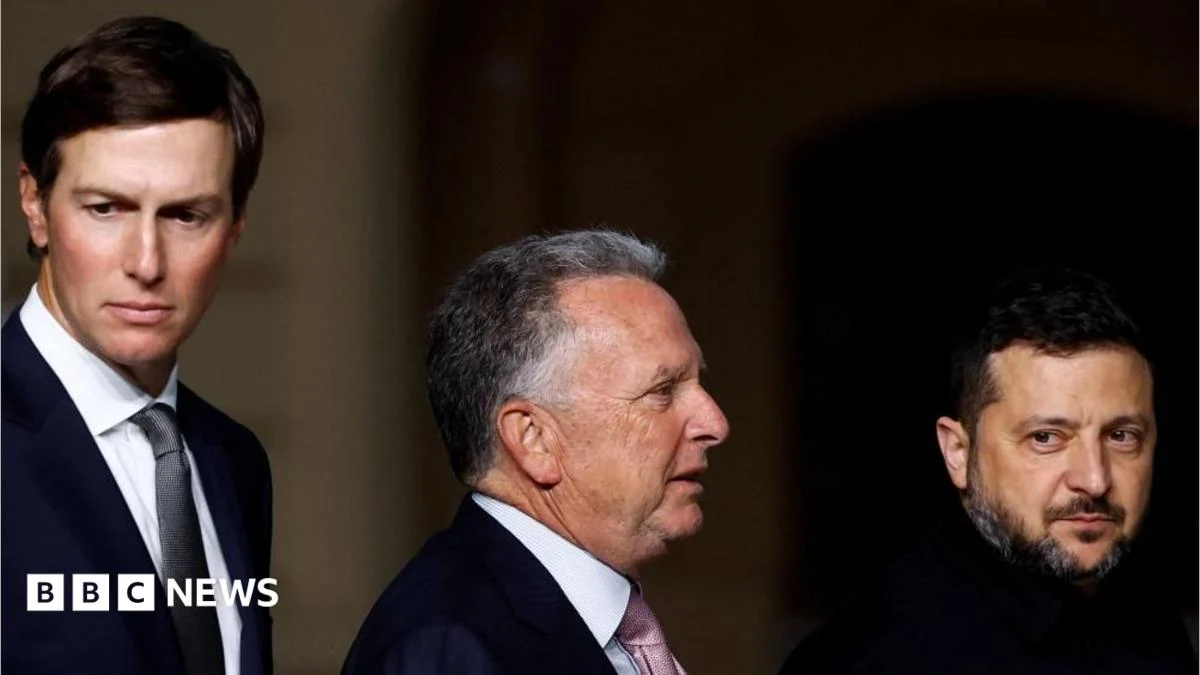
The recent high-stakes diplomatic overtures in Kyiv, marked by the unprecedented arrival of Donald Trump’s special envoys, Steve Witkoff and Jared Kushner, carried a potent and layered symbolism. Their journey to Ukrainian soil for the first time since the full-scale Russian invasion underscored the gravity of the conflict and the urgent need for dialogue, even as the immediate threat of Russian aggression loomed large. The fact that their travel was restricted to the relative safety of a train, a stark contrast to the potential vulnerability of air travel against a backdrop of Russian drone activity, served as a potent visual metaphor for the precarious security situation Ukraine endures. This necessity highlighted the constant danger faced by the nation, a danger orchestrated by the very leadership with whom the envoys had recently engaged in discussions in Moscow.
The choice of Saint Sophia Cathedral as the venue for President Volodymyr Zelensky’s meeting with Witkoff and Kushner was a deliberate and historically resonant decision. This UNESCO World Heritage site, a cornerstone of Ukraine’s rich cultural and spiritual heritage, stands as a powerful symbol of national identity and resilience. Its proximity to the recent site of Russian drone strikes on Ukraine’s security services headquarters on Friday amplified President Zelensky’s unspoken yet clear message: Ukraine’s historical and cultural heart is under direct threat, and the world must recognize the existential nature of the conflict. The juxtaposition of ancient history and modern warfare served as a poignant reminder of what is at stake.
The extended talks, lasting several hours, were a significant development, further bolstered by the subsequent inclusion of European national security advisors, notably the United Kingdom’s National Security Adviser Jonathan Powell. The reported warmth and optimism that emerged from these discussions, with all parties speaking of "substantive discussions" and the potential revival of past "trilateral talks" involving the United States and Europe, offered a glimmer of hope in a protracted and devastating conflict. This collaborative approach, bringing together key Western allies, suggested a unified front in seeking a path towards de-escalation and a lasting peace settlement.
However, beneath the surface of diplomatic cordiality, fundamental divergences in perspective and stated objectives remained starkly apparent. The American envoys arrived directly from Moscow, where Russian President Vladimir Putin had presented a narrative of "tangible advances" on the battlefield. This assertion stood in stark contrast to the on-the-ground reality described by Ukrainian officials. Kyiv reported significant territorial gains in August, exceeding their losses, and claimed a staggering 42,000 Russian casualties, both dead and wounded, during the same period. This disparity in reporting underscores the deep chasm of information and perception surrounding the conflict, a common feature of protracted wars where propaganda and strategic narratives play a crucial role.
President Putin’s insistence to the US envoys that the "root causes of the conflict" must be addressed served as a thinly veiled reiteration of his long-standing strategic demands. These demands, which have formed the bedrock of Russia’s justification for its actions, include the cession of Ukrainian territory, Ukraine’s abandonment of aspirations to join NATO, and a significant reduction in the size of its armed forces. These are non-negotiable points for Moscow, representing a fundamental challenge to Ukraine’s sovereignty and its right to self-determination.

In response, President Zelensky remained resolute, emphasizing Ukraine’s unwavering commitment to securing "strong and clear" security guarantees, a crucial component of which is a robust and capable army. He offered no indication of willingness to cede any territory, particularly in the eastern Donbas region, a complex and highly sensitive issue that he described with characteristic understatement as "difficult." This stance reflects the deep-seated national resolve within Ukraine to protect its territorial integrity and resist Russian annexation. The Ukrainian leadership views any territorial concession as a betrayal of its people and a dangerous precedent that would embolden further aggression.
The discussions, while yielding positive pronouncements, also revealed the immense challenges ahead. US envoy Witkoff acknowledged that progress had been made and that the "ingredients for a settlement were there," but he candidly admitted that "both sides would have to make compromises to narrow the differences between them." This statement, while diplomatic, highlights the current impasse: neither side appears willing to make the significant concessions required to bridge the vast ideological and territorial divides. The very definition of "compromise" is fraught with peril for Ukraine, as any perceived capitulation could be seen as a national humiliation and a strategic defeat.
The prevailing sentiment in Kyiv, therefore, is one of cautious expectation that the fighting will continue, with the specter of a challenging winter ahead looming large. The conflict has already exacted a devastating toll on Ukraine’s infrastructure and economy, and the coming months are likely to exacerbate these hardships. The harsh realities of winter, including potential energy shortages and disruptions to daily life, add another layer of complexity to an already dire humanitarian situation.
Against this backdrop, some diplomatic circles entertain the possibility of a window of opportunity for a settlement emerging next spring. This optimistic outlook is predicated on a number of factors, including potential shifts in the battlefield dynamics, evolving political landscapes within Russia and its allies, and sustained international pressure. However, many observers remain less optimistic, citing the entrenched positions of both belligerents and the deep-seated mistrust that has developed over decades of strained relations, culminating in the current full-scale war.
President Zelensky’s expression of gratitude for the US envoys’ visit was particularly poignant. The temporary respite from air strikes, a short-term agreement brokered during their visit, offered a much-needed reprieve to the beleaguered citizens of Kyiv. This brief period of relative calm, however, was not expected to last, underscoring the transient nature of any de-escalation in the face of ongoing hostilities. The visit, therefore, served as both a diplomatic maneuver and a humanitarian gesture, providing a momentary pause in the relentless cycle of violence.
The strategic implications of this diplomatic engagement extend far beyond the immediate cessation of hostilities. The participation of European national security advisors signals a concerted effort to foster a unified European approach to the conflict, moving beyond individual national responses. This collective effort is crucial for exerting sustained diplomatic and economic pressure on Russia, while simultaneously providing robust support to Ukraine. The potential revival of "trilateral talks" involving the US and Europe suggests a desire to create a more structured and coordinated framework for future peace negotiations, one that leverages the collective diplomatic and economic power of the West.

The context of the Trump administration’s foreign policy, which often prioritized transactional diplomacy and challenged established international norms, adds another layer of complexity to this narrative. While the current US administration has re-engaged with traditional alliances and reinforced support for Ukraine, the involvement of envoys associated with the previous administration raises questions about the long-term implications and potential shifts in US foreign policy. The envoys’ dual engagements in Moscow and Kyiv highlight the intricate web of relationships and rivalries that define the current geopolitical landscape.
Furthermore, the conflict in Ukraine has had far-reaching global consequences, impacting energy markets, food security, and international relations. The persistent instability in Eastern Europe serves as a stark reminder of the interconnectedness of the global community and the devastating ripple effects of armed conflict. The ongoing efforts to find a resolution are therefore not merely about the fate of Ukraine but about the broader stability and security of the international order.
The differing casualty figures reported by Russia and Ukraine underscore the challenges of obtaining verifiable information during wartime. Independent verification of battlefield claims is often difficult, leading to a reliance on intelligence assessments and the narratives presented by each side. This information asymmetry can significantly influence public opinion, diplomatic negotiations, and the overall perception of the conflict’s trajectory.
The strategic demands articulated by President Putin, particularly concerning NATO expansion and territorial integrity, reflect a broader geopolitical struggle for influence and security in Eastern Europe. Russia perceives NATO’s eastward enlargement as a direct threat to its security interests, while Ukraine views NATO membership as a vital safeguard against Russian aggression. This fundamental disagreement forms a core impediment to any lasting peace settlement.
The "difficult" nature of territorial concessions, as described by President Zelensky, is rooted in the deep emotional and nationalistic significance attached to Ukraine’s sovereign borders. The loss of territory is not merely a geographical adjustment but a symbolic surrender that would be deeply resented by the Ukrainian population and could have profound implications for national identity and historical memory.
The prospect of a negotiated settlement remains a distant and uncertain goal. The deeply entrenched positions of both sides, coupled with the ongoing violence, create a challenging environment for productive diplomacy. However, the very fact that dialogue, however tentative, is occurring is a positive development. The continued engagement of international actors, including the United States and European nations, is crucial for maintaining pressure on Russia to de-escalate and for supporting Ukraine’s efforts to preserve its sovereignty and territorial integrity. The path forward is fraught with peril, but the pursuit of peace, however arduous, remains the ultimate objective. The world watches with bated breath, hoping that the seeds of dialogue sown in Kyiv will eventually blossom into a lasting peace, ensuring that the rich tapestry of Ukrainian history and culture can continue to thrive, free from the shadow of aggression.
