
 By Lina Irawan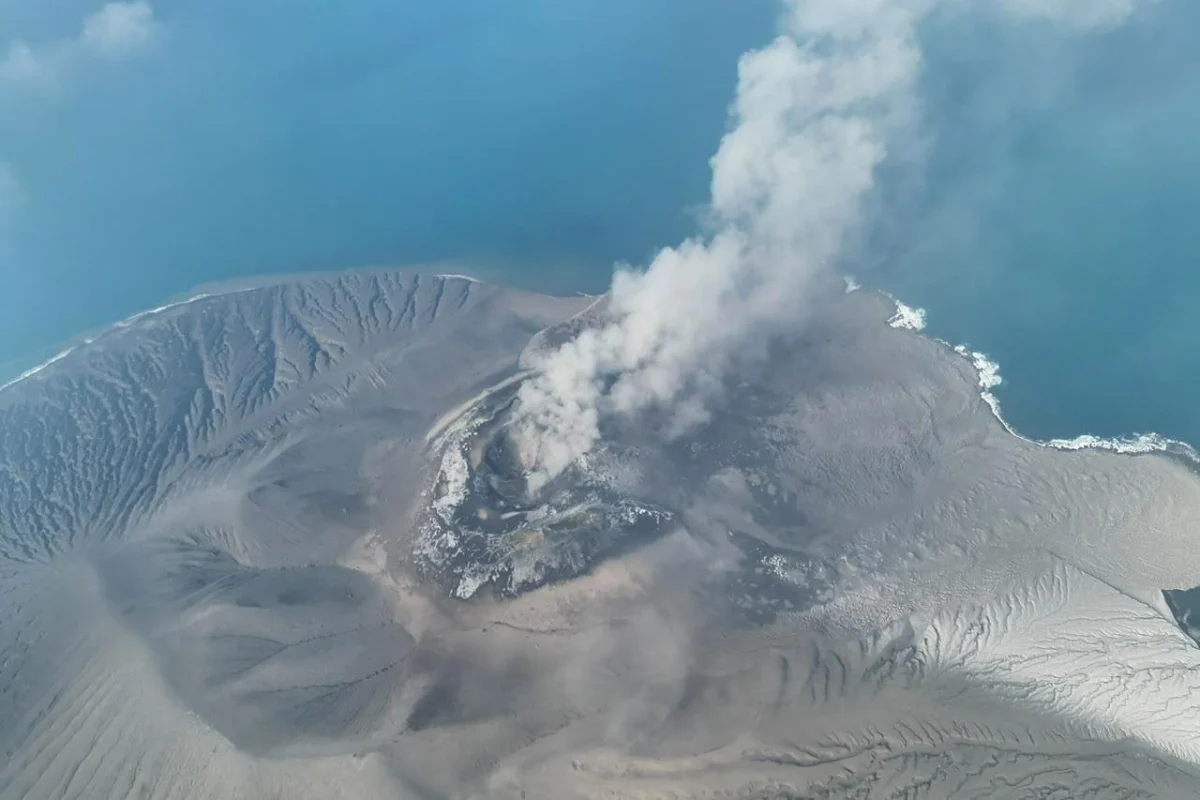
The volcanic island of Anak Krakatau, meaning "Child of Krakatau," is strategically located in Indonesia’s Sunda Strait, a vital shipping lane separating the main islands of Java and Sumatra. This geological offspring of the infamous Krakatau volcano, known for its catastrophic 1883 eruption, had exhibited heightened signs of activity since Friday. On Sunday, it erupted with significant force, first for 30 seconds at 3:53 a.m. local time, followed by another 16-second burst approximately three hours later. Indonesia’s Geological Agency, officially known as the Center for Volcanology and Geological Hazard Mitigation (PVMBG), meticulously tracked these events, with closed-circuit camera footage providing stark visuals of incandescent lava flares erupting from the crater, indicating a magmatic eruption.
Despite the intensity of the eruptions and the widespread ashfall, authorities confirmed that no casualties were reported, and no general evacuation order was issued. This decision was largely due to the volcano’s isolated location; the nearest permanent settlement is situated more than 16 kilometers (10 miles) away. However, the PVMBG promptly issued stern warnings, advising both residents and visitors to maintain a safe distance of at least 3 kilometers (2 miles) from the active crater, a standard precaution to mitigate risks from ejected volcanic material or pyroclastic flows. The agency maintains a four-level alert system for volcanoes, and Anak Krakatau has been at Level 3 (Siaga, or Alert) for some time, indicating an ongoing potential for eruptions and requiring heightened vigilance.
The immediate and most tangible impact of the eruption was the extensive spread of volcanic ash. Fine particles were carried by prevailing winds, blanketing parts of Indonesia’s capital, Jakarta, a megacity of over 10 million people, and extending into Lampung province on Sumatra’s southern tip. Volcanic ash, composed of pulverized rock and glass, poses significant hazards. In the atmosphere, it can severely abrade aircraft engines, clog fuel systems, and reduce visibility to dangerous levels, rendering airspace unsafe for flight. On the ground, it can cause respiratory problems, contaminate water supplies, damage crops, and disrupt electronic systems. The PVMBG, responsible for monitoring Indonesia’s 127 active volcanoes, meticulously tracked the ash plume’s dispersion, issuing advisories to relevant aviation and public health authorities.
In response to the clear and present danger posed by the airborne ash, AirNav Indonesia, the state-owned air traffic service provider, swiftly took action. It announced the closure of airspace around eight key airports. This included the nation’s primary gateway, Soekarno-Hatta International Airport (CGK) in Jakarta, and the capital’s secondary airport, Halim Perdanakusuma International Airport. Additionally, six other regional airports were affected, most notably Radin Inten II Airport in Lampung, which bore the brunt of the ashfall closer to the source. The decision to close these vital transportation hubs was a critical safety measure, underscoring the non-negotiable priority of aviation security in the face of volcanic hazards.
By Sunday evening, the ramifications of these closures had become starkly clear. The grounding of flights at eight airports had impacted an estimated 170,000 passengers and resulted in the cancellation of 1,558 flights. Soekarno-Hatta International Airport alone accounted for a staggering 963 of these cancellations, highlighting its immense operational scale and its critical role in connecting Indonesia with the world. All eight affected airports were initially ordered to remain closed until 8:59 a.m. Monday, with further assessments pending based on weather patterns and ash dispersal. The economic fallout from such a widespread disruption is substantial, affecting not only airline revenues but also the broader tourism sector, cargo logistics, and the productivity of business travelers. Airlines face significant costs associated with rerouting flights, accommodating stranded passengers, and repositioning aircraft.
The human element of this crisis was palpable at the affected airports. Stranded passengers expressed a mix of frustration and resignation. Diego Urdiales, a Spanish tourist eagerly awaiting his flight home to Madrid, voiced the common sentiment of uncertainty: "It’s of course an inconvenience. I was supposed to get input from the airline… but so far no news." Meanwhile, Michele Gouw, an Indonesian passenger, reflected a more philosophical acceptance, characteristic of a population accustomed to natural challenges: "It’s a natural disaster, it’s a force majeure, so, what can we do? We just have to accept it and wait for the airline and airport directions." These testimonials underscore the sudden and often helpless position travelers find themselves in when faced with unpredictable natural events.
Indonesia’s Directorate General of Civil Aviation, under the Ministry of Transportation, moved swiftly to coordinate the national response. It announced continuous monitoring of the eruption’s impact on air travel, maintaining close communication with airlines, airport operators, air navigation services, and the national meteorology agency. Lukman F. Laisa, the Ministry of Transportation director general of civil aviation, emphasized the paramount importance of safety in a public statement: "Safety remains our top priority in every operational decision." He also issued a crucial warning about the potential for cascading disruptions, explaining that the widespread cancellations would inevitably affect aircraft rotations, fleet availability, and terminal capacity across the country and potentially internationally, as airlines worked to restore their complex operational networks. This ripple effect often means that even airports not directly affected by ash, such as Bali’s I Gusti Ngurah Rai International Airport and Medan’s Kualanamu International Airport, experienced disruptions due to canceled connecting flights and repositioning issues.
The volcanology agency, in collaboration with the Darwin Volcanic Ash Advisory Centre (VAAC), a key international body responsible for providing advisories on volcanic ash to the aviation industry, utilized sophisticated satellite imagery to track the ash plumes. Their analysis identified two distinct ash clouds. One plume ascended to an altitude of approximately 20,000 feet (6,100 meters) and drifted northeast, spreading over Jakarta, Banten, West Java, and adjacent waters. A second, more formidable cloud reached an astonishing height of 50,000 feet (15,200 meters), extending its reach over parts of Banten, Lampung, and Bengkulu provinces, the southern Sunda Strait, and significant sections of the Indian Ocean west of Sumatra. These varying altitudes are critical for aviation, as different flight levels are affected, potentially grounding various types of aircraft.
Lana Saria, head of Indonesia’s Geological Agency, provided crucial insights into Anak Krakatau’s recent behavior. She confirmed that volcanic activity at Anak Krakatau had intensified significantly since July, with Sunday’s eruption being the most powerful during this period. The repeated eruptions, she explained, are a clear indicator of a continued supply of magma and volcanic gases beneath the volcano. While this sustained activity signals an active and dynamic system, Saria cautiously noted that officials cannot definitively predict whether a larger, more destructive eruption will occur. "We continue to evaluate the volcano’s development based on all monitoring data, not solely on the number of eruptions or the height of the ash column," Saria stated in a video briefing, emphasizing the comprehensive nature of their monitoring efforts, which include seismometers, GPS deformation sensors, and gas emission detectors. She further outlined the primary hazards associated with Anak Krakatau’s current state: volcanic ashfall, high concentrations of noxious gases, and the ejection of hot rocks and other volcanic material in the immediate vicinity of the crater.
Beyond air travel, the eruption’s impact extended into other societal sectors. Recognizing the potential health risks posed by prolonged exposure to volcanic ash, particularly for children, the government authorized schools in affected areas to temporarily transition to online learning from home. This proactive measure aims to reduce students’ exposure to ashfall, which can cause respiratory issues and eye irritation, and allows local authorities the flexibility to adjust classroom activities based on the evolving conditions on the ground and air quality assessments.
Anak Krakatau’s history is inextricably linked to its formidable parent, Krakatau. The original Krakatau volcano gained global infamy for its monumental eruption in August 1883, one of the most powerful volcanic events in recorded history. The eruption, estimated at a Volcanic Explosivity Index (VEI) of 6, generated colossal tsunamis that devastated coastal regions, killing tens of thousands of people. The atmospheric effects were global, injecting massive amounts of sulfur dioxide into the stratosphere, which led to vivid sunsets worldwide and a measurable period of global cooling in the years that followed.
Anak Krakatau itself has a more recent and tragic history. In December 2018, an eruption of the "Child of Krakatau" caused a devastating tsunami that claimed the lives of at least 430 people across the coastal areas of Sumatra and Java. Researchers later concluded that this catastrophic event was triggered not directly by the eruption’s blast, but by an underwater landslide. Volcanic activity caused a large chunk of Anak Krakatau’s southwest slope to collapse into the sea, displacing a massive volume of water and generating destructive waves with little to no warning. Scientists reported that after that calamitous event, Anak Krakatau island was reduced to only about a quarter of its original size, a dramatic testament to the volcano’s destructive power. This historical context provides a critical backdrop to the current vigilance of Indonesian authorities, even as they confirm that Sunday’s eruption did not pose a tsunami threat. The memory of 2018 ensures that monitoring and emergency preparedness remain at the forefront of the nation’s strategy for managing its volatile geological landscape.
As Indonesia grapples with the immediate aftermath of Anak Krakatau’s latest outburst, the long-term outlook remains one of careful observation and preparedness. The PVMBG will continue its round-the-clock monitoring, utilizing advanced instrumentation to track seismic activity, ground deformation, and gas emissions. While the current disruption is primarily to air travel and local life, the unpredictable nature of Anak Krakatau, a volcano born of immense power and capable of further significant events, means that vigilance is not just a policy, but a way of life for those living in its shadow. The swift, coordinated response from Indonesian agencies, from aviation authorities to volcanologists, reflects the nation’s ongoing commitment to safeguarding its citizens and critical infrastructure against the ever-present forces of nature.
