
 By Lina Irawan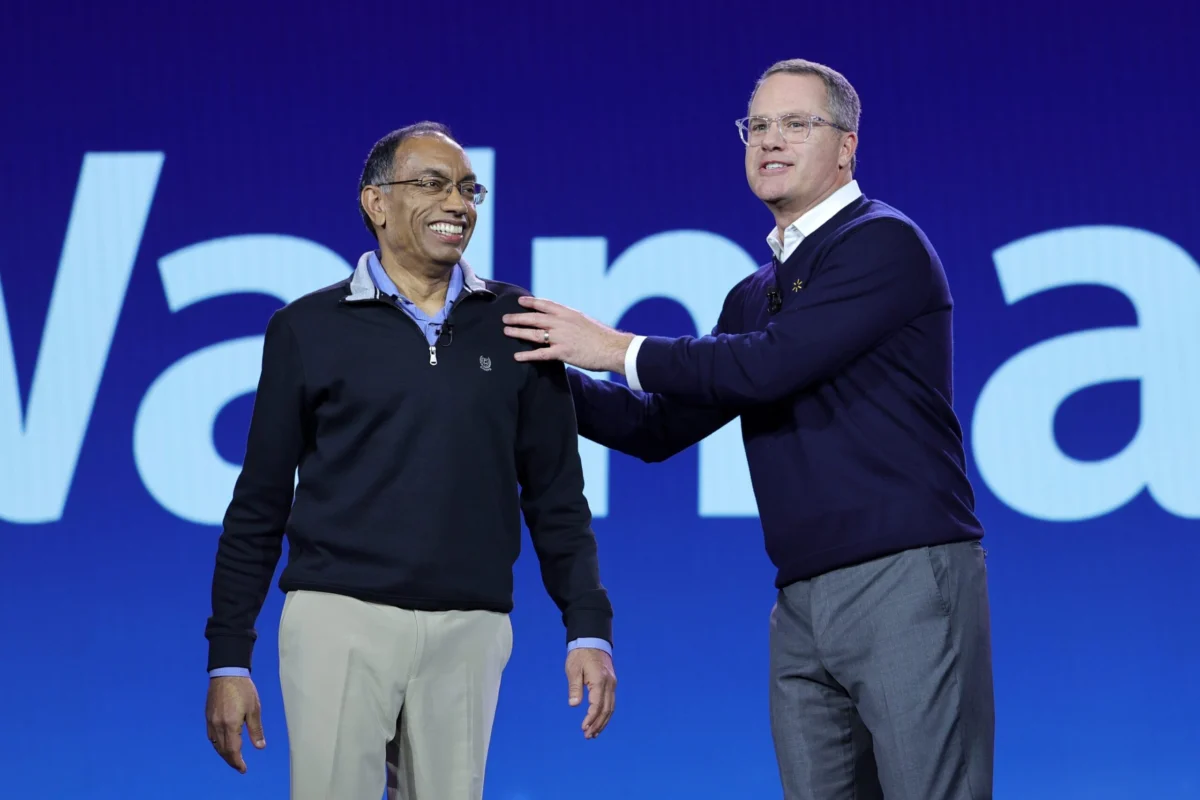
A comprehensive analysis of executive compensation data reveals that the financial rewards for technology leadership have soared to unprecedented levels. Median reported compensation for executives holding "technology" in their title, predominantly Chief Technology Officers (CTOs), reached a staggering $2.6 million in the most recent fiscal year. This figure represents an astonishing 45.4% increase from 2021, according to data meticulously compiled for Fortune by the executive pay analytics firm C-suite Comp. This meteoric rise in tech exec pay far outstripped the gains seen by their counterparts across the C-suite, highlighting a distinct and powerful market demand for specialized technological expertise.
In stark contrast, other senior leadership roles experienced significantly more modest increases. Median compensation for Chief Operating Officers (COOs) saw an 18.3% rise, while Chief Executive Officers (CEOs) experienced a 17.2% bump. Chief Financial Officers (CFOs) recorded a 15% increase, and Chief Information Officers (CIOs) trailed with a 9.2% gain. The sheer magnitude of the increase for tech leaders underscores a recalibration of value within corporate structures, positioning technology at the very heart of strategic imperative.
Even more striking than the percentage change is the absolute dollar value of these increases. Median pay for chief technology officers surged by an impressive $809,587 between 2021 and 2025. This gain actually surpassed that of CEOs, who typically command the highest compensation and are most likely to reap massive pay rewards, whose median pay rose by $698,399 over the same period. This is particularly noteworthy given that CEO starting salaries were, on average, twice as high as those for CTOs in 2021. The combined median gains for operating, finance, and information chiefs totaled $725,584—less than the CTO’s individual increase. This data paints a clear picture: the market is heavily investing in technology leadership, recognizing its critical role in navigating the complexities and opportunities presented by the AI revolution.
"Strategic CTOs are a real value-add for these companies," affirmed Dan Laddin, a founding partner at Compensation Advisory Partners, a consulting firm that advises corporate boards on executive pay programs. Laddin emphasized the transformation of the CTO role from a technical manager to a pivotal strategic leader. "So people who can do that, and lead that side of the business—you are seeing a dramatic increase." This sentiment reflects a growing understanding among corporate boards that a forward-thinking, AI-savvy CTO is not merely a cost center but a potent engine for innovation, efficiency, and ultimately, revenue generation.
The telehealth platform Hims & Hers provides a compelling real-world illustration of this shifting pay priority. In May 2025, the company’s board approved two significant new-hire awards for incoming C-suite executives, starkly revealing their strategic focus. Nader Kabbani, the incoming Chief Operating Officer, received an award of 216,333 restricted stock units (RSUs) valued at $13.5 million. In a dramatic contrast, Mohamed Elshenawy, the incoming Chief Technology Officer, was granted an astounding 1,036,339 RSUs, valued at $57.2 million—more than four times the award given to the COO. (Kabbani, notably, left Hims & Hers just six months later, further highlighting the company’s apparent prioritization of technical leadership.)
The rationale behind this significant disparity was explicitly detailed in Hims & Hers’ annual proxy report to shareholders. The board explained that "competition for experienced talent in the AI space during 2025 was intense," noting that Elshenawy’s award specifically reflected the "unique competitive circumstances for AI talent" prevalent at the time of his hiring. No equivalent justification regarding competitive circumstances was provided for Kabbani’s award, underscoring the specific premium placed on AI expertise.
Elshenawy’s impressive background further justified the substantial investment. He joined Hims & Hers from Cruise, the self-driving vehicle company owned by General Motors, where he had served as both president and CTO. His extensive experience in cutting-edge autonomous technology positioned him as a highly coveted asset in the AI talent market. Consequently, Elshenawy’s reported compensation for 2025 reached $60.9 million, a figure more than 2.5 times higher than the $23 million reported for Hims & Hers CEO and co-founder, Andrew Dudum.
It is crucial to note that the figures reported in proxy statements, such as those for Elshenawy, represent grant-date values. These are calculated when a board approves an award and do not necessarily equate to immediate take-home pay. Stock awards, particularly RSUs, typically vest over several years and their ultimate value is contingent on the company’s stock performance. For instance, none of Elshenawy’s RSUs had vested by the end of 2025. Furthermore, the company’s stock experienced a decline after the award was granted, reducing the initial $57.2 million value to $33.6 million by the last trading day of the year, according to Hims & Hers. This nuance highlights the long-term, performance-driven nature of these compensation packages, but it does not diminish the strong signal sent by the initial grant-date valuation.
The four-year surge in CTO pay has undeniably ushered in a new order within the C-suite. In fiscal year 2021, the typical (median) CTO was paid approximately $176,000 less than the typical (median) COO. By the most recent fiscal year, this dynamic had reversed, with CTOs earning roughly $275,000 more than COOs. While a clear hierarchy still exists between CTOs and CEOs, with CTOs not yet close to catching up to the highest-paid leaders, the trend is significant. The typical CEO was paid $2.27 million more than the typical CTO in 2021; this gap narrowed slightly to about $2.16 million more in the most recent year, signaling a clear upward trajectory and a recalibrated priority for the technology leadership role.
The AI Talent Factor: A Market Reimagined
The timing of this explosive surge in CTO compensation aligns almost perfectly with the rapid expansion and mainstream adoption of generative artificial intelligence. The now-ubiquitous AI chatbot, ChatGPT, launched by OpenAI in November 2022, captured the world’s attention and achieved 100 million users in a mere two months, setting a record for the fastest consumer adoption of any application in history. This breakthrough moment served as a potent catalyst, igniting a global "AI race" among corporations.
As the consumer market embraced AI, enterprise adoption quickly followed suit. OpenAI launched its enterprise product in August 2023, and by the fall and winter of that year, a significant portion of the Fortune 500 companies were actively piloting and experimenting with the platform’s advanced features. Tech giant Microsoft, a key investor in OpenAI, further accelerated this trend by making its AI-powered Copilot available to enterprise customers in the fall of 2023, with major players like Pfizer and Chevron among its earliest adopters. It was during this critical period, specifically from 2021 to 2025, that the median compensation for technology roles surged by an astounding 28.9%—the largest single-year movement recorded for any role in the C-suite data during this timeframe.
This rapid investment in AI platforms inevitably led to a dramatically more expensive talent market. While headlines frequently focused on the mega-packages granted to engineers and researchers at frontier AI labs, with reports of companies like Meta offering $100 million sign-on bonuses to attract top OpenAI staff, the impact rippled down to traditional corporate structures. Hiring CTOs to lead even established, marquee Nasdaq- and NYSE-listed companies also became an increasingly costly endeavor.
Warehouse robotics company Symbiotic exemplifies this trend. In January 2025, James Kuffner joined the company as CTO, receiving an initial equity award with a target value of $18 million, alongside an additional $3 million to compensate him for cash awards he forfeited at his previous employer. Symbiotic’s board cited Kuffner’s three decades of invaluable experience in robotics at industry titans like Toyota, Google, and Carnegie Mellon. They explicitly stated that the award reflected "the value his experience commands in the competitive market for such talent." Kuffner’s reported total compensation for 2025 reached $37 million, a testament to the premium placed on deep, practical expertise in AI-driven automation.
Similarly, human capital management giant Workday moved decisively to attract top talent. In March 2025, following the retirement of his predecessor, Workday hired Gerrit Kazmaier as its president of product and technology. Kazmaier’s compensation package included a target value of $31 million. The board underscored the necessity of this substantial offer, stating the package was "both competitive and necessary to attract a proven industry leader" of Kazmaier’s caliber. For a company like Workday, which leverages AI to revolutionize HR and finance processes, securing such leadership is paramount to maintaining its competitive edge and driving innovation.
However, the pay increases weren’t limited to new hires entering the AI fray. Even existing CTOs saw their compensation rise as companies sought to retain their invaluable expertise. Walmart, for example, proactively increased the target value of Suresh Kumar’s annual equity award by $1 million. The company explained that this move resulted in a 7.1% increase to his target compensation, strategically positioning him slightly above the 75th percentile of his peer group. This preemptive adjustment serves a dual purpose: it signals to the market that Walmart highly values its CTO, making Kumar a significantly more expensive target for competitors attempting to poach him. It underscores a broader trend where companies are not just competing to attract new talent but are also aggressively working to safeguard their existing AI leadership.
What Boards Are Buying: The Evolving Mandate of the CTO
The fundamental rationale underpinning this surge in compensation is the dramatic evolution of the CTO role itself at many companies. "Historically, I think a lot of times [the CTO] was keeping the systems running and thinking about how we can be more efficient from a process standpoint," explained Dan Laddin of Compensation Advisory Partners. Today, the role has transcended mere operational oversight. Laddin now observes CTOs taking on far more strategic responsibilities, intricately involved in shaping workflow processes, enhancing customer experiences, and leveraging vast datasets to enable companies to streamline operations or enter new markets through AI-driven innovation.
This expanded mandate means that companies are increasingly willing to look beyond their direct industry peers to secure the best talent. Laddin notes that since large awards are not uncommon in the broader tech sector, there has been a noticeable "acceleration and expansion" in compensation as companies strive to recruit new tech talent or, crucially, retain their existing in-house experts.
Kyle Eastman, another partner at Compensation Advisory Partners who specializes in technology compensation, highlights the unique nature of benchmarking CTO pay. "Judgement plays probably more of a role in benchmarking CTO compensation than it does CFO compensation," he stated. This is because the CTO role can vary significantly from company to company and across different sectors, leading to a wider market range for compensation and requiring boards to exercise greater discretion in determining appropriate pay packages, often based on the specific strategic needs and technological ambition of the organization.
Tanvir Hossain, the founder of C-suite Comp, which provided the underlying data for this analysis, attributes the increase to at least two primary drivers. First, technology officers historically had a lower compensation baseline compared to other C-suite roles, making their recent growth appear more pronounced. Second, and perhaps more significantly, is the fundamental shift in how corporate boards and CEOs now perceive and value the role. "Technology leadership has evolved from back-office utility into a primary engine of business strategy and revenue," Hossain asserted.
He further elaborated on the timeline of this transformation. The period from 2021 through 2023 was largely characterized by companies focusing on cost discipline and efficiency. However, this cautious approach was dramatically disrupted by the advent of generative AI. "ChatGPT was the catalyst that ignited an aggressive C-suite arms race for engineering visionaries," Hossain said. He pinpointed 2024 as the critical turning point, stating, "The year 2024 was the pivot point where boards recognized that failing to capitalize on generative AI meant risking rapid obsolescence."
This realization has fundamentally reshaped corporate investment strategies, pushing technology and AI leadership to the forefront. The soaring compensation for CTOs is not merely a reflection of a hot job market; it is a tangible indicator of a strategic imperative. Companies are effectively betting their future on the ability of their technology leaders to harness AI, innovate, and drive competitive advantage in an increasingly AI-driven global economy. The long-term implications of this shift are profound, signaling a sustained demand for AI expertise and a continued revaluation of the roles critical to technological innovation.
