
 By admin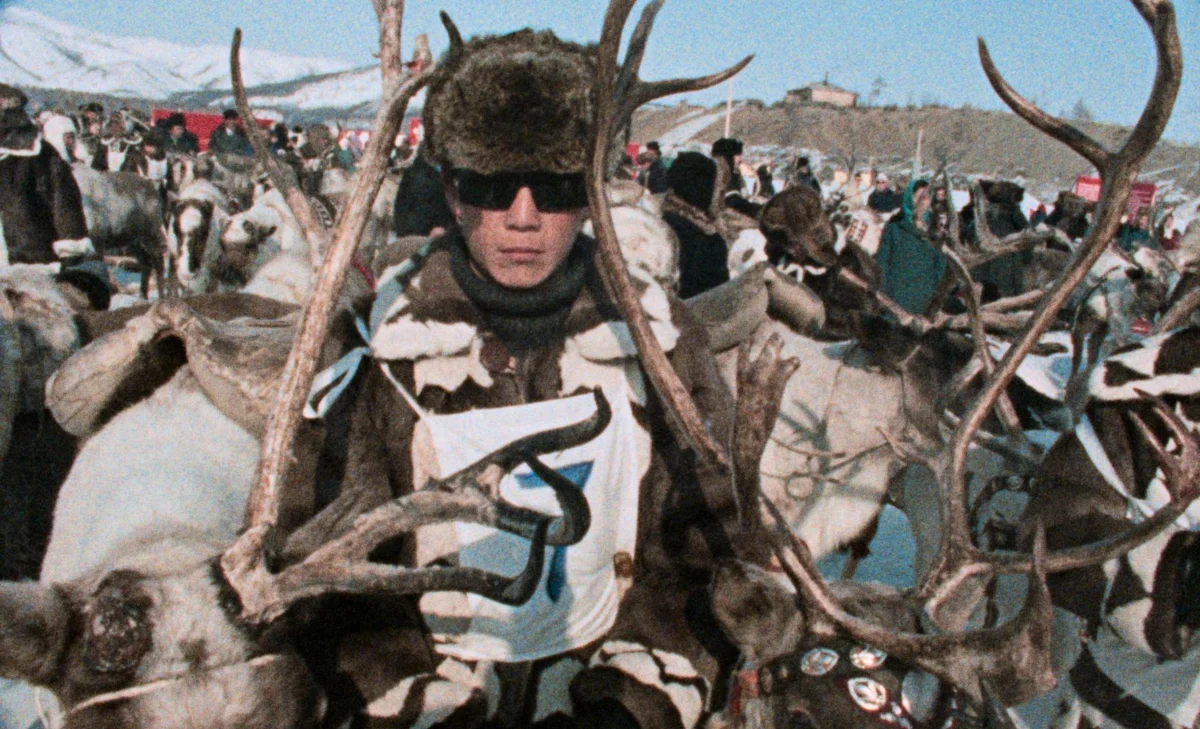
In the vibrant, yet often misunderstood, geopolitical landscape of the early 1970s, Italian film crews embarked on an ambitious cinematic expedition across the vast expanse of the USSR. Their mission: to capture the intricate tapestry of a multicultural empire, a reality far removed from the monolithic, gray image that Western audiences had largely conjured behind the Iron Curtain. Armed with official permission, these intrepid documentarians navigated a complex political terrain, their cameras focused on an astonishing diversity of life. From the bustling arteries of urban commuters to the joyous abandon of village fetes, from the salt-laced air surrounding Baku trawlers to the stark, windswept plains inhabited by Siberian reindeer herders, the objective was to present an unvarnished portrait of the Soviet polity at a pivotal moment. Remarkably, they managed to sidestep the pervasive pressure to produce overt propaganda, even discovering subtle ways to critique a system that, while vociferously proclaiming regional autonomy, maintained a tight grip of control from the Kremlin. This monumental endeavor, initially envisioned as a multi-chapter television series, ultimately saw only a handful of episodes grace Italian television screens, broadcast a single time before the entire project receded into the dusty obscurity of archival storage. For a filmmaker like Sergei Loznitsa, whose career has been dedicated to excavating the complexities of historical memory and political realities through documentary, this forgotten archive represents a treasure trove of unparalleled significance.
Now, through Loznitsa’s masterful reinterpretation in "Imperium," this rich, 60-hour trove of 16mm footage has been resurrected and meticulously organized. The film embarks on a geographical odyssey, charting a course that commences in Moscow and sweeps eastward, before doubling back through the Central Asian republics, often referred to as "the Stans," and the Baltic states, culminating its journey in what was then Leningrad. Echoing the stylistic approach of Loznitsa’s previous works, such as "Maidan" and "State Funeral," the film judiciously incorporates select snippets of conversation and musical scores, allowing the raw power of the original imagery to take center stage. The vast majority of the footage, however, has been painstakingly restored and seamlessly edited together, revealing an immense state whose distinct regions, despite the incessant, centralized pronouncements of unity, managed to preserve their unique traditions and cultural identities. This is not a narrative driven by a singular, overarching plot, but rather a mosaic of lived experiences, a testament to the enduring resilience of local customs in the face of ideological homogenization.
While "Imperium" offers moments of profound engrossment, its nearly three-hour duration can, at times, feel substantial. This is perhaps more palpable than in Loznitsa’s earlier masterpieces, where the sheer momentum of historical forces seemed to propel the viewer forward, inexorably towards watershed moments whose reverberations continue to shape the present. In "Imperium," the film’s motivation is undeniably clear – to showcase the multifaceted reality of the Soviet Union – yet the conceptual framework, while broad, can feel somewhat diffuse. The film is likely to resonate most profoundly with those who possess a lived memory of how the Soviet Union was discussed in the West during that era, a decade before Ronald Reagan’s "Evil Empire" moniker reduced a complex geopolitical entity to a simplistic, Cold War-era caricature. This "Star Wars"-esque label, while potent in its rhetorical impact, merely amplified the anti-communist propaganda that had saturated American-driven global discourse since the conclusion of the Second World War. Loznitsa, however, remains steadfast in his focus on the internal dynamics of the country, deliberately steering clear of external perceptions, though for many viewers, disentangling these two perspectives will prove an almost impossible feat.
The film commences with an iconic visual: a grand parade in Red Square, a scene undoubtedly orchestrated for the 24th Congress of the Central Committee of the Communist Party. Banners, emblazoned with the same unwavering slogans that had adorned the square for the preceding forty years, proudly proclaimed production targets being met ahead of schedule. This image of official pronouncements and perceived success quickly gives way to the bustling interior of the GUM department store. Here, window displays showcase an array of luxury goods: sharp tuxedos, gleaming patent leather shoes, and intricately beaded handbags. The juxtaposition prompts a question: for whom in early 1970s Moscow were these aspirations of opulence being catered to? The film then offers a surprising glimpse of commercialized religion, a vibrant trade in Christmas decorations serving as a poignant reminder. This, among many other instances, underscores a crucial point: despite an official state policy of atheism, certain deeply ingrained traditions were permitted to persist, existing in a curious, often tolerated, state of parallel existence with the dominant ideology. The contemporary echo of this phenomenon is chillingly evident in Vladimir Putin’s current regime, which has adeptly harnessed religion to bolster its oligarchic dictatorship, demonstrating a continued, albeit altered, interplay between faith and state power.
From the gilded cage of the capital, the camera’s gaze shifts eastward, venturing into regions where the acquisition of consumer goods became a far more arduous undertaking. In Suzdal, an ancient woman is captured performing the arduous task of washing clothes in a frigid ice hole, a stark image of resilience against the elements. Shots of Vladimir reveal a town that appears remarkably unchanged from its pre-Revolutionary days, a frozen tableau of a bygone era. Further south, residents emerge for a winter carnival, its joyous spirit and ancient customs hinting at roots that must surely predate the arrival of Leninism. As the cameramen venture deeper into the eastern territories, the vibrancy of local customs intensifies. Near the Mongolian border, the spectacle of Bactrian camel races unfolds, a testament to the enduring nomadic heritage of the region. In the vast Sakha Republic, the traditional imagery of reindeer sleds cutting across the snow-laden landscape evokes a primal connection to the land. It is in these Siberian expanses that the footage most forcefully, albeit subtly, critiques Soviet policy. A group of young Caucasian Russians, clad in quintessential 1970s fashion, strum guitars and sing Russian songs, their melodies drifting across the plains. Looking on from the periphery are members of the local Yakut population, their expressions a subtle, yet palpable, display of discontent. They are the silent observers of what can only be described as a not-so-subtle form of cultural colonialism, their own distinct heritage seemingly overshadowed by the imposed narratives and cultural expressions of the dominant Russian culture.
The most profound takeaway from "Imperium" is the remarkable, almost stubborn, resilience of centuries-old traditions in the face of the Soviet Union’s relentless push towards uniformity. In Bukhara, people continued to attend mosques, their faith a private sanctuary amidst the public pronouncements of secularism. Similarly, in Etchmiadzin, churches remained vibrant centers of spiritual life. The inhabitants of these diverse regions clung tenaciously to ways of life that had not been entirely collectivized or subsumed by the dictates of Stalinist ideology. Today, however, the social landscape of Russia has undergone transformations far more profound than anything Lenin or Brezhnev could have possibly imagined. The relentless advance of unfettered capitalism, coupled with the pervasive influence of the internet, has reshaped the very fabric of society. Populations that once boldly resisted homogeneity, clinging to their distinct multicultural identities, now find themselves increasingly looking westward for their acquisitions, becoming consumers in a globalized marketplace. The subtle critiques of Soviet cultural imposition, so evident in the 1970s footage, seem almost quaint in comparison to the homogenizing forces of contemporary global consumerism.
It is a fascinating exercise to ponder the potential impact had Italian television screened the majority of these rediscovered films upon their initial creation. At a time when obtaining an authentic sense of life within the Soviet Union was a formidable challenge, particularly in the West, such a comprehensive visual record could have offered a crucial counterpoint to prevailing narratives. In the United States, for instance, the 1977 National Geographic publication "Journey Across Russia: The Soviet Union Today" represented one of the earliest populist correctives to the pervasive notion of a uniform, collectivized proletariat society. This Italian cinematic endeavor, however, offered a far more nuanced and visually rich exploration, moving beyond mere reportage to capture the lived realities of individuals across a vast and diverse territory.
Italy itself, with its historically significant and politically influential Communist Party, grappled with its own unique challenges in confronting the realities of the Soviet system. There existed, at times, a reluctance to fully acknowledge the abuses perpetrated by the Politburo, a tendency to sanitize or downplay the less palatable aspects of Soviet governance. In this context, an intriguing companion piece to "Imperium" emerges in the form of Federico Ferrone and Michele Manzolini’s 2013 documentary, "The Train to Moscow: A Journey to Utopia." This film, also constructed from found footage, delves into an earlier period, chronicling the disillusionment of a party supporter from Emilia Romagna who discovered that life in the USSR was far from the promised land of solidarity and freedom. His revelations, at the time, were notably censored by his Italian colleagues, a testament to the complex internal dynamics and ideological pressures within the Italian left. The enduring question that both films, in their disparate ways, provoke is fundamental: why do so many individuals find themselves susceptible to believing in the utopian promises peddled by empires, both past and present? The allure of a grand, unifying vision, even when demonstrably flawed, continues to exert a powerful hold on the human psyche, a phenomenon that "Imperium" inadvertently illuminates with its potent, unearthed images of a world both familiar and profoundly alien. The project’s rediscovery and Loznitsa’s thoughtful curation offer not just a historical artifact, but a compelling invitation to re-examine our understanding of Soviet history and the enduring power of cultural narratives.
