
 By admin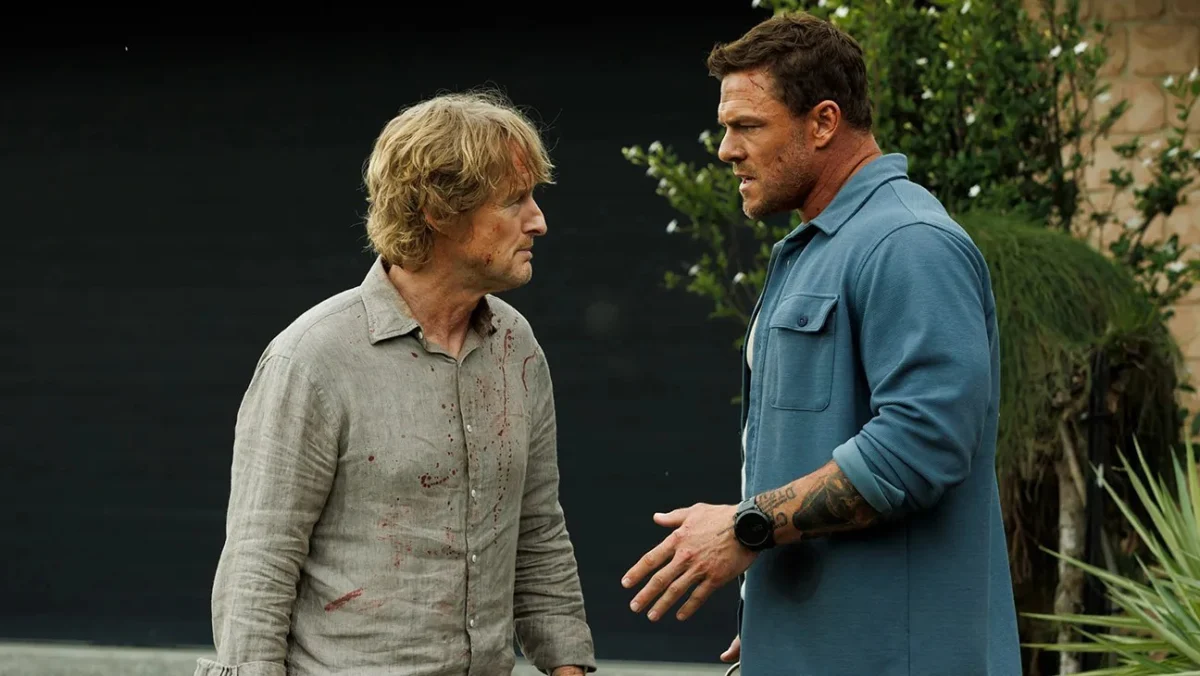
The seemingly insatiable appetite for celebrity endorsements, exemplified by Ben Affleck’s long-awaited foray into Aflac commercials, coupled with a persistent surge in star-driven, straight-to-streaming productions, paints a picture of successful actors working harder than ever. This trend raises a pertinent question: are movie stars, those individuals we generally perceive as having "made it," actively seeking any and all opportunities? The case of Owen Wilson, a familiar face in blockbuster franchises and high-profile superhero universes, further complicates this notion. Wilson, who recently graced the big screen in Disney’s lavish "Haunted Mansion" and holds a significant role within the Marvel Cinematic Universe, is also slated to reprise his beloved, scene-stealing character in the "Fockers" franchise. So, what compels him to appear in Angel Studios’ "Runner," a project that seemingly operates in a different stratum of the film industry?
Scott Waugh’s action thriller, "Runner," co-starring the formidable Alan Ritchson, known for his titular role in "Reacher," presents an unexpectedly entertaining, albeit middle-tier, cinematic experience. Clocking in at a brisk and efficient 98 minutes, the film exhibits a commendable sense of pacing. However, there’s an undeniable undercurrent of dispiritedness surrounding a movie of this caliber. It falls into a peculiar niche: not polished enough to compete with major studio fare, yet not sufficiently raw or audacious to establish itself as a cult-favorite exploitation film in the vein of Roger Corman’s legendary productions. Despite its limitations, Waugh’s muscular direction, coupled with the solid chemistry between Wilson and Ritchson, elevates "Runner" beyond its thinly sketched premise, which often struggles to sustain its relentless barrage of action sequences.
At the heart of "Runner" is Alan Ritchson’s portrayal of Hank Malone, a decorated "big American war hero" who has transitioned into a courier operating in Brisbane, Australia. Hank is meticulously navigating his sobriety, celebrating a full year of AA membership, and is dedicated to learning French as a tribute to his late daughter. His life takes an abrupt detour when his employer assigns him a short-term job: to retrieve a donated liver being transported from the United States. The mission, however, quickly escalates beyond a simple pick-up when the vital organ arrives not in a sterile medical container, but under the arm of Ben Bishop, a loquacious and determined messenger portrayed by Owen Wilson, who insists on accompanying the liver to its final destination. This unexpected companionship sets the stage for a race against time and a confrontation with dangerous adversaries.
The ticking clock is a crucial element of the narrative, as the organ’s viability dwindles with every passing minute. Ben, with an almost frantic urgency, directs Hank to drive directly to a hospital on the Gold Coast, approximately an hour away, where an anxious mother, Kate (played by Leila George), awaits the life-saving transplant for her gravely ill daughter, Ellie (portrayed by Scarlett Crabtree). However, their journey is far from uneventful. As they navigate the urban sprawl, Hank notices a convoy of ominous black vehicles shadowing their car, a clear indication that another party has a vested interest in the organ. This suspicion is confirmed when Hank discovers that the pursuit is orchestrated by Damian Zaldívar (Rodrigo Santoro), the ruthless son of a powerful drug lord (Cecilia Toussaint). Damian’s motive is starkly self-serving: he also requires the liver to survive and has been instructed by his mother to eliminate anyone who stands between him and his objective.
"Runner," which Ritchson also co-produced, undeniably serves as a significant showcase for his burgeoning talent. Ritchson is an actor possessing genuine screen presence and a compelling physicality. While his career has yet to demonstrate extensive range, he has been consistently on the cusp of mainstream stardom for several years. This particular project, however, is unlikely to catapult him into the A-list stratosphere. The film barely registers as a theatrical release, feeling more like a product designed for a more accessible platform. Nevertheless, the most fitting comparison for Ritchson’s performance and the film’s overall tone is Dwayne Johnson’s underappreciated 2003 vehicle, "The Rundown," during his transition from "The Rock" to a leading man. In both instances, the protagonists initially attempt to de-escalate conflict and harbor personal aspirations that extend beyond mere physical confrontation. Ritchson imbues Hank with a relatable humanity and a dry wit, making the character likable and compelling, even without a melodramatic backstory that mirrors his current predicament with almost cartoonish precision.
Opposite Ritchson, Owen Wilson delivers a performance that can best be described as his signature "butterscotch stallion" mode. He injects Ben with a motor-mouthed energy that, while familiar, is undeniably effective. Whether improvising or adhering strictly to the script penned by Miles Hubley and Tommy White, Wilson’s innate talent and extensive experience infuse the character with an infectious charm. Ben’s incessant chatter, which in less capable hands could easily devolve into sheer obnoxiousness, is expertly managed by Wilson, ensuring the audience remains engaged. In the classic "action guy-funny guy" dynamic of buddy movies, Wilson’s comedic timing and effervescent personality provide a crucial counterpoint to Ritchson’s more grounded performance, preventing the duo from becoming too lopsided. This balance allows the audience to root for their frantic, albeit noble, determination to deliver the organ, even amidst the cacophony of chaotic violence that will undoubtedly be a primary draw for many viewers.
Director Scott Waugh, who was notably recognized as a Variety "Director to Watch" in 2012, has previously helmed the less-than-stellar "Expend4bles." With "Runner," he appears to redeem himself, perhaps due to the film’s more focused scope, which centers on two main actors rather than a sprawling ensemble. Waugh demonstrates a clear understanding of the film’s objectives, delivering precisely what is needed for its particular brand of entertainment. While undeniably simplistic and frequently bordering on the absurd, the film manages to elicit genuine laughs, and its action sequences are commendably sturdy and exciting.
Despite these strengths, a pervasive sense of corners being cut is palpable. The absence of Norman Greenbaum’s iconic 1969 single, "Spirit in the Sky," replaced by a cover or a soundalike, is a minor but noticeable omission. This suggests potential licensing issues or budgetary constraints. Similarly, the choice of Brisbane as a setting seems arbitrary, likely serving primarily to capitalize on significant tax incentives rather than contributing meaningfully to the narrative. Furthermore, the moving backgrounds visible through the windows of every vehicle on screen appear to have undergone insufficient visual effects refinement, detracting from the overall polish. These budgetary shortcuts, unfortunately, cast a shadow over the otherwise commendable efforts made elsewhere in the production, making them seem somewhat chintzy or inadequate in comparison.
Perhaps paradoxically, the evident enjoyment the actors derive from their roles significantly elevates the film. This palpable enthusiasm can transform even the most budget-conscious productions into something approaching classic status. "Runner," despite its clunky execution, doesn’t entirely transcend its limitations. The combined efforts of Wilson and Ritchson act as the duct tape holding the entire enterprise together. Nevertheless, it is a far more enjoyable and competent film than one might have initially expected. The chemistry and charisma of the lead actors are so potent that they leave the audience wishing to see them collaborate again on a project with a more polished and sophisticated execution. This sentiment, while likely not the intended takeaway for the film’s producers, is a testament to the undeniable appeal of "Runner." It is precisely the kind of "for-hire" work that unequivocally proves its stars deserve opportunities that better showcase their talent and potential. The film, in its own unpretentious way, highlights the disparity between the caliber of actors involved and the modest scope of the production, leaving viewers with a lingering desire for more substantial vehicles for these engaging performers.
