
 By admin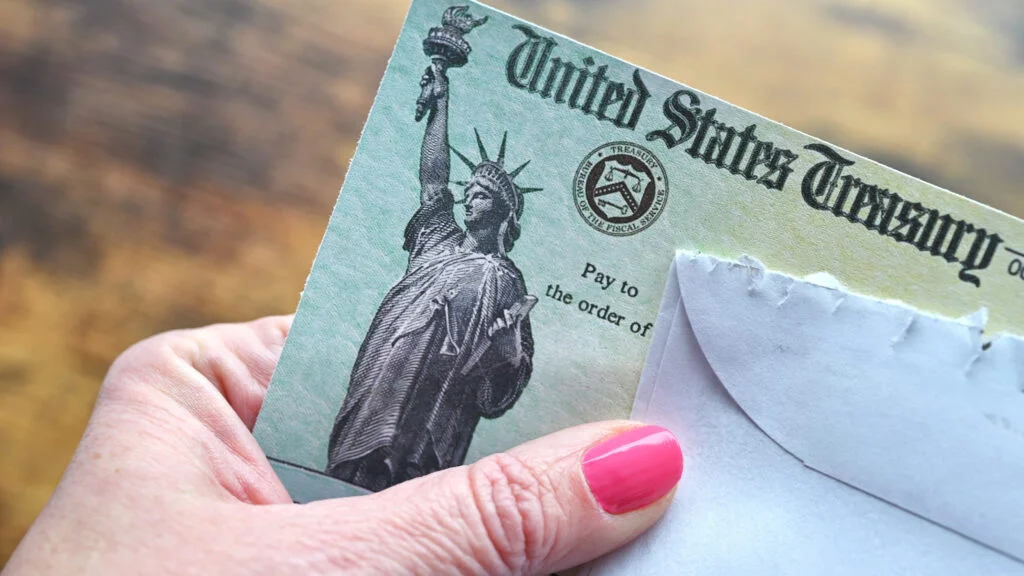
The fundamental legal tension lies in the "power of the purse," a cornerstone of American governance reserved for Congress under Article I of the Constitution. For the executive branch to distribute direct cash payments to citizens, it typically requires a specific appropriation from the legislative branch. In this instance, the Trump administration has not sought, nor received, a new appropriation from Congress to fund these $500 payments. This has led many to speculate that the administration may be attempting to repurpose existing funds from the Department of Health and Human Services (HHS) or the Centers for Medicare & Medicaid Services (CMS). Legal experts warn that such a maneuver could violate the Anti-Deficiency Act, which prohibits federal employees from making or authorizing an expenditure from any appropriation or fund in excess of the amount available in the appropriation or fund unless authorized by law.
The targeted nature of the payments adds another layer of legal and ethical complexity. According to the White House fact sheet, the checks will be mailed exclusively to individuals who do not receive federal premium tax credits (subsidies) to help pay for their ACA coverage. Under the ACA, subsidies are generally available to those earning between 100% and 400% of the federal poverty level, though temporary expansions under the Biden administration—specifically through the American Rescue Plan Act and the Inflation Reduction Act—extended these benefits to higher earners. With the expiration of those extra subsidies earlier this year, many middle-income families who fall just above the eligibility threshold have seen their monthly premiums skyrocket. By targeting this group, the Trump administration is reaching out to a demographic that is disproportionately represented in suburban districts and battleground states—voters who are often referred to as the "squeezed middle class."

The administration’s rhetoric justifies the payments as a remedy for "gross mismanagement" by the previous administration. However, healthcare analysts point to a more complex reality. The rising costs for unsubsidized plan holders are, in part, a direct result of the current administration’s policy choices. Since taking office, the Trump administration has significantly reduced funding for the "navigator" programs that help people enroll in coverage and has slashed the advertising budget for the ACA’s open enrollment periods. Furthermore, the decision by congressional Republicans not to extend the enhanced subsidies that were a hallmark of the Biden era has left a vacuum in affordability. By issuing $500 checks rather than pursuing a legislative fix to lower premiums across the board, the administration is opting for a one-time financial infusion that critics describe as a "political band-aid" rather than a sustainable healthcare policy.
The historical precedent for such executive action is thin and fraught with failure. In 2020, during the final months of his first term, President Trump announced a plan to send $200 prescription drug discount cards to millions of Medicare beneficiaries. That plan was ultimately scuttled after the Government Accountability Office (GAO) and other watchdogs raised concerns about its legality and its potential to be viewed as an illegal use of taxpayer funds for political campaigning. The current "Working Families Obamacare Refunds" bear a striking resemblance to that failed initiative. Both plans involve the direct distribution of cash or cash-equivalents to a specific voting bloc shortly before an election, and both rely on dubious interpretations of executive authority to manage healthcare programs.
From an economic perspective, the $500 refund is unlikely to have a long-term impact on healthcare affordability. While $500 may provide temporary relief for a family facing a $1,200 monthly premium, it does nothing to address the underlying drivers of healthcare inflation, such as hospital consolidation, pharmaceutical pricing, or the administrative overhead of private insurance. In fact, some economists argue that such payments could be counterproductive. If the funds are diverted from other CMS programs—such as those designed to improve quality of care or manage chronic diseases—the long-term health outcomes for the population could suffer. Moreover, by only helping the unsubsidized, the administration is ignoring the millions of low-income Americans who, while receiving subsidies, still struggle with high deductibles and out-of-pocket costs that prevent them from seeking necessary medical care.

The political timing of the checks is perhaps the most scrutinized aspect of the plan. With control of the House and Senate hanging in the balance, the delivery of checks to swing-state voters is seen by many as a transparent attempt to influence the electorate. Legal challenges are almost certain to follow. Advocacy groups and perhaps even members of Congress are likely to file lawsuits seeking an injunction to stop the mailing of the checks. They will argue that the executive branch is overstepping its authority and that the "refunds" are a form of illegal electioneering. If a federal judge were to issue a stay, the administration could find itself in a protracted legal battle that keeps the issue in the headlines throughout the election cycle, potentially turning a planned political win into a liability.
The insurance industry has also reacted with a mix of confusion and caution. Insurers set their rates based on predictable federal funding and market stability. Sudden, unilateral moves by the executive branch to inject cash into the market—even if the cash goes to the consumers rather than the companies—can create uncertainty. If insurers believe the federal government will intervene with one-time checks whenever premiums rise, it may disincentivize them from working to lower costs or participating in the competitive bidding processes that keep the ACA exchanges functioning. Furthermore, there is the question of how these payments will be treated for tax purposes. If the $500 is considered taxable income, its net value to the recipient is reduced, and it could potentially complicate their eligibility for other means-tested programs.
In the broader context of the ACA’s history, this move represents a continuation of the "guerrilla warfare" that has defined the law’s existence. Since its passage in 2010, the ACA has been the subject of dozens of legal challenges, including multiple trips to the Supreme Court. The law has been partially dismantled through executive orders and tax legislation, yet it remains the primary vehicle for individual health insurance in the United States. The Trump administration’s current plan suggests a shift in strategy: rather than attempting to "repeal and replace" the law through Congress—a feat that proved impossible in 2017—the administration is now using its executive power to selectively mitigate the law’s unpopularity among specific groups of voters while simultaneously blaming its failings on political opponents.

Ultimately, the legality of the $500 checks will likely be decided in a courtroom. The administration will have to identify a specific statute that allows for the disbursement of these funds. They may point to broad authorities granted to the HHS Secretary to conduct "demonstration projects" or to manage the "stability" of the insurance markets. However, those authorities have historically been interpreted narrowly by the courts, especially when they involve large-scale cash transfers. If the administration cannot provide a clear and compelling legal justification, the "Working Families Obamacare Refunds" may go down in history not as a boon for the middle class, but as a cautionary tale of executive overreach in the pursuit of political gain. As the first checks prepare to hit the mail, the nation watches to see if this unprecedented move will stand up to the rigors of constitutional law or if it will be struck down as an unauthorized raid on the federal treasury.
