
 By admin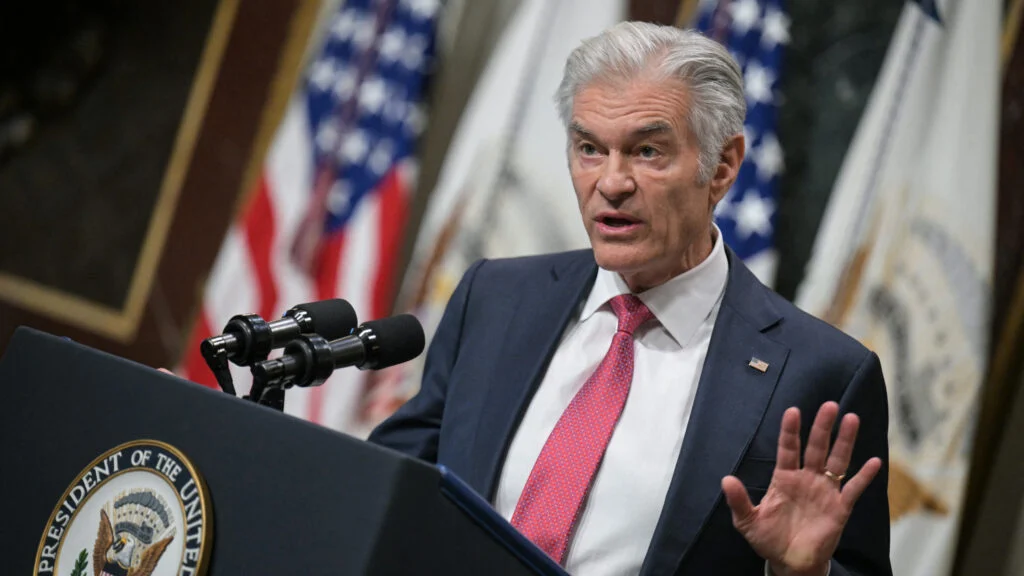
The intersection of rapidly advancing artificial intelligence and a shifting political climate is fundamentally reshaping the future of medicine, sparking both existential dread among tech leaders and cautious optimism—or deep skepticism—among healthcare providers on the front lines. As the global medical community grapples with the dual pressures of technological disruption and legislative reform, a series of developments across the United States and the United Kingdom highlight a world in transition, where the promise of automated cures meets the reality of systemic funding gaps and ideological divides.
The conversation surrounding the future of artificial intelligence took an ominous turn this week when a high-level official at Anthropic, one of the world’s leading AI safety and research companies, publicly estimated a significant probability of catastrophe. In a social media post that sent ripples through both Silicon Valley and Washington, the official suggested there is a greater than 10% chance that "AI could kill all humans" within the next decade. This startling admission from within the industry underscores the growing "p(doom)" debate—a colloquial term among researchers for the probability of an existential AI-driven disaster. While Anthropic was founded on the principle of "constitutional AI" to ensure safety and alignment with human values, such a high estimate of risk from a senior insider suggests that the technical challenges of controlling superintelligent systems remain daunting. For the healthcare sector, which is increasingly reliant on AI for everything from drug discovery to diagnostic imaging, these existential warnings provide a sobering backdrop to the more immediate discussions regarding clinical implementation and regulatory oversight.
In the United States, the practical application of AI in healthcare has become a central pillar of the Trump administration’s medical strategy, though it remains a point of contention among rural leaders. Mehmet Oz, the head of the Centers for Medicare and Medicaid Services (CMS), has emerged as a vocal proponent of "AI-based avatars" as a solution for the chronic physician shortages plaguing rural America. Oz and other administration officials argue that AI can act as a force multiplier, providing high-level medical guidance and monitoring in areas where specialists are scarce. However, a deep-dive investigation reveals a growing rift between federal optimism and the boots-on-the-ground reality of rural healthcare.
Rural hospitals, many of which are already operating on razor-thin margins, are currently facing a projected $1 trillion in Medicaid cuts over the next ten years. For these institutions, the promise of AI avatars feels like a secondary concern compared to the primary threat of insolvency. While AI tools show promise in administrative tasks—such as automated prescription reminders or analyzing patient data to identify those at highest risk for readmission—there is a profound fear that these technologies will exacerbate the "digital divide." Urban centers with robust budgets are better positioned to integrate expensive AI infrastructure, while rural clinics may be left with "automated" care that lacks the nuance of human intervention. Furthermore, technical experts warn that AI models, which rely on massive datasets, often struggle with subjective clinical assessments. In rural settings, determining "medical frailty" for Medicaid exemptions requires a level of contextual understanding that current algorithms may lack, potentially leading to inequitable denials of care based on rigid, data-driven parameters.
Despite these concerns, the federal government is doubling down on its investment in autonomous medical technology. The Advanced Research Projects Agency for Health (ARPA-H) recently announced a $62.7 million commitment to a new program dubbed ADVOCATE (Autonomous Devices for Virtual Oversight and Clinical Analysis of Treatment Efficacy). The program’s goal is nothing short of revolutionary: the development of "autonomous prescribing cardiologists." These AI-driven bots are intended to manage the care of the 6.7 million Americans living with heart failure. By assessing symptom severity, ordering laboratory tests, and directly prescribing medications, these AI agents could theoretically provide specialized cardiac care to patients who lack access to human cardiologists.
The ADVOCATE program represents a shift from AI as a "decision support tool" to AI as an "autonomous practitioner." Proponents argue that heart failure management is often a matter of fine-tuning dosages based on clear physiological markers—a task perfectly suited for an algorithm. However, the move toward autonomous prescribing raises significant legal and ethical questions regarding liability and the "black box" nature of deep learning. If an AI bot incorrectly adjusts a patient’s diuretics or beta-blockers, resulting in a fatal event, the current legal framework for medical malpractice offers little clarity on whether the developer, the hospital, or the federal agency is responsible.
As the U.S. pushes toward autonomy, the United Kingdom is taking a more structured approach to regulation. A high-level U.K. commission recently unveiled a comprehensive set of 44 recommendations aimed at creating a future-proof regulatory framework for AI in medicine. The commission’s report emphasizes a "staged authorization" process, which mirrors the clinical trial phases used for new pharmaceuticals. Under this proposal, AI models would not be granted blanket approval but would instead be monitored through progressive levels of deployment, with mandatory reporting systems for clinicians to flag performance issues or biases in real-time. The report highlights the immense potential of AI in high-volume tasks, such as reviewing millions of retinal scans to track eye health in diabetic patients, but maintains that safety and equity must remain the "north star" of innovation. This move by the U.K. reflects a broader global trend of nations attempting to harness technological efficiency without sacrificing the "human-in-the-loop" safeguards that define modern medical ethics.
While AI dominates the technological horizon, the immediate future of public health in the U.S. is being shaped by the upcoming midterm elections, where vaccine policy has emerged as a surprising and divisive battleground. The White House has been pushing for a centralized, revamped immunization strategy, but a growing number of states are moving in the opposite direction. A "patchwork" of vaccine laws is forming across the country, as Republican-led states like Florida, Arizona, and Iowa move to roll back school vaccine requirements and distance themselves from federal guidance.
This divergence marks a historic shift in how public health is managed in America. Historically, the Centers for Disease Control and Prevention (CDC) provided a unified roadmap for immunizations that states followed to ensure herd immunity. Today, candidates like Abdul El-Sayed, a Democratic Senate contender in Michigan, are finding themselves at the center of a debate over the federal government’s authority to mandate health interventions. The outcome of these midterm races will likely determine whether the U.S. maintains a cohesive national defense against infectious diseases or transitions into a fractured system where a child’s protection against measles or polio depends entirely on the political leanings of their state legislature.
Amidst these turbulent political and technological shifts, the scientific community continues to celebrate the foundational research that paves the way for future cures. The recent announcement of the 2026 Lasker Awards—often referred to as "America’s Nobels"—honored breakthroughs that have already begun to transform lives. Two scientists, Emmanuel Mignot and Masashi Yanagisawa, were recognized for their independent discovery of orexin, a neuropeptide that regulates wakefulness. Their work solved the biological mystery of narcolepsy, revealing that the condition is caused by the loss of orexin-producing neurons. This discovery has ignited a massive $5 billion pharmaceutical race, with companies like Takeda recently receiving FDA approval for drugs that mimic orexin, offering the first true hope for patients who have spent decades struggling with uncontrollable sleepiness.
The Lasker Awards also honored a team of Japanese scientists for their work on hemophilia A treatments and recognized Michael J. Fox for his extraordinary advocacy and philanthropic efforts in Parkinson’s disease research. Fox’s foundation has been instrumental in funding the search for biomarkers, which are essential for the very AI tools that the Trump administration and ARPA-H are now looking to deploy.
As we look toward the end of the decade, the narrative of health and medicine is one of extreme contrasts. We are entering an era where AI might autonomously manage a failing heart or, according to some, threaten our very existence. We see a world where state-of-the-art "avatars" are proposed for rural towns that cannot afford to keep their hospital doors open. And we witness a political landscape where the fundamental tenets of public health, such as vaccination, are being renegotiated in the voting booth. The synergy—or friction—between these forces will define the quality and longevity of human life for generations to come. Through it all, the pursuit of scientific truth, as evidenced by the Lasker laureates, remains the one constant in an otherwise volatile medical frontier.
