
 By Titik Puspa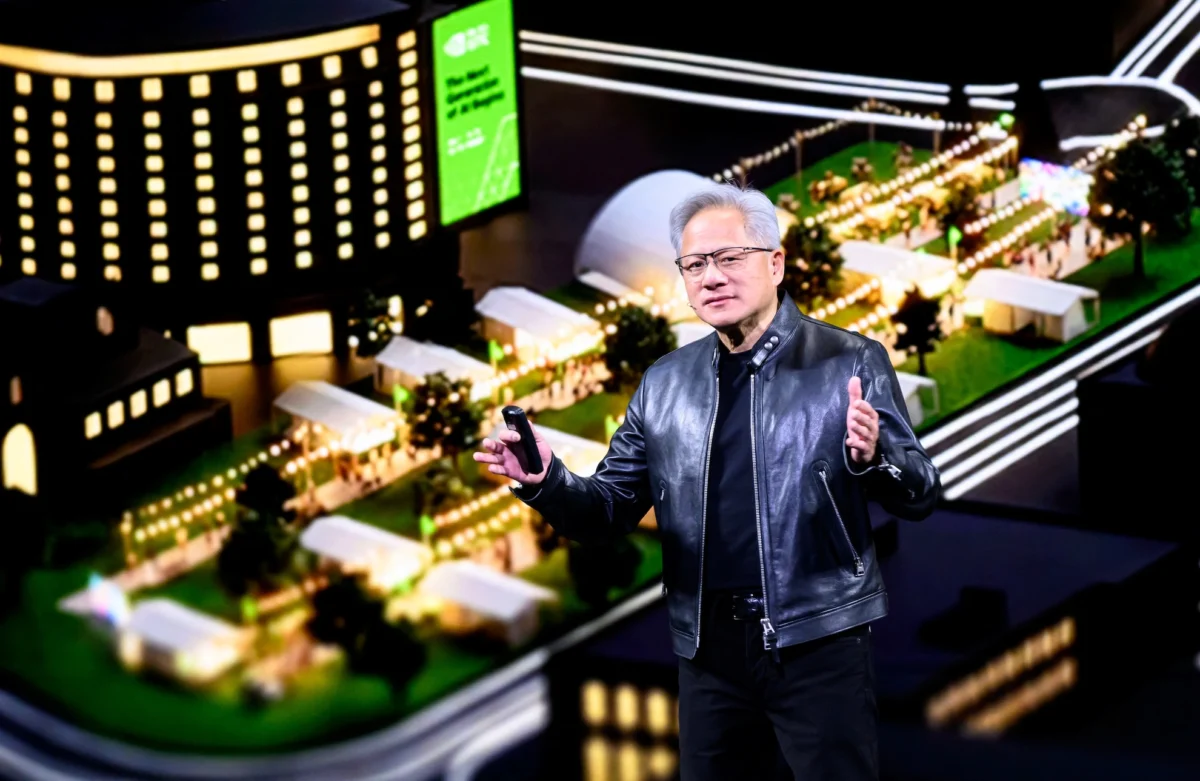
Jensen Huang, the visionary founder, CEO, and often described as Nvidia’s chief evangelist, delivered a compelling forecast at the Goldman Sachs Communacopia + Technology conference on Thursday, asserting that his company’s unparalleled dominance in the artificial intelligence (AI) sector will continue to fuel record-breaking revenue growth well into the end of next year. Huang’s conviction stems from an almost prescient understanding of the AI landscape, a perspective he believes is uniquely enabled by Nvidia’s deeply integrated position across the entire AI ecosystem.
The prevailing narrative in the technology industry has been rife with speculation and "hand-wringing" regarding the sustainability of Nvidia’s meteoric rise. This skepticism is fueled by the burgeoning competition for critical AI hardware, particularly Graphics Processing Units (GPUs) and specialized AI chips. The landscape is becoming increasingly crowded with formidable players. Major cloud service providers, known as hyperscalers – including Amazon Web Services (AWS), Microsoft Azure, and Google Cloud – are aggressively developing their own custom silicon to power their AI workloads, aiming for greater control and cost efficiency. Simultaneously, leading AI research labs and companies like Anthropic and OpenAI are also pursuing in-house chip development to accelerate their proprietary model training and deployment. Beyond these giants, newer, ambitious ventures are emerging. Companies like Cerebras, which recently went public, and promising startups such as Etched, are also carving out their niches, presenting direct challenges to Nvidia’s market share.
However, Huang contends that the perception of Nvidia as merely a chip manufacturer is fundamentally flawed and outdated. He highlighted the immense complexity and scale of Nvidia’s offerings, stating, "Most people think Nvidia builds a chip. I mean, you need airplanes to ship what we build." He elaborated on this point, drawing a stark contrast between the early days of GPUs, which were primarily associated with enhancing PC gaming experiences and sold at consumer-friendly price points like $399, and the current state of high-performance AI computing. "One GPU now is not $399. It’s $8.5 million dollars. That’s one GPU, all connected with NVLink, 2 million parts, right? 250,000 kilowatts. That’s a GPU, and we ship thousands of them." This dramatic escalation in cost and complexity underscores the transformative shift in the GPU’s role from a consumer peripheral to the core engine of advanced computing.
To illustrate the immense demand and the sophistication of its current product line, Huang pointed to the GB200 NVL72, a state-of-the-art computer system that integrates 36 Grace CPUs with 72 Blackwell GPUs. This single product is reportedly experiencing an astonishing 27% month-over-month sales growth, a testament to the insatiable appetite for high-performance AI infrastructure. The GB200 NVL72 represents a significant leap in computational power, designed to handle the most demanding AI workloads, from training massive language models to complex scientific simulations. Its architecture, featuring high-speed interconnects and massive parallel processing capabilities, is precisely what is needed to drive the next wave of AI innovation.
Huang’s optimism is not solely grounded in current sales figures; it extends to a confident projection of Nvidia’s financial trajectory for the coming year. He reiterated the company’s revenue outlook for 2025, guidance that was initially provided last month following another record-breaking quarterly earnings report. At that time, Nvidia projected a potential year-over-year revenue growth of 70%. On Thursday, Huang reaffirmed this ambitious target, stating, "I think we could grow 70% year over year. We’re confident about that." This projection is particularly significant when considered against current analyst expectations. The consensus among financial analysts is that Nvidia is poised to conclude its current fiscal year with revenues approaching a staggering $400 billion. A 70% growth on this substantial base would translate to approximately $680 billion in revenue for the following year, a truly monumental figure that would solidify Nvidia’s position as a dominant force in the global technology economy.
The bedrock of Huang’s unwavering confidence lies in what he describes as Nvidia’s inextricable embedment within virtually every facet of the AI revolution. He articulated this unique vantage point by suggesting that his company’s pervasive reach allows him to "see the future." This statement is not mere hyperbole but a reflection of Nvidia’s strategic positioning as a foundational platform provider for the entire AI ecosystem. "Nvidia runs every model. Every single lab can use us," Huang emphasized, encompassing AI models developed by industry titans like Anthropic, OpenAI, and Google, as well as the rapidly growing array of open-weight models. "We are a foundational platform of the AI ecosystem, foundational platform of the AI industry." This ubiquity means that Nvidia’s hardware and software solutions are integral to the development and deployment of AI across a vast spectrum of applications and research initiatives.
Nvidia’s influence extends far beyond the chip itself, permeating the entire supply chain and infrastructure required for AI. Their reach encompasses collaborations with memory chip manufacturers, crucial components for high-performance computing, and extends to the planning and execution of massive data center projects. Huang revealed the depth of this involvement by stating, "We’re tracking every single gigawatt of land, power, shell around the world. Literally everything on the planet." The term "shell" refers to the physical infrastructure of a data center building prior to the installation of computing equipment, indicating Nvidia’s involvement from the very inception of data center development.
This granular oversight is facilitated by a sophisticated network of partnerships and data streams. Huang elaborated on this intricate web of information, explaining, "I mean, just think about all my partners. How many neoclouds are reporting back to us? How many OEMs are reporting back to us? How many clouds are reporting back to us? How many AI-native companies are reporting back to us? We’re working with everybody, and so we kind of know where everything is." This constant flow of information from a diverse array of industry players provides Nvidia with an unparalleled, real-time view of demand, supply, and emerging trends within the AI landscape.
This intimate knowledge of the market and its participants inevitably led to questions regarding Nvidia’s practice of "circular deals," a business model where the company invests in other firms that subsequently become significant customers, purchasing Nvidia’s products. This strategy bears historical parallels to the downfall of companies like Lucent Technologies during previous technological build-outs, where such financing structures were criticized for their potential to inflate valuations and mask underlying financial weaknesses. Huang, however, offered a characteristically pragmatic, if somewhat jocular, defense of Nvidia’s approach. "Well, it’s not circular because we put a little bit of money in, and a lot of money comes back," he quipped. He further elaborated with a humorous anecdote: "I look at the spreadsheet, we put in $1 and $100 comes back in. Is that circular? If that is, let’s do more of that."
Beyond the witty repartee, Huang underscored the robust due diligence that precedes any such investment. He insisted that before Nvidia commits capital to a company, rigorous verification is conducted to ensure that substantial, revenue-generating contracts with actual customers are already in place. He revealed that he has personally reviewed such contracts totaling an impressive $100 billion, emphasizing his commitment to secure and predictable revenue streams: "I’m not taking any risks. … I need a sure thing." This approach mitigates the risks associated with speculative investments, ensuring that Nvidia’s financial participations are directly tied to demonstrable market demand and successful commercial adoption of AI technologies.
While Huang’s outlook is undeniably bullish, the long-term sustainability of Nvidia’s AI stronghold remains a subject of ongoing scrutiny. The tech industry is characterized by a relentless cycle of innovation and disruption, where even the most dominant players are eventually challenged. As the AI industry matures, a natural progression toward greater efficiency in infrastructure utilization and token consumption is anticipated. Companies will likely seek to optimize their AI deployments, potentially reducing their reliance on the most cutting-edge, and therefore expensive, hardware.
However, for the foreseeable future, Nvidia’s strategic positioning appears unassailable. With its technology deeply embedded across the AI value chain, from foundational hardware to critical infrastructure planning, the company is exceptionally well-positioned to capitalize on the continued expansion of artificial intelligence. As Jensen Huang himself concluded, Nvidia currently has its "finger in every pie," and the company’s internal projections and market indicators suggest another year of substantial growth and prosperity. The insights gleaned from its comprehensive market intelligence and its strategic investments, coupled with the sheer, unyielding demand for its advanced computing solutions, paint a picture of continued dominance.
