
 By Rifan Muazin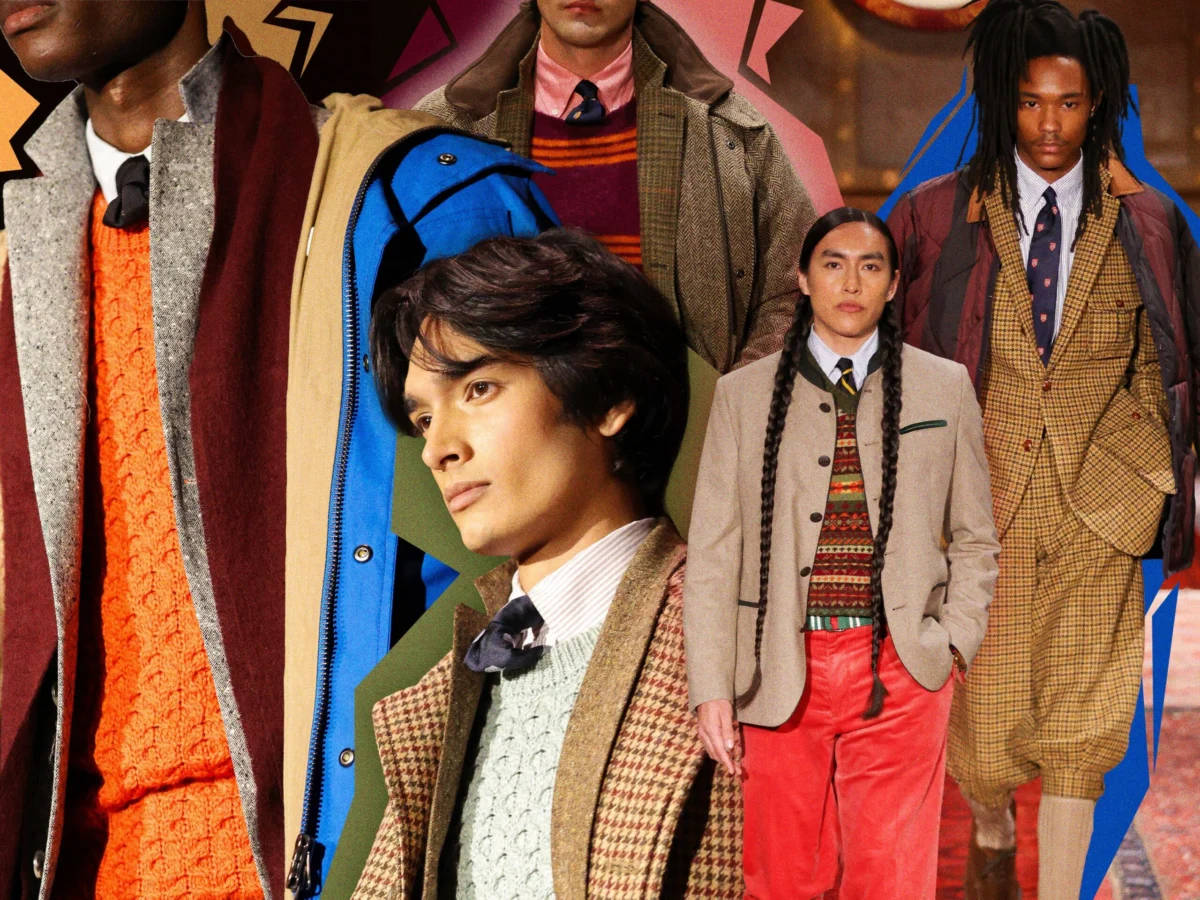
Later this month, J. Press will mark a significant milestone in its storied history by opening a new flagship store at the prestigious corner of Madison Avenue and East 44th Street in Manhattan. This opening is not merely a retail launch; it is a meticulously curated homecoming for a brand that has defined the American sartorial landscape for nearly 125 years. The new space, designed with a deep reverence for the brand’s heritage, features rich wood paneling, archival photographs, and framed correspondence from former American presidents who looked to J. Press for their tailoring needs. The atmosphere is intended to be a physical manifestation of the "Ivy League" aesthetic—a world of rugby shirts, Harris Tweed sport coats, and the quintessential Oxford-collar button-down.

For J. Press, the location carries profound historical weight. From 1932 until 2014, the brand operated a store directly across the street, making this return a symbolic restoration of its presence in the heart of New York’s traditional menswear district. The intersection of Madison and 44th is a hallowed ground for students of menswear history; it is the longtime home of the Brooks Brothers building. Constructed in 1915, that building served as the flagship for J. Press’s most formidable rival for over a century. However, while J. Press is currently in a phase of aggressive expansion, the Brooks Brothers building has sat hauntingly vacant since the brand succumbed to bankruptcy in 2020. This juxtaposition serves as a stark reminder of the volatile nature of the modern retail environment and the high stakes involved in heritage brand management.
The strategic significance of this moment is central to the vision of Jack Carlson, the creative director and president of J. Press. Carlson, who rose to prominence as the founder of the prep-revival label Rowing Blazers, was actually in the process of negotiating a deal to take over the former Brooks Brothers space when the building was sold to new developers. While that specific deal did not materialize, Carlson has moved forward with an even more ambitious mandate: leading J. Press through the most substantial expansion in its century-long existence. Under Carlson’s leadership, J. Press intends to broaden its American footprint significantly, with plans to open as many as 20 new stores over the next four years. The ultimate goal is to increase annual sales tenfold, targeting a revenue benchmark of $100 million.

Achieving such a goal is a formidable task. The fashion industry is famously unforgiving to mid-market heritage brands that fail to adapt. The landscape is littered with the remnants of labels that either grew too fast, lost their identity to private equity demands, or failed to resonate with a younger generation. To succeed, Carlson must perform a delicate balancing act: he needs to attract a new, fashion-forward demographic without alienating the "trad" purists—the longtime devotees who view J. Press as a bastion of timeless quality and who often recoil at the "fashion" label, which they associate with low-quality, high-volume trends. Carlson remains optimistic, however, noting that a $100 million valuation is a modest and attainable target for a brand that holds such a central place in the conversation of American style. His strategy for growth is not to dilute the brand, but to "double down" on the specific elements that have made J. Press a household name among the elite for decades.
The foundation of J. Press dates back to 1902, when Jacobi Press, a Jewish immigrant from Latvia, opened a small tailoring shop on the campus of Yale University. At a time when the American elite was looking toward English tailoring for inspiration, Press helped synthesize a new, distinctly American style. This "Ivy League" look blended the structure of traditional British clothing with a more relaxed, athletic sensibility favored by university students. Over the decades, J. Press became the primary purveyor of this aesthetic, gaining mentions in the works of F. Scott Fitzgerald and Tom Wolfe. Its client list read like a "who’s who" of 20th-century cultural icons, including Cary Grant, Miles Davis, and John F. Kennedy.

The brand’s contributions to the modern wardrobe are foundational. J. Press popularized the "sack suit"—a jacket with a natural shoulder and no darts, creating a straighter, more comfortable silhouette—as well as the navy blazer with brass buttons and the Shaggy Dog sweater. The latter, a brushed Shetland wool crewneck, has become a cult object among menswear enthusiasts for its unique texture and vibrant colorways. J. Press remained a family-owned enterprise until 1986, when it was sold to the Japanese clothing conglomerate Onward Holdings. This sale was a pivotal moment; Onward had been a licensee of J. Press in Japan since the 1970s, reflecting the deep-seated obsession with "Americana" in Japanese culture. Today, while J. Press has maintained a boutique presence in the U.S., it operates a staggering 80 stores across Japan, where the Ivy style documented in the 1965 book Take Ivy remains a permanent fixture of high-end fashion.
Carlson’s modern strategy for J. Press involves bringing that same energy and reverence back to the United States. In February, he orchestrated the brand’s first-ever runway show at New York Fashion Week (NYFW). The presentation was a direct homage to Take Ivy, blending archival recreations with contemporary pieces, such as collegiate sweatshirts and high-concept outerwear. One standout piece was a $1,500 blaze orange waxed cotton raincoat, produced in an extremely limited edition of five by New York designer Léo Guarin. While the collection was praised for its craftsmanship, it also sparked a public debate when the rapper and designer Tyler, The Creator criticized the brand on social media for staying too close to its source material. Tyler’s critique—that the brand "didn’t want to change a color or nothing"—highlighted the central conundrum of heritage fashion: how to innovate without betraying the past.

Carlson, however, views this tension as an inherent part of the job. He acknowledges that there will always be "reactionary" purists who want nothing to change and "avant-garde" fashionistas who want a complete overhaul. By navigating the middle ground, Carlson aims to make J. Press relevant to a broader, more inclusive audience. This inclusivity was on full display during his sophomore NYFW presentation for the Fall-Winter 2026 season. The show featured a diverse cast of models and reintroduced a women’s collection for the first time in 50 years. The collection utilized premium textiles from heritage mills like Fox Brothers and Barbour, maintaining a link to the brand’s aristocratic origins while incorporating modern pops of cobalt blue and camouflage patterns.
This evolution is supported by experts like W. David Marx, author of Ametora: How Japan Saved American Style. Marx notes that for much of the late 20th century, J. Press’s clientele had become increasingly older and restricted to a small circle of "trad" enthusiasts. He argues that for the brand to survive, it must embrace a version of Ivy League style that is more inclusive and reflective of contemporary society. This sentiment is echoed by the online community, such as the r/NavyBlazer subreddit, where moderators have expressed cautious optimism about Carlson’s direction. While there are concerns that rapid expansion could lead to a decline in quality, enthusiasts have been heartened by Carlson’s focus on technical details, such as improving the "collar roll" on Oxford shirts and sourcing high-end fabrics from historic British mills.

Perhaps the most significant evidence of Carlson’s commitment to quality is his approach to the Shaggy Dog sweater. As J. Press looks to scale, many brands would be tempted to move production to high-capacity factories in Asia to lower costs. Instead, Carlson has committed to maintaining production in the Shetland Islands of Scotland. Each Shaggy Dog is hand-brushed using traditional teasels—the dried heads of a local flower—to achieve its signature "fuzzy" texture. This process is labor-intensive and performed by artisanal craftsmen whose families have often worked in the industry for generations. Carlson’s plan for growth involves expanding the capacity of these local Scottish factories rather than outsourcing, ensuring that the brand’s "halo" product remains authentic.
As J. Press approaches its 125th anniversary, the stakes have never been higher. The brand is attempting to prove that a heritage label can grow into a $100 million powerhouse without losing its soul or its commitment to artisanal craftsmanship. By opening the Madison Avenue flagship, Carlson is planting a flag in the ground, signaling that J. Press is not just a relic of the past, but a vital part of the future of American menswear. As Carlson himself noted, his job is not merely to sell clothes, but to act as a standard-bearer for a specific type of American excellence. In a world of fast fashion and disposable trends, J. Press is betting that there is still a massive market for things made the right way, with a sense of history and a "higher purpose." Whether the ambitious expansion succeeds will depend on the brand’s ability to remain "suitably reverent" to its past while aggressively pursuing a more diverse and global future.
