
 By admin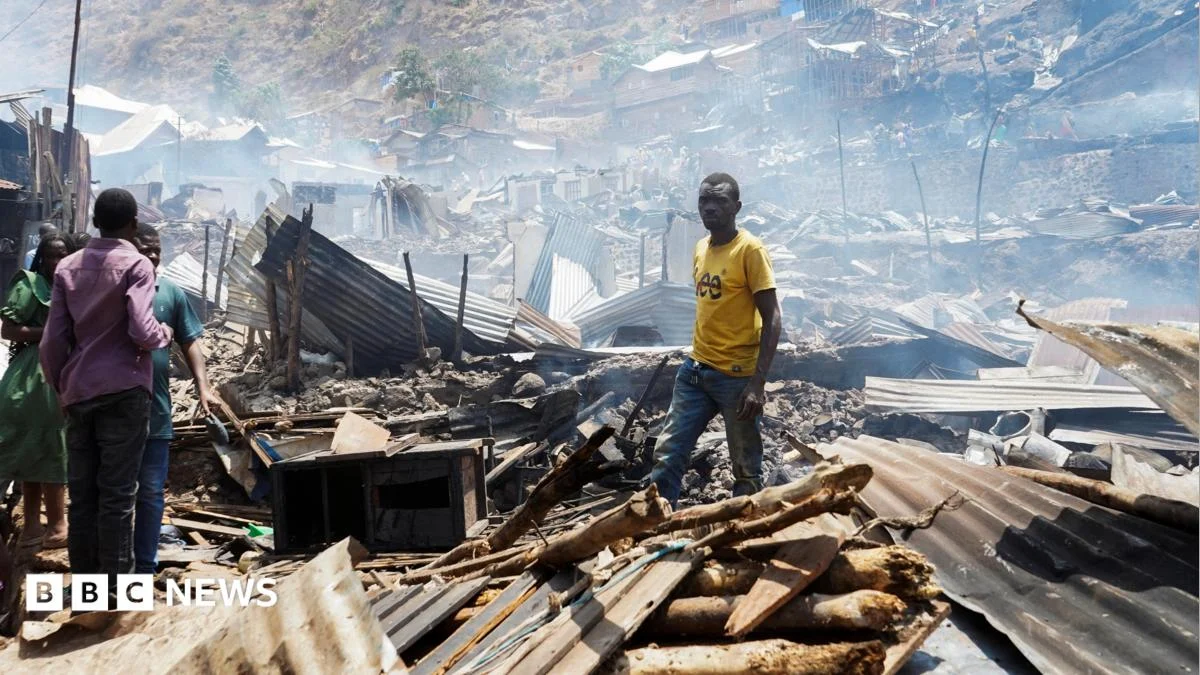
A devastating stampede, triggered by a raging fire that consumed two schools in the rebel-controlled city of Bukavu in the eastern Democratic Republic of Congo, has resulted in the tragic loss of at least 24 young lives. The inferno, the cause of which remains unknown, ripped through educational facilities in the densely populated Kadutu commune, sending panicked children and adults fleeing for safety. The provisional death toll, released by rebel-appointed authorities on Thursday evening, confirmed initial reports but carries a grim premonition of further fatalities as the full extent of the disaster unfolds. Survivors, many bearing the physical and emotional scars of the ordeal, have been transported to nearby hospitals, where harrowing footage depicts children lying in pain on crowded floors, a stark testament to the chaos and terror that gripped the community. Beyond the immeasurable human cost, the fire also reduced approximately 300 homes to rubble, compounding the misery for an already vulnerable population.
Bukavu, the capital of South Kivu province, is no stranger to hardship. Perched precariously on a series of hillsides, it is one of the most densely populated urban centers in the vast Democratic Republic of Congo. This geographical challenge, coupled with persistent instability, has historically made disaster response and infrastructure development difficult. The city fell under the control of the M23 rebels in February of last year, a development that has further complicated governance and access to essential services. The rebel-appointed authorities, while releasing the initial death toll, are now faced with the immense challenge of managing the aftermath of this catastrophe in a region already grappling with widespread insecurity and humanitarian crises.
The national government in Kinshasa, though not providing specific casualty figures, issued a statement on X (formerly Twitter) expressing profound grief. The Ministry of National Education and New Citizenship acknowledged the "deep sorrow over the deadly fire" and the loss of "several lives." The statement affirmed that the toll "remains provisional" and extended condolences to the affected families. In a move aimed at addressing the immediate educational disruption, the minister also ordered assessments of the affected schools to ensure the continuity of learning, a critical yet daunting task given the destruction. This tragedy, however, is not an isolated incident in the DRC. It follows a disturbingly similar event just last weekend in the capital, Kinshasa, where a stampede at a wedding banquet hall claimed lives, underscoring a disturbing pattern of safety lapses at public gatherings.
In response to these repeated incidents, the Congolese government has declared a renewed commitment to public safety, ordering the implementation of strict safety measures nationwide and deploying teams to enforce standards at all public gathering places. However, the effectiveness of such measures in a country with vast geographical challenges, limited resources, and ongoing conflict remains a significant concern. The underlying causes of these stampedes – often overcrowding, poor emergency preparedness, and inadequate crowd management – need to be addressed systematically and sustainably, not just reactively.
The M23 rebellion, a significant factor in the eastern DRC’s protracted conflict, has a complex history. Initially a predominantly Tutsi rebel group, it re-emerged in late 2021, citing grievances against the Congolese government. Their resurgence has been marked by significant territorial gains and has exacerbated the humanitarian crisis in the eastern provinces, displacing millions and intensifying inter-communal tensions. The presence of armed groups in regions like Bukavu invariably strains local resources and governance, making swift and effective disaster response even more challenging. The rebel-appointed authorities in Bukavu are operating within a precarious political landscape, where their legitimacy and capacity to manage such crises are often scrutinized. Their ability to provide accurate information, coordinate relief efforts, and ensure accountability for the tragedy will be crucial in the coming days and weeks.
The economic and social fabric of Bukavu has been severely impacted by years of conflict and instability. The Kadutu commune, where the schools are located, is known for its high population density, a characteristic that amplifies the risk and impact of disasters like fires and stampedes. In such environments, informal settlements often lack basic infrastructure like adequate firebreaks, emergency exits, and organized evacuation routes, making them particularly vulnerable. The destruction of 300 houses means that a significant number of families have lost their homes and livelihoods, pushing them further into destitution. Rebuilding efforts will require substantial external assistance and a commitment to more resilient urban planning.
The psychological toll on the survivors, particularly the children, is immense. Witnessing such a horrific event, losing friends and classmates, and experiencing the terror of a stampede can lead to long-term trauma. Access to psychosocial support services is crucial for these young survivors, but such services are often scarce in conflict-affected and underdeveloped regions like eastern DRC. The international community’s role in providing not only immediate humanitarian aid but also long-term support for mental health and psychosocial well-being cannot be overstated.
The lack of a definitive cause for the fire adds another layer of concern. Was it accidental, perhaps due to faulty electrical wiring or an unattended cooking fire, common issues in densely populated areas with aging infrastructure? Or could it be related to the ongoing conflict, though initial reports do not suggest this? The uncertainty necessitates a thorough and impartial investigation, which may be challenging given the prevailing security situation. Transparency and accountability in the investigation process will be vital for rebuilding trust and preventing future incidents.
The Ministry of National Education’s directive to assess affected schools for learning continuity highlights the long-term implications of this tragedy. These schools were not just buildings; they were centers of learning and hope for the children of Bukavu. Their destruction represents a significant setback for education in the region. Rebuilding or relocating these schools will require substantial financial investment and logistical planning. Furthermore, ensuring that future educational facilities are built with robust safety standards, including fire escapes, clear evacuation plans, and regular safety drills, is paramount.
The comparative analysis with the recent stampede in Kinshasa underscores a systemic issue. While the contexts differ – a school fire versus a wedding banquet – the underlying factor of crowd mismanagement and inadequate safety protocols at public gatherings is a recurring theme. This suggests a need for a national-level review and overhaul of safety regulations and enforcement mechanisms for all public spaces. This could involve mandatory safety inspections, standardized crowd control training for event organizers, and clearer penalties for non-compliance. The deployment of national teams to enforce standards is a step in the right direction, but sustained political will and resource allocation will be necessary for these measures to be effective.
The future of Bukavu and the eastern DRC remains intrinsically linked to the resolution of the protracted conflict and the establishment of effective, accountable governance. While immediate relief efforts are crucial for the victims of this fire, addressing the root causes of instability, poverty, and inadequate infrastructure is essential for preventing future tragedies. The international community, regional actors, and the Congolese government must collaborate to foster a more secure and prosperous future for the people of eastern DRC, where children can attend school without fear and communities can gather without risking their lives. The deaths of these 24 schoolchildren serve as a tragic reminder of the urgent need for comprehensive solutions that prioritize human safety and well-being in one of Africa’s most challenging regions. The journey from tragedy to resilience will be long and arduous, but it is a path that must be navigated with unwavering determination and a commitment to justice and accountability.
