
 By Rifan Muazin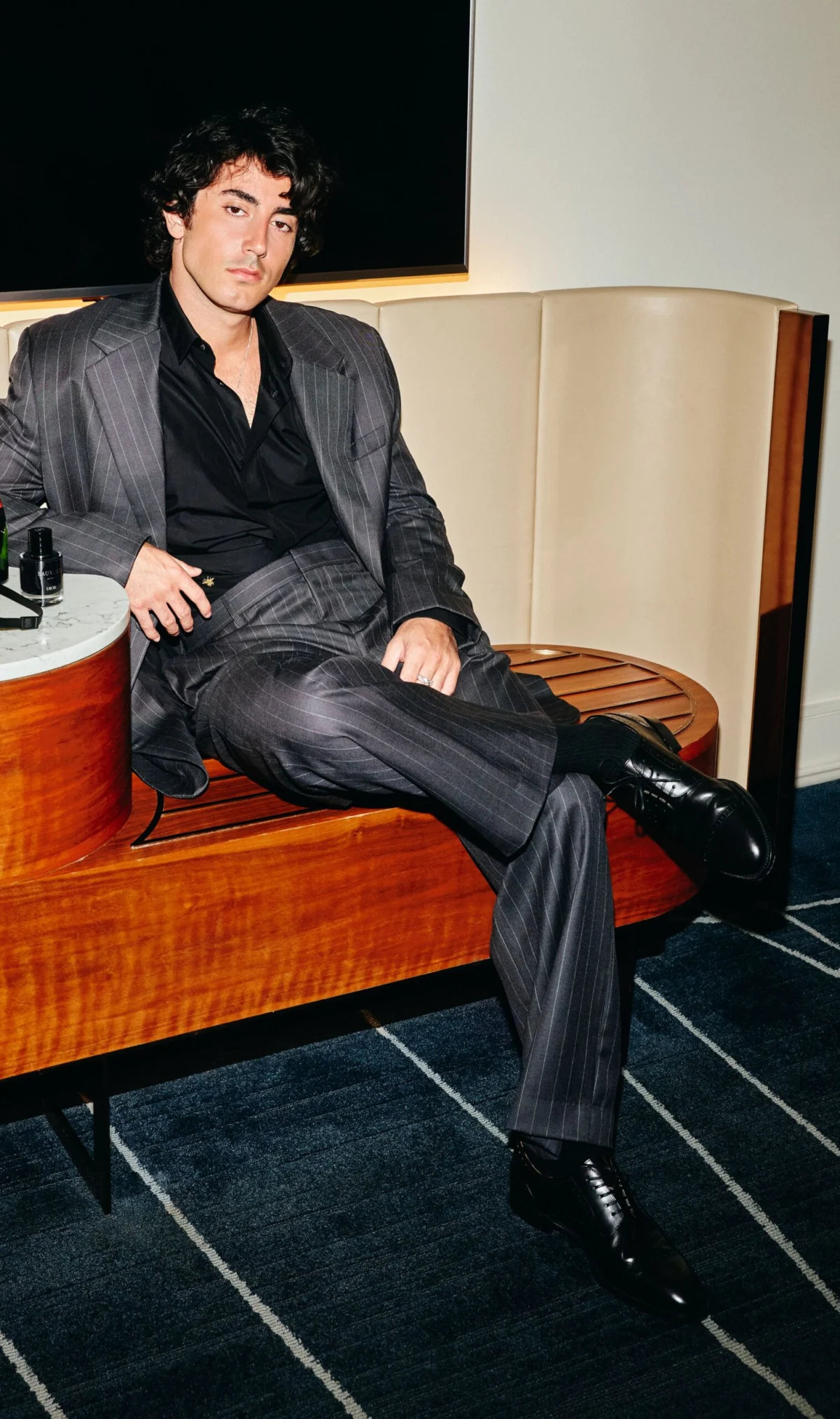
If Anthony Ippolito were born to play one role, Sylvester Stallone would be it. He is a near doppelganger of the "Italian Stallion," a physical resemblance that transcends mere surface-level similarity and enters the realm of the uncanny. This striking likeness makes his performance as a young Stallone in the new film I Play Rocky one of the most anticipated and compelling cinematic turns of the season. The biopic, which meticulously traces Stallone’s desperate and determined struggle to get the 1976 film Rocky produced against all odds, made its high-profile premiere at the Toronto International Film Festival (TIFF). Even before the credits rolled on its opening night, the industry was buzzing with Oscar predictions, positioning Ippolito as a frontrunner for the awards circuit.
For those who find Ippolito’s face and intense screen presence familiar, it is likely because this is not his first time stepping into the shoes of a cinematic titan. He previously garnered critical acclaim for his portrayal of a young Al Pacino in the Paramount+ limited series The Offer, which chronicled the chaotic and legendary production of The Godfather. To play two of the most influential figures of the New Hollywood era—Pacino and Stallone—back-to-back is a feat rarely accomplished by a young actor. In an exclusive discussion, Ippolito admitted to feeling "spoiled" by these opportunities, recognizing the immense weight and privilege of representing men who redefined masculinity and stardom in the 20th century. This rising star power has not gone unnoticed by the fashion elite; the French luxury house Dior has already claimed him, dressing and grooming him for his landmark premiere weekend in Toronto.

The narrative of I Play Rocky focuses on a specific, pivotal window in film history. In the mid-1970s, Sylvester Stallone was a struggling actor with a script and a dream, famously down to his last $100 and forced to sell his dog, Butkus, because he couldn’t afford pet food. The film explores the legendary standoff where Stallone refused to sell his screenplay for Rocky—even when offered upwards of $360,000 (a fortune at the time)—unless he was cast in the lead role. Producers originally wanted established stars like Burt Reynolds, James Caan, or Ryan O’Neal, but Stallone’s stubborn refusal to compromise on his vision mirrors the very underdog story he wrote.
Ippolito’s preparation for the role was an odyssey of physical and psychological transformation. To accurately portray the Stallone of 1975, Ippolito underwent a grueling training regimen that lasted nearly two years. This was not merely about hitting the gym; it was a total lifestyle overhaul designed to replicate the "thick" and "rugged" physique Stallone possessed before he became the hyper-shredded action icon of the Rambo or Rocky III eras. During the primary "bulking phase," Ippolito gained approximately 40 pounds. He worked with world-renowned trainers Grant Roberts—famed for his work with Hilary Swank in Million Dollar Baby—and Kirk Myers of Dogpound.
The actor’s process involved five-day-a-week splits focused on heavy lifting and massive caloric intake to achieve the necessary "silhouette." As production neared, the routine shifted into "two-a-days," incorporating intense boxing sessions and cardiovascular work to lean out while maintaining the muscle mass. Ippolito noted that the goal was to match Stallone’s specific 1970s body type—a look that was powerful and functional but lacked the modern, dehydrated aesthetic of contemporary superhero cinema. This physical dedication was a far cry from his days playing baseball for Baruch College, where the training was functional for the field but didn’t require the aesthetic precision of a cinematic transformation.

Beyond the physical, Ippolito had to navigate the complexities of Stallone’s unique vocal and facial characteristics. Stallone’s signature look—the drooping eyelid and slightly slurred speech—was the result of a birth complication where a pair of forceps severed a nerve in his face, causing permanent partial paralysis. For an actor, imitating such a recognizable voice carries the risk of descending into caricature or satire. Ippolito’s approach was grounded in empathy; he viewed the paralysis not as a gimmick to be mimicked, but as a source of Stallone’s childhood isolation and his ultimate "underdog" identity.
Meeting the legend himself provided Ippolito with insights that no amount of archival footage could offer. Stallone spoke candidly with Ippolito about the raw reality of those high-stakes negotiations in the 70s. Hearing Stallone describe the sheer terror and resolve required to turn down life-changing sums of money while living in poverty gave Ippolito the emotional anchor needed for the performance. He was particularly struck by Stallone’s intellect—a sharp, writerly mind that is often overshadowed by his brawny public persona. Stallone, after all, was only the third person in history to be nominated for Academy Awards for both Best Actor and Best Original Screenplay for the same film, joining the ranks of Charlie Chaplin and Orson Welles.
The film, directed by Peter Farrelly (who transitioned from broad comedies like Dumb and Dumber to Oscar-winning dramas like Green Book), also delves into the private life of Stallone during this era, specifically his relationship with his then-wife, Sasha Czack. Ippolito explained that while public records provide the framework of Stallone’s career, the domestic scenes allowed him to take creative liberties. These moments of vulnerability with Sasha (played in the film with equal intensity) help humanize a man who would eventually become a global symbol of invincibility.

Ippolito’s performance highlights a multidimensional portrait of masculinity. He draws a direct line from Stallone’s writing to Marlon Brando’s performance as Terry Malloy in On the Waterfront. Just as Brando’s boxer was a "contender" with a sensitive soul, Stallone’s Rocky Balboa was defined as much by his tenderness toward Adrian as by his ability to take a punch. Ippolito’s task was to capture this "New Hollywood" sensitivity—a time when male leads were allowed to be broken, crying, and desperate before they were triumphant.
The actor’s association with Dior further cements his status as a modern style icon. During the TIFF premiere, Ippolito was the face of Dior’s grooming and fashion, utilizing the Dior Sauvage line to complete his red-carpet presence. In the interview, he joked about his evolving grooming habits, noting that while he was once a simple "soap and water" guy, the demands of high-definition cameras and the advice of industry makeup artists have turned him into a devotee of moisturizing and, crucially, sunscreen.
As I Play Rocky moves toward a wider release, the conversation around Ippolito’s career trajectory is intensifying. Having played both Pacino and Stallone, he has effectively become the go-to actor for portraying the legends of the 1970s. When asked about the possibility of a "Stallone Cinematic Universe"—perhaps a film about the making of The Expendables—Ippolito laughed, suggesting that he would either need to wait a few decades or lean heavily into prosthetic technology to play the older, more weathered version of the star.

The "grieving process" of leaving a role behind is something Ippolito is currently navigating. After nearly two years of living, eating, and breathing like Sylvester Stallone, the actor is slowly returning to himself. This involves shedding the "bulk weight" and moving away from the 1970s persona that has dominated his life. However, the impact of the role remains. I Play Rocky is more than a biopic; it is a testament to the era of the "self-made man" and the enduring power of the underdog story. Through Ippolito’s transformative performance, a new generation is being introduced to the grit, heart, and sheer willpower that defined the making of a cinematic masterpiece. As the awards season approaches, all eyes are on Anthony Ippolito, the man who stepped into the ring as a legend and emerged as a powerhouse in his own right.
