
 By admin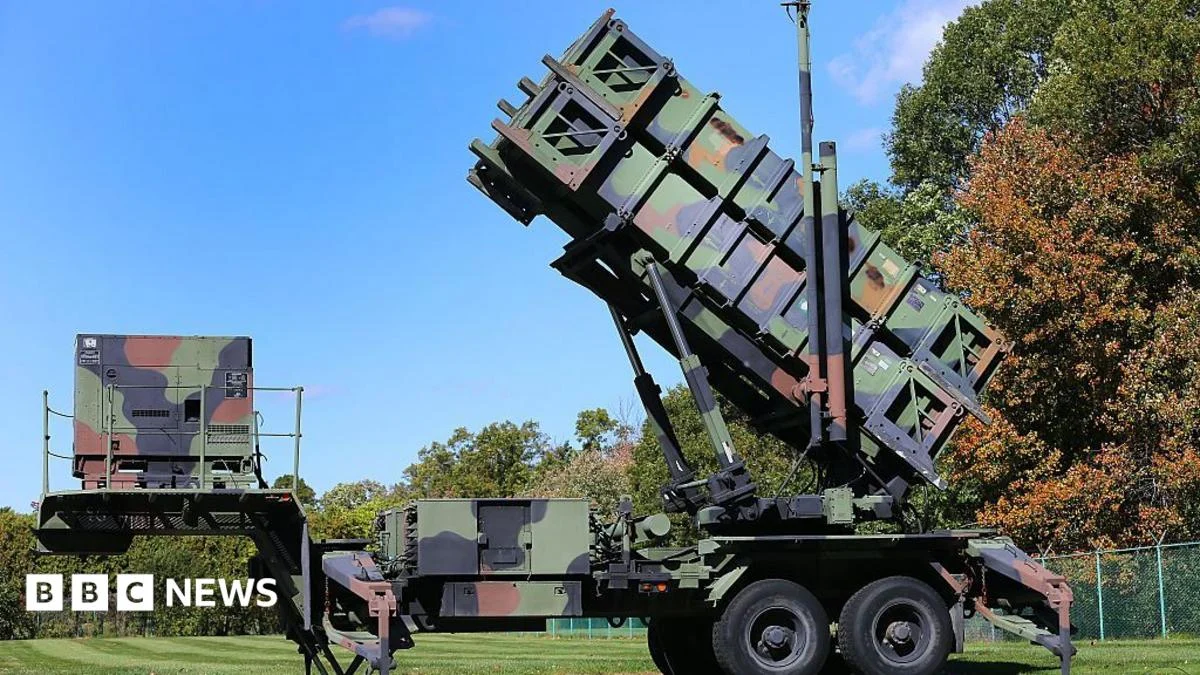
A stark contradiction has emerged between the pronouncements of the White House and an independent assessment from the US Department of Defense’s Inspector General, with the latter directly refuting President Donald Trump’s repeated claims of "virtually unlimited" munitions. The Inspector General’s report, a rare and detailed look into typically classified defense stockpiles, reveals significant "shortfalls" in critical munitions and identifies "bottlenecks" in the resupply chain, directly challenging the administration’s narrative that reports of shortages are mere "fake news" or even "treasonous."
The report, which covers the period from February through June, indicates that the US spent a staggering $22 billion on munitions during these five months alone. This substantial expenditure, while intended to replenish supplies, has paradoxically led to "strategic inventory shortfalls," according to the independent watchdog. When pressed for a response to these findings, the White House reiterated its stance, with spokeswoman Anna Kelly stating on Tuesday that the US military possesses "more than enough" munitions, ammunition, and stockpiles to meet all strategic objectives and beyond.
This independent report offers a first-of-its-kind glimpse into the actual state of US weapons stockpiles, a level of detail that is usually shielded from public view due to national security concerns. Prior to this official assessment, various think tanks and analyses had already painted a concerning picture of depleted US weapon reserves. These previous estimates suggested a dire situation, foreshadowing the findings of the Inspector General.
The ongoing conflict with Iran, characterized by intense aerial exchanges and ground engagements, has placed an unprecedented strain on US military resources. US forces have expended vast quantities of both long-range ground attack systems and the sophisticated air and missile defense systems crucial for intercepting Iranian aerial threats. The sheer volume of ordnance deployed in this high-intensity scenario has been a primary driver of the current inventory concerns.
A late July analysis conducted by the Center for Strategic and International Studies (CSIS) had already flagged alarming depletion levels for key interceptor missiles. Their findings indicated that stocks of crucial systems like the Patriot missile and the Terminal High Altitude Area Defense (THAAD) system were significantly diminished. In some instances, CSIS reported that these vital interceptor stocks had been depleted by more than half, a statistic that underscores the scale of the challenge facing the Pentagon. While the Inspector General’s report does not provide precise figures on remaining weapon quantities, it unequivocally confirms the existence of inventory shortfalls and highlights "industrial base bottlenecks" that are impeding the timely resupply of munitions.
These identified bottlenecks in the industrial base are a critical concern, suggesting that the capacity to produce and deliver new munitions is not keeping pace with the rate of expenditure. The report further elaborates that the Department of Defense is actively working to address these issues by "streamlining procurement processes and production lead times." The goal of these initiatives is to not only mitigate the current shortages but also to ensure the military’s ability to "respond rapidly to a contingency," a clear acknowledgment of the operational risks posed by depleted stockpiles.
The White House’s steadfast rejection of the Inspector General’s assessment is a significant point of contention. President Trump, in particular, has consistently framed any reports of US munitions shortages as deliberate misinformation. He has frequently taken to social media platforms to denounce such reports, labeling them as "fake news" and, on occasion, even characterizing them as "treasonous." In a 4 August X (formerly Twitter) post, Defense Secretary Pete Hegseth echoed this sentiment, dismissing news coverage of the shortages as "not true." Furthermore, a lengthy post on Truth Social on September 3rd saw Trump assert that the US possesses "virtually unlimited" ammunition and is actively "stockpiling and preparing for any contingency that could happen."
The Inspector General’s report also provides a detailed financial breakdown of the conflict’s impact on defense budgets. It reveals that equipment losses alone have amounted to $3.7 billion. An additional $7.4 billion has been attributed to other expenditures related to the conflict. In total, the US spent an estimated $33.4 billion (approximately £24.7 billion) on the war during the specified period from February 28 to June 30.
Adding further context to the financial burden of the conflict, a separate estimate released concurrently on Tuesday by the Congressional Budget Office (CBO) placed the total cost of the war at a higher figure of $38 billion. This broader CBO estimate includes not only the cost of replacing expended munitions and lost equipment but also accounts for increased operational tempo, such as greater flying hours for aircraft and higher fuel consumption. The discrepancy between the Inspector General’s figure and the CBO’s estimate highlights the multifaceted and substantial financial commitment required to sustain such a prolonged and intense conflict.
The implications of these findings are far-reaching. The Inspector General’s report, by providing an independent and somewhat unprecedented level of detail on munitions stockpiles, serves as a crucial check on executive branch pronouncements. It underscores the complex realities of modern warfare, where sustained high-intensity operations can rapidly deplete even the most robust inventories. The identified industrial base bottlenecks suggest a need for long-term strategic planning and investment in defense manufacturing capabilities to ensure readiness for future contingencies.
The debate over munitions shortages is not merely an accounting exercise; it has direct implications for national security and military readiness. A perceived or actual lack of critical weaponry could embolden adversaries and constrain the ability of US forces to respond effectively to evolving threats. The Inspector General’s report, by confirming these shortfalls, raises important questions about the adequacy of current defense planning, procurement strategies, and the resilience of the defense industrial base.
The Pentagon’s acknowledgment of efforts to "streamline procurement processes and production lead times" is a positive step, but the effectiveness of these measures will be closely scrutinized. The ability to rapidly replenish depleted stocks is paramount, especially in a geopolitical climate characterized by heightened tensions and the potential for rapid escalation.
The conflict with Iran, as detailed in the report, has served as a severe stress test for US military logistics and industrial capacity. The findings underscore the importance of transparency and independent oversight in defense matters, even when those findings may be politically inconvenient. As the US continues to navigate a complex global security landscape, the lessons learned from this period of intense munitions expenditure will be critical in shaping future defense policy and ensuring the nation’s continued military superiority. The report’s revelation of "strategic inventory shortfalls" and "industrial base bottlenecks" demands a serious and comprehensive re-evaluation of how the US prepares for and sustains prolonged military engagements, moving beyond political rhetoric to address the tangible realities of defense readiness.
